


Emodin alleviates sepsis-mediated lung injury via inhibition and reduction of NF-kB and HMGB1 pathways mediated by SIRT1
- PMID: 34806822
- PMCID: PMC11896518
- DOI: 10.1002/kjm2.12476
Emodin alleviates sepsis-mediated lung injury via inhibition and reduction of NF-kB and HMGB1 pathways mediated by SIRT1
Abstract
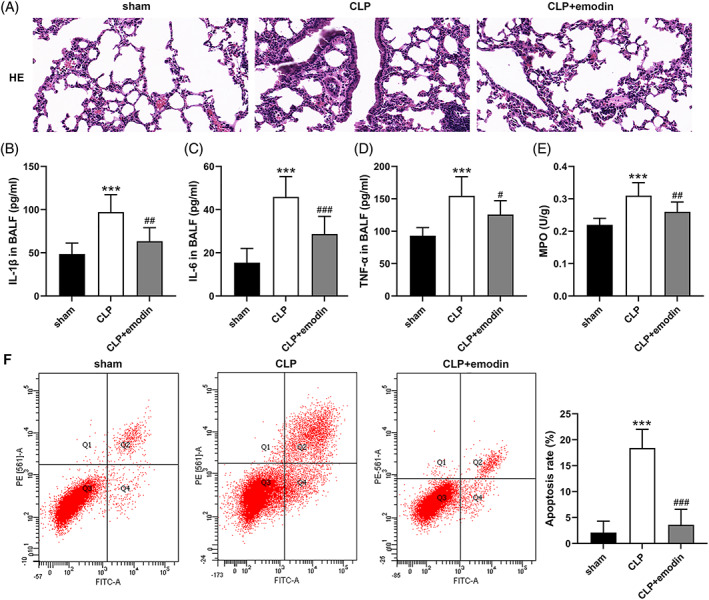
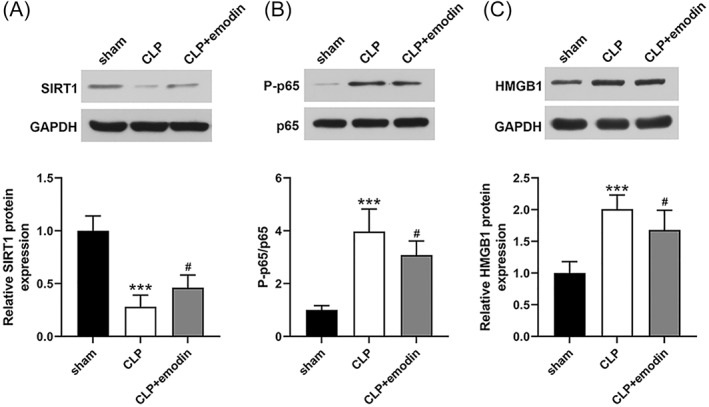
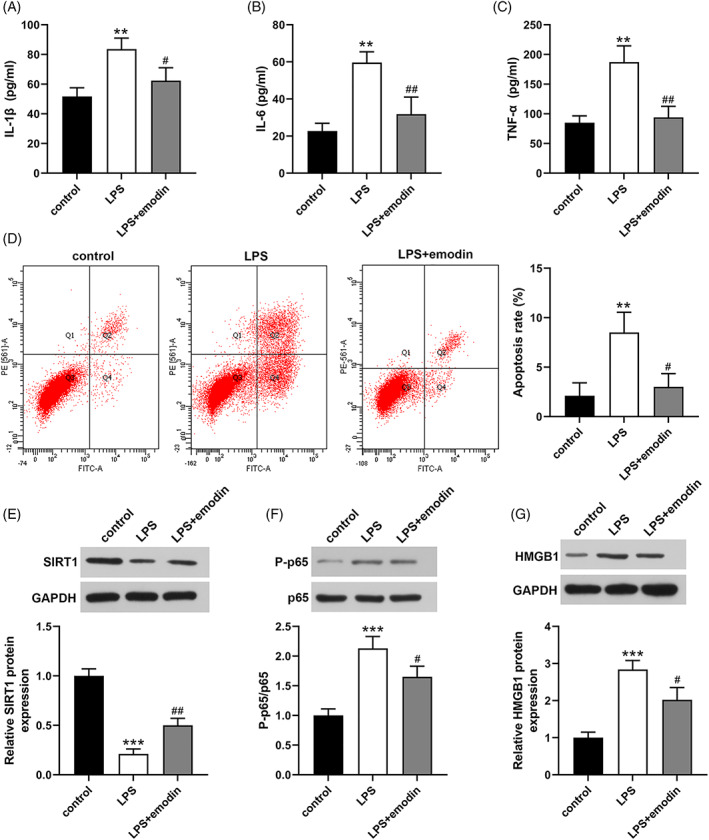
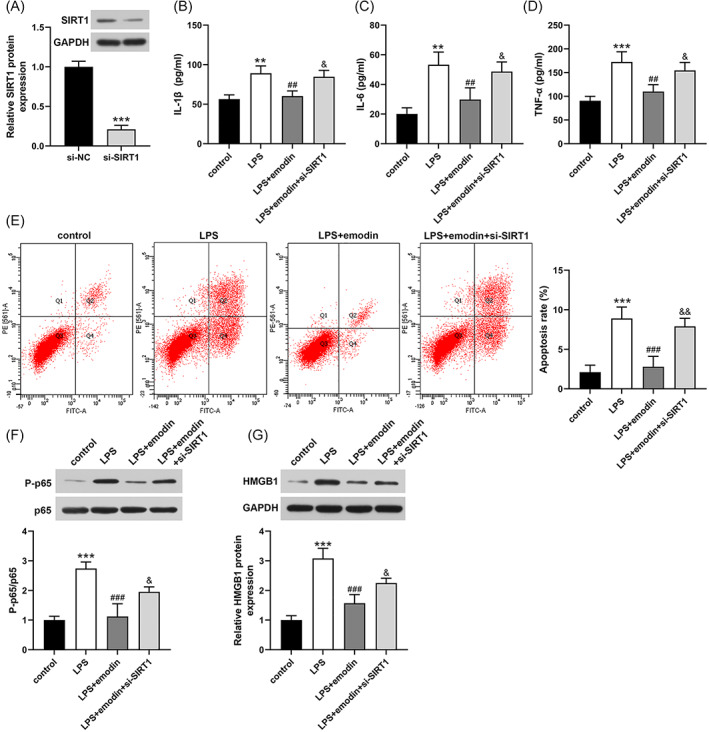
Inflammation plays an important role during sepsis, and excessive inflammation can result in organ damage, chronic inflammation, fibrosis, and scarring. The study aimed to investigate the specific mechanism of emodin by constructing in vivo and in vitro septic lung injury models via inhibition and reduction of NF-kB and high mobility group box 1 (HMGB1) pathways. A cecal ligation and puncture (CLP) model was built for adult male Sprague-Dawley rats. Concentrations of TNF-α, IL-1β, and IL-6 in bronchoalveolar lavage fluid were determined using commercially available ELISA kits. Hematoxylin and eosin staining was used for the right lung inferior lobes. Myeloperoxidase (MPO) activity of the lung tissue was detected by using the MPO kit. Murine alveolar epithelial cell line (MLE-12) cells were used for flow cytometry and Western blot to analyze the apoptosis rate and protein expression. Emodin significantly decreased CLP-induced cell apoptosis, upregulated expression of sirtuin 1 (SIRT1), and inhibited p-p65/p65 and HMGB1. In lipopolysaccharide (LPS) treated cell model, emodin treatment markedly decreased LPS-induced release of IL-1, IL-6, and tumor necrosis factor (TNF)-α, inhibited LPS-induced cell apoptosis and suppressed protein levels of P-P65/P65 and HMGB1. However, science of SIRT1 reversed the above effects by treatment of emodin. In summarize, this study found that emodin can alleviate sepsis-induced lung injury in vivo and in vitro through regulation of SIRT1.
Keywords: HMGB1; NF-kB; SIRT1; emodin; sepsis.
© 2021 The Authors. The Kaohsiung Journal of Medical Sciences published by John Wiley & Sons Australia on behalf of Kaohsiung Medical University.
Conflict of interest statement
All authors declare no conflict of interest.
Figures
References
-
- Duyu M, Turkozkan C. Therapeutic plasma exchange in the pediatric intensive care unit: a single‐center 5‐year experience. Transfus Apher Sci. 2020;59(5):102959. - PubMed
-
- Guo R, Li Y, Han M, Liu J, Sun Y. Emodin attenuates acute lung injury in Cecal‐ligation and puncture rats. Int Immunopharmacol. 2020;85:106626. - PubMed
-
- de Castro R, Medeiros D, Prata‐Barbosa A, de Magalhães‐Barbosa M. Surviving sepsis campaign international guidelines for the management of septic shock and sepsis‐associated organ dysfunction in children. Pediatr Crit Care Med. 2020;21(10):924–5. - PubMed
-
- Dong X, Zeng Y, Liu Y, You L, Yin X, Fu J, et al. Aloe‐emodin: a review of its pharmacology, toxicity, and pharmacokinetics. Phytother Res. 2020;34(2):270–81. - PubMed
MeSH terms
Substances
LinkOut - more resources
Full Text Sources
Medical
Research Materials
Miscellaneous
