


Matrix Gla Protein Levels Are Associated With Arterial Stiffness and Incident Heart Failure With Preserved Ejection Fraction
- PMID: 34809448
- PMCID: PMC8792238
- DOI: 10.1161/ATVBAHA.121.316664
Matrix Gla Protein Levels Are Associated With Arterial Stiffness and Incident Heart Failure With Preserved Ejection Fraction
Abstract
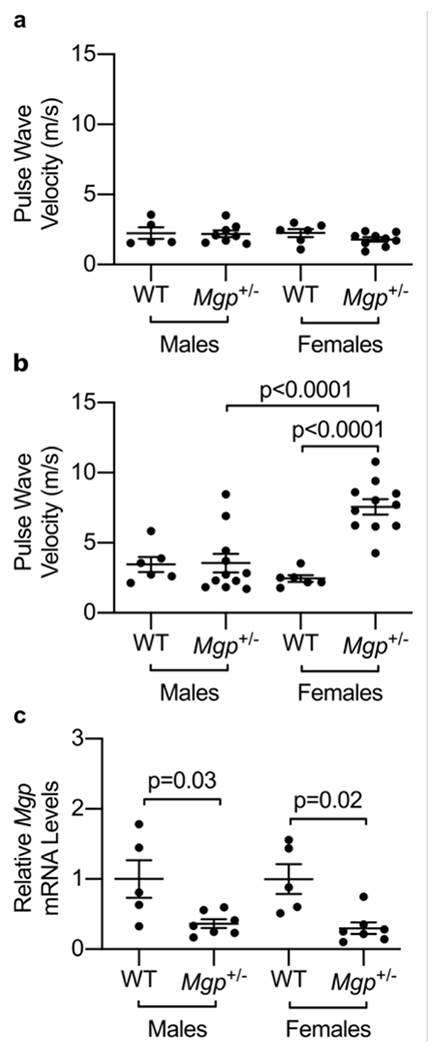
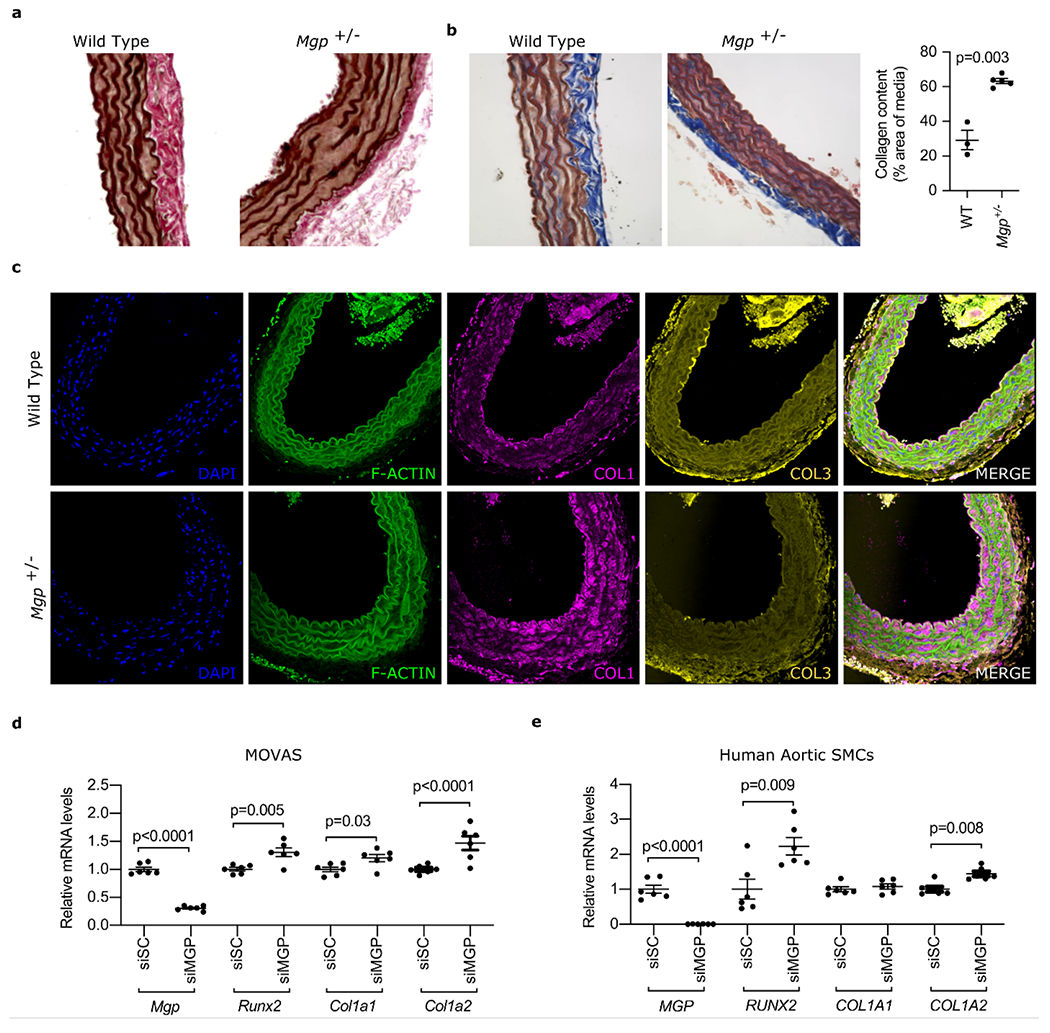
Objective: Arterial stiffness is a risk factor for cardiovascular disease, including heart failure with preserved ejection fraction (HFpEF). MGP (matrix Gla protein) is implicated in vascular calcification in animal models, and circulating levels of the uncarboxylated, inactive form of MGP (ucMGP) are associated with cardiovascular disease-related and all-cause mortality in human studies. However, the role of MGP in arterial stiffness is uncertain. Approach and Results: We examined the association of ucMGP levels with vascular calcification, arterial stiffness including carotid-femoral pulse wave velocity (PWV), and incident heart failure in community-dwelling adults from the Framingham Heart Study. To further investigate the link between MGP and arterial stiffness, we compared aortic PWV in age- and sex-matched young (4-month-old) and aged (10-month-old) wild-type and Mgp+/- mice. Among 7066 adults, we observed significant associations between higher levels of ucMGP and measures of arterial stiffness, including higher PWV and pulse pressure. Longitudinal analyses demonstrated an association between higher ucMGP levels and future increases in systolic blood pressure and incident HFpEF. Aortic PWV was increased in older, but not young, female Mgp+/- mice compared with wild-type mice, and this augmentation in PWV was associated with increased aortic elastin fiber fragmentation and collagen accumulation.
Conclusions: This translational study demonstrates an association between ucMGP levels and arterial stiffness and future HFpEF in a large observational study, findings that are substantiated by experimental studies showing that mice with Mgp heterozygosity develop arterial stiffness. Taken together, these complementary study designs suggest a potential role of therapeutically targeting MGP in HFpEF.
Keywords: arterial stiffness; biomarker; heart failure; hypertension; mice; pulse wave velocity.
Figures
Comment in
-
Matrix GIa Protein, Large Artery Stiffness, and the Risk of Heart Failure With Preserved Ejection Fraction.Arterioscler Thromb Vasc Biol. 2022 Feb;42(2):223-226. doi: 10.1161/ATVBAHA.121.317206. Epub 2021 Dec 30. Arterioscler Thromb Vasc Biol. 2022. PMID: 34965735 Free PMC article. No abstract available.
References
-
- Yancy CW, Jessup M, Bozkurt B, Butler J, Casey DE Jr., Drazner MH, et al. 2013 accf/aha guideline for the management of heart failure: Executive summary: A report of the american college of cardiology foundation/american heart association task force on practice guidelines. Circulation. 2013;128:1810–1852 - PubMed
-
- Weber T, Wassertheurer S, O’Rourke MF, Haiden A, Zweiker R, Rammer M, et al. Pulsatile hemodynamics in patients with exertional dyspnea: Potentially of value in the diagnostic evaluation of suspected heart failure with preserved ejection fraction. J Am Coll Cardiol. 2013;61:1874–1883 - PubMed
-
- Chirinos JA. Arterial stiffness: Basic concepts and measurement techniques. J Cardiovasc Transl Res. 2012;5:243–255 - PubMed
Publication types
MeSH terms
Substances
Grants and funding
- R01 HL140224/HL/NHLBI NIH HHS/United States
- R01 HL141434/HL/NHLBI NIH HHS/United States
- R01 HL092577/HL/NHLBI NIH HHS/United States
- R01 HL060040/HL/NHLBI NIH HHS/United States
- R01 HL159514/HL/NHLBI NIH HHS/United States
- N01 HC025195/HL/NHLBI NIH HHS/United States
- HHSN268201500001I/HL/NHLBI NIH HHS/United States
- R01 HL143227/HL/NHLBI NIH HHS/United States
- R01 HL131532/HL/NHLBI NIH HHS/United States
- K76 AG064328/AG/NIA NIH HHS/United States
- R01 HL142983/HL/NHLBI NIH HHS/United States
- R01 HL070100/HL/NHLBI NIH HHS/United States
- R01 HL142809/HL/NHLBI NIH HHS/United States
- HHSN268201500001C/HL/NHLBI NIH HHS/United States
- R01 HL151704/HL/NHLBI NIH HHS/United States
- R01 HL128914/HL/NHLBI NIH HHS/United States
- R01 HL134168/HL/NHLBI NIH HHS/United States
- K24 HL153669/HL/NHLBI NIH HHS/United States
- R01 HL134893/HL/NHLBI NIH HHS/United States
LinkOut - more resources
Full Text Sources
Medical
Molecular Biology Databases
Miscellaneous
