


Variation in COVID-19 Mortality in the US by Race and Ethnicity and Educational Attainment
- PMID: 34812846
- PMCID: PMC8611482
- DOI: 10.1001/jamanetworkopen.2021.35967
Variation in COVID-19 Mortality in the US by Race and Ethnicity and Educational Attainment
Abstract
Importance: Racial and ethnic inequities in COVID-19 mortality have been well documented, but little prior research has assessed the combined roles of race and ethnicity and educational attainment.
Objective: To measure inequality in COVID-19 mortality jointly by race and ethnicity and educational attainment.
Design, setting, and participants: This cross-sectional study analyzed data on COVID-19 mortality from the 50 US states and the District of Columbia for the full calendar year 2020. It included all persons in the United States aged 25 years or older and analyzed them in subgroups jointly stratified by age, sex, race and ethnicity, and educational attainment.
Main outcomes and measures: Population-based cumulative mortality rates attributed to COVID-19.F.
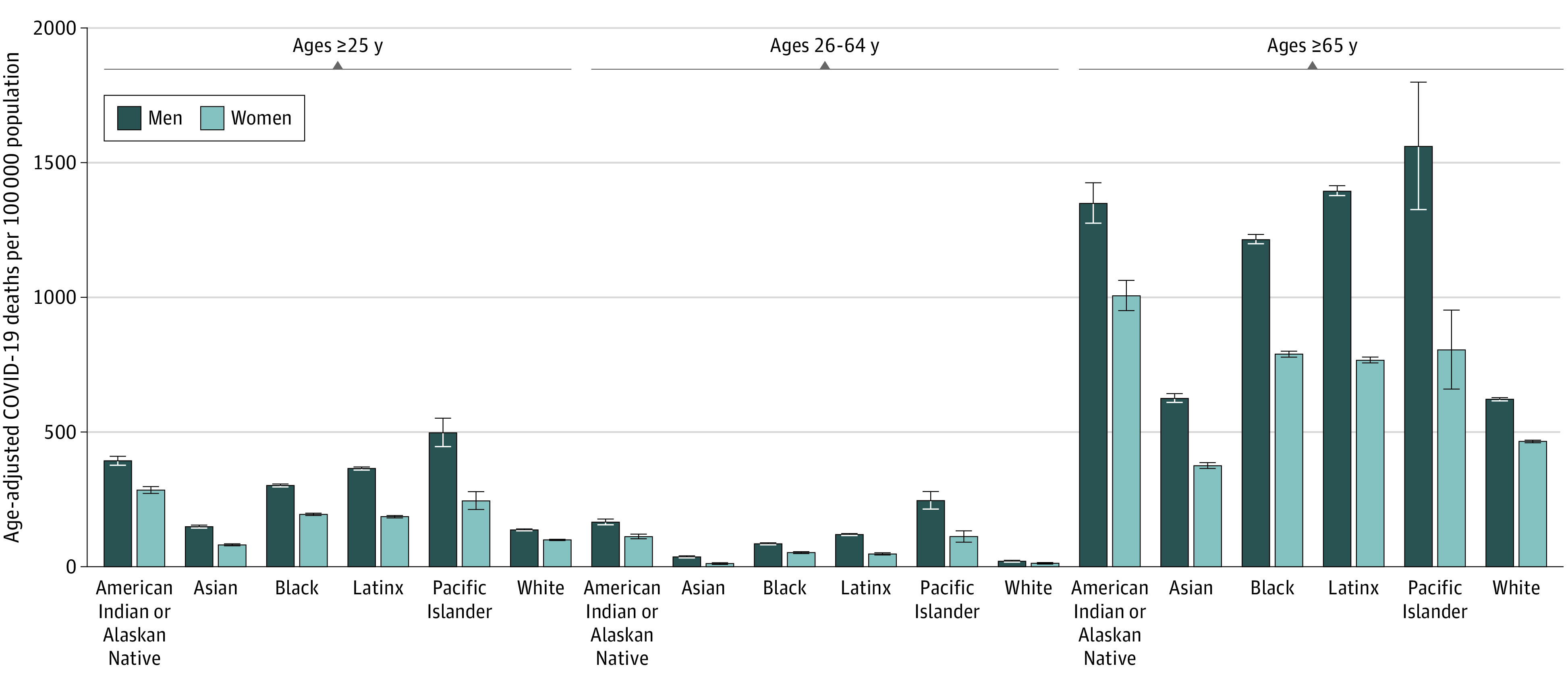
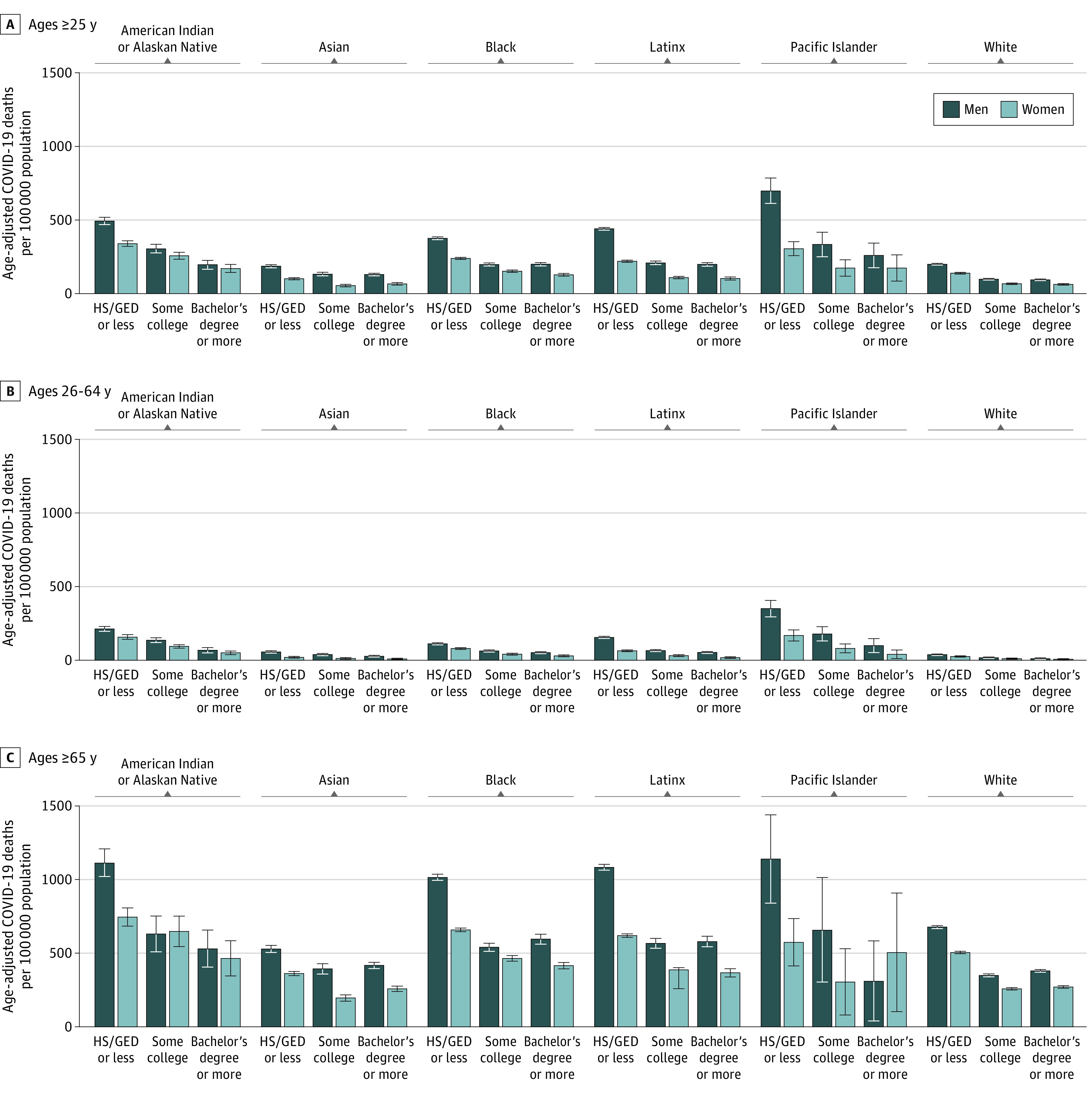
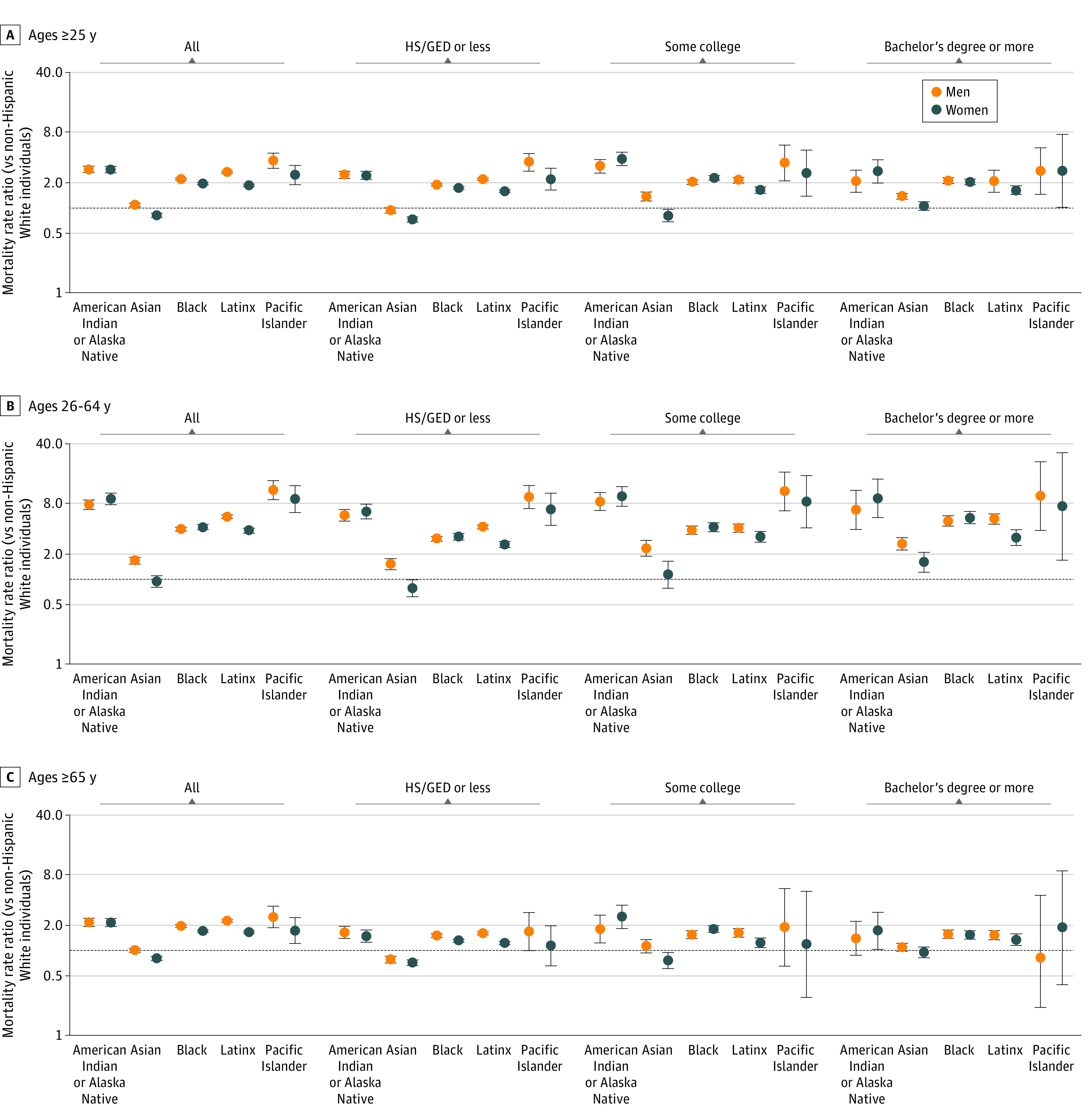
Results: Among 219.1 million adults aged 25 years or older (113.3 million women [51.7%]; mean [SD] age, 51.3 [16.8] years), 376 125 COVID-19 deaths were reported. Age-adjusted cumulative mortality rates per 100 000 ranged from 54.4 (95% CI, 49.8-59.0 per 100 000 population) among Asian women with some college to 699.0 (95% CI, 612.9-785.0 per 100 000 population) among Native Hawaiian and Other Pacific Islander men with a high school degree or less. Racial and ethnic inequalities in COVID-19 mortality rates remained when comparing within educational attainment categories (median rate ratio reduction, 17% [IQR, 0%-25%] for education-stratified estimates vs unstratified, with non-Hispanic White individuals as the reference). If all groups had experienced the same mortality rates as college-educated non-Hispanic White individuals, there would have been 48% fewer COVID-19 deaths among adults aged 25 years or older overall, including 71% fewer deaths among racial and ethnic minority populations and 89% fewer deaths among racial and ethnic minority populations aged 25 to 64 years.
Conclusions and relevance: Public health research and practice should attend to the ways in which populations that share socioeconomic characteristics may still experience racial and ethnic inequity in the distribution of risk factors for SARS-CoV-2 exposure and infection fatality rates (eg, housing, occupation, and prior health status). This study suggests that a majority of deaths among racial and ethnic minority populations could have been averted had all groups experienced the same mortality rate as college-educated non-Hispanic White individuals, thus highlighting the importance of eliminating joint racial-socioeconomic health inequities.
Conflict of interest statement
Figures
References
-
- Chen JT, Testa C, Waterman P, Krieger N. Intersectional inequities in COVID-19 mortality by race/ethnicity and education in the United States, January 1, 2020–January 31, 2021. Harvard Center for Population and Development Studies Working Paper Volume 21, Number 3, February 23, 2021.
-
- Chen YH, Glymour M, Riley A, et al. Excess mortality associated with the COVID-19 pandemic among Californians 18–65 years of age, by occupational sector and occupation: March through October 2020. medRxiv. Preprint posted online January 22, 2021. doi: 10.1101/2021.01.21.21250266 - DOI - PMC - PubMed
MeSH terms
LinkOut - more resources
Full Text Sources
Medical
Miscellaneous
