


Comparative anatomy of dissected optic lobes, optic ventricles, midbrain tectum, collicular ventricles, and aqueduct: evolutionary modifications as potential explanation for non-tumoral aqueductal anomalies in humans
- PMID: 34812897
- PMCID: PMC8789712
- DOI: 10.1007/s00381-021-05408-0
Comparative anatomy of dissected optic lobes, optic ventricles, midbrain tectum, collicular ventricles, and aqueduct: evolutionary modifications as potential explanation for non-tumoral aqueductal anomalies in humans
Abstract
Purpose: An extensive literature has postulated multiple etiologies for aqueductal stenosis. No publications were found, discussing that evolutionary modifications might explain aqueductal anomalies. This study's objectives were to review the evolutionary modifications of vertebrates' tectum structures that might explain human aqueduct anomalies. Undertaking vertebrate comparative study is currently not feasible in view of limitations in obtaining vertebrate material. Thus, vertebrate material collected, injected, dissected, and radiographed in the early 1970s was analyzed, focusing on the aqueduct and components of the midbrain tectum.
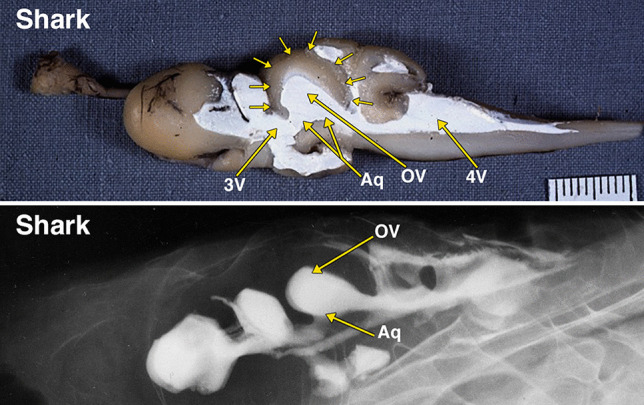
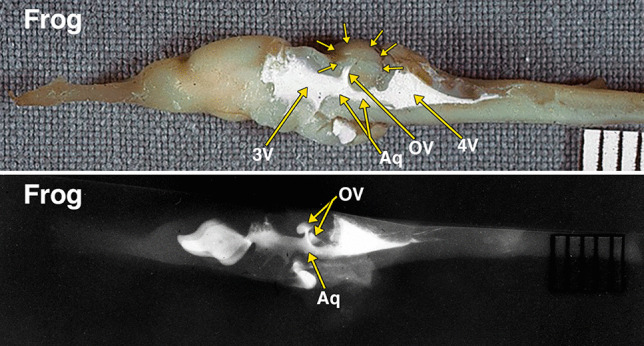
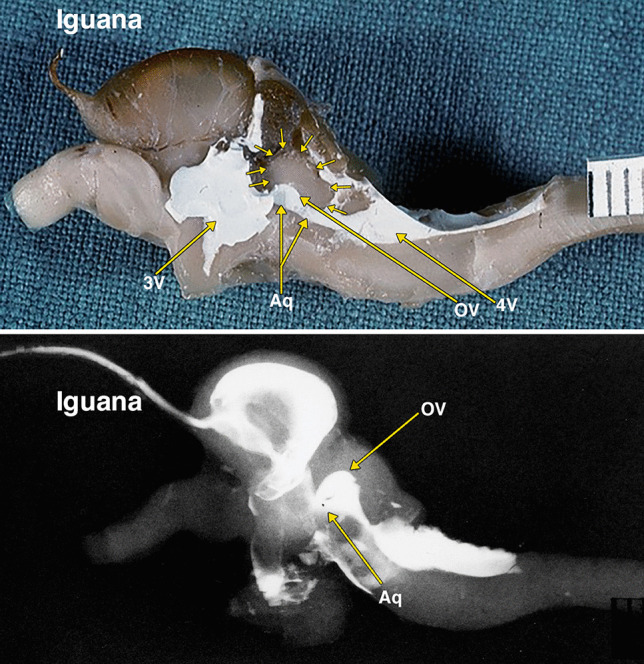
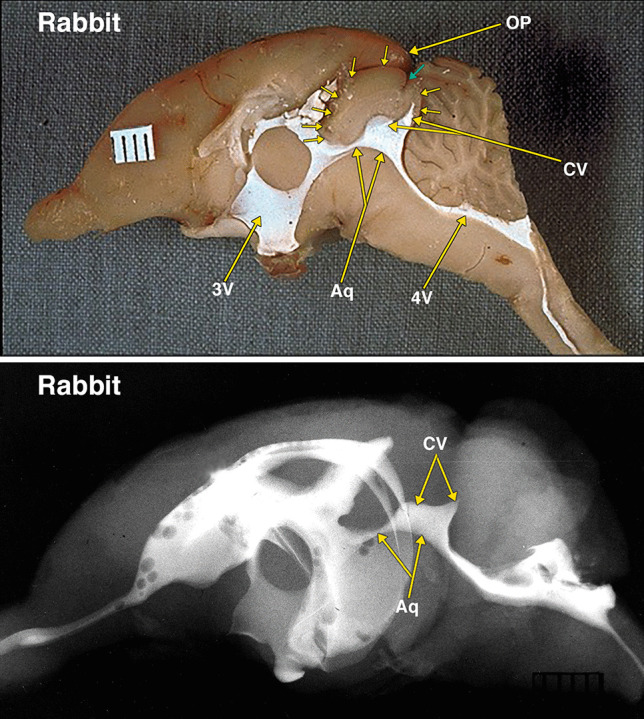
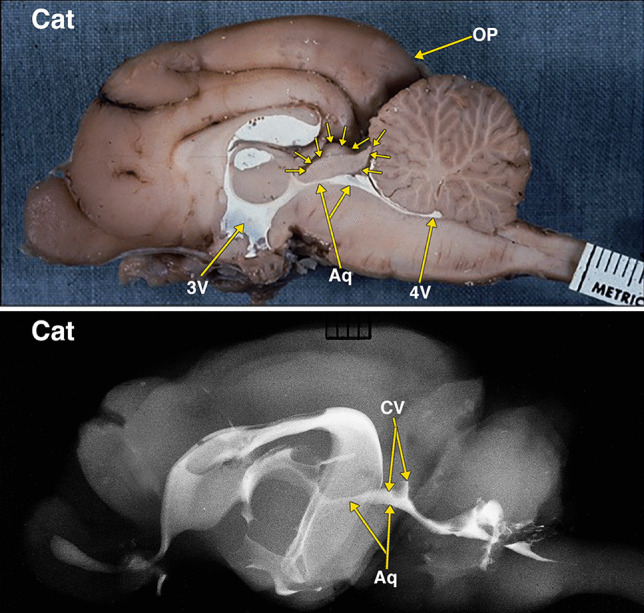
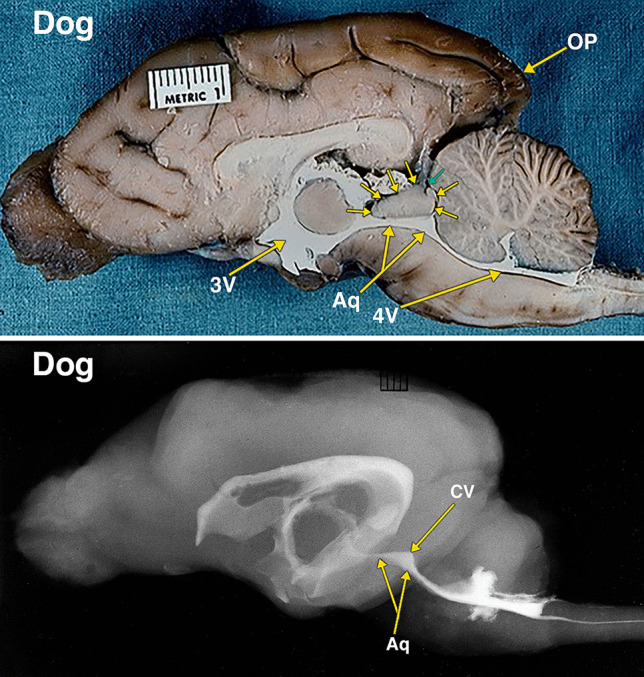
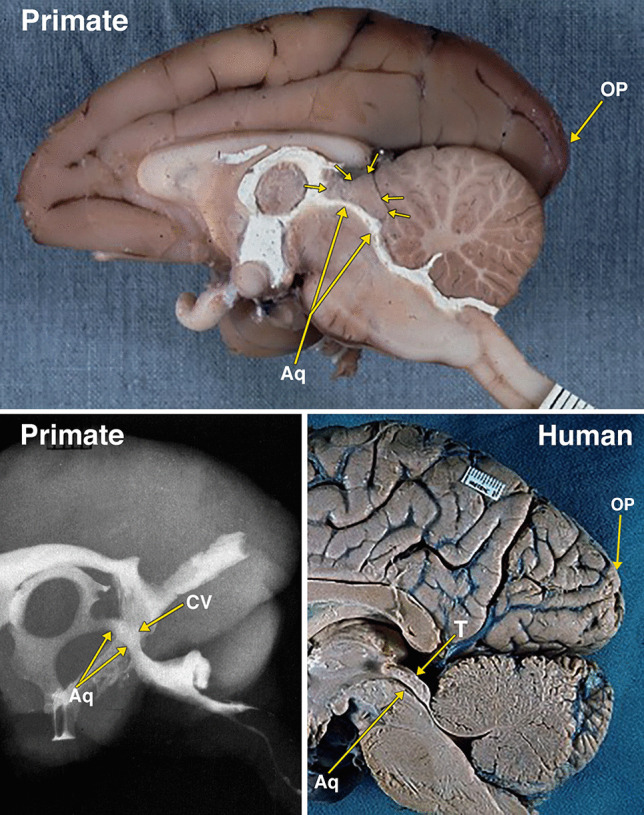
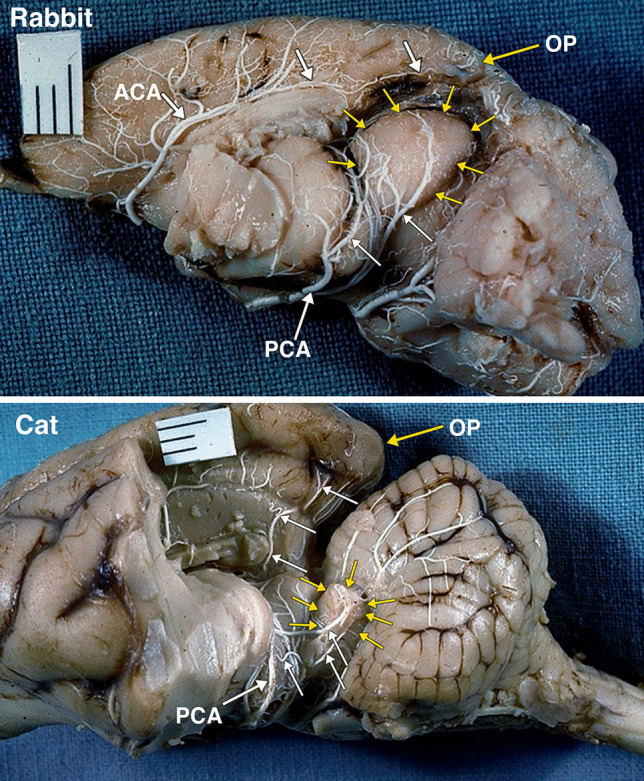
Methods: Photographs of brain dissections and radiographs of the cerebral ventricles and arteries of adult shark, frog, iguana, rabbit, cat, dog, and primate specimens, containing a barium-gelatin radiopaque compound, were analyzed focusing on the aqueduct, the optic ventricles, the quadrigeminal plate, and collicular ventricles. The anatomic information provided by the dissections and radiographs is not reproducible by any other radiopaque contrast currently available.
Results: Dissected and radiographed cerebral ventricular and arterial systems of the vertebrates demonstrated midbrain tectum changes, including relative size modifications of the mammalian components of the tectum, simultaneously with the enlargement of the occipital lobe. There is a transformation of pre-mammalian optic ventricles to what appear to be collicular ventricles in mammals, as the aqueduct and collicular ventricle form a continuous cavity.
Conclusions: The mammalian tectum undergoes an evolutionary cephalization process consisting of relative size changes of the midbrain tectum structures. This is associated with enlargement of the occipital lobe, as part of overall neocortical expansion. Potentially, aqueductal anomalies could be explained by evolutionary modifications.
Keywords: Anatomy Comparative; Cerebral aqueduct; Dissection; Mammals; Nonmammalian; Optic lobe; Tectum Mesencephali.
© 2021. The Author(s).
Conflict of interest statement
The authors declared no potential conflicts of interest with respect to the research, authorship, and/or publication of this article.
Figures
References
-
- Alvord EJ (1961) The pathology of hydrocephalus. In: Fields WS, Desmond MM (eds) Disorders of the developing nervous system. Eighth Annual scientific meeting of the Houson Neurological Society, Texas Medical Center. CC Thomas, Springfield, pp 343–412
-
- Ariens-Kappers CU, Huber OC, Crosby EC. The comparative anatomy of the nervous system of vertebrates, including Man. New York: Macmillan; 1936.
-
- Ballard W. Comparative anatomy and embryology. New York: Ronald Press; 1964.
-
- Boyd J, Khaytin I, Casagrande V (2009) Evolution of the visual system in mammals — comparative evolutionary aspects across orders. In: Binder MD, Hirokawa N, Windhorst U (eds) Encyclopedia of neuroscience. Springer, Berlin.
-
- Conlogue G, Ogden J, Kier EL (1978) Preparation technique and new contrast medium for radiography of biologic specimens. Radiol Technol 49(6):737–743. - PubMed
MeSH terms
LinkOut - more resources
Full Text Sources
Medical
Miscellaneous
