


The effect of concha bullosa and nasal septal deviation on palatal dimensions: a cone beam computed tomography study
- PMID: 34814910
- PMCID: PMC8609805
- DOI: 10.1186/s12903-021-01974-6
The effect of concha bullosa and nasal septal deviation on palatal dimensions: a cone beam computed tomography study
Abstract
Introduction: Nasal septal deviation (NSD) and concha bullosa (CB) are associated with airway obstruction in mouth breathers. Mouth breathing is associated with alterations in maxillary growth and palatal architecture. The aim of our study was to determine the effect of the presence of CB and NSD on the dimensions of the hard palate using cone-beam computed tomography (CBCT).
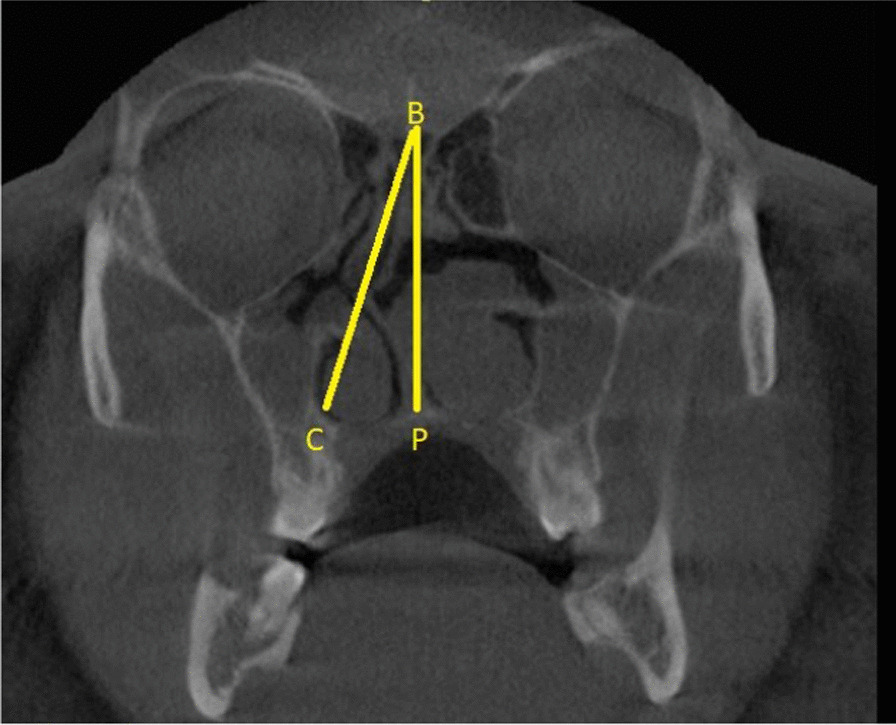
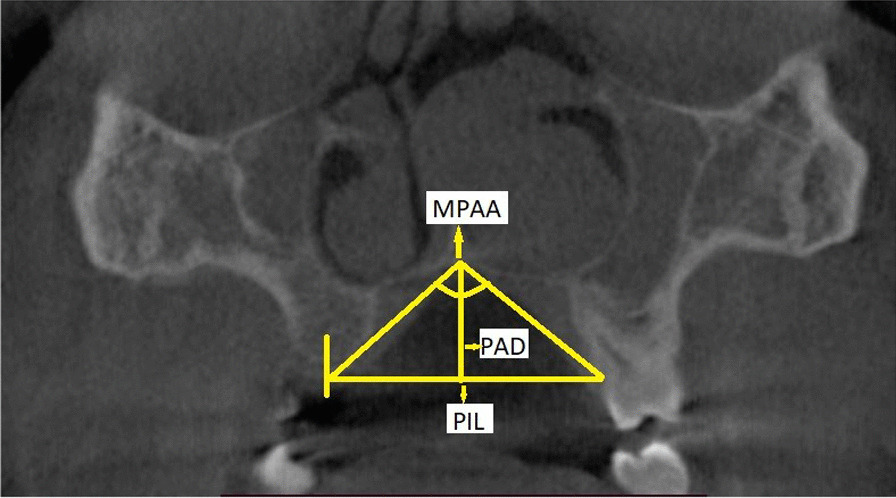
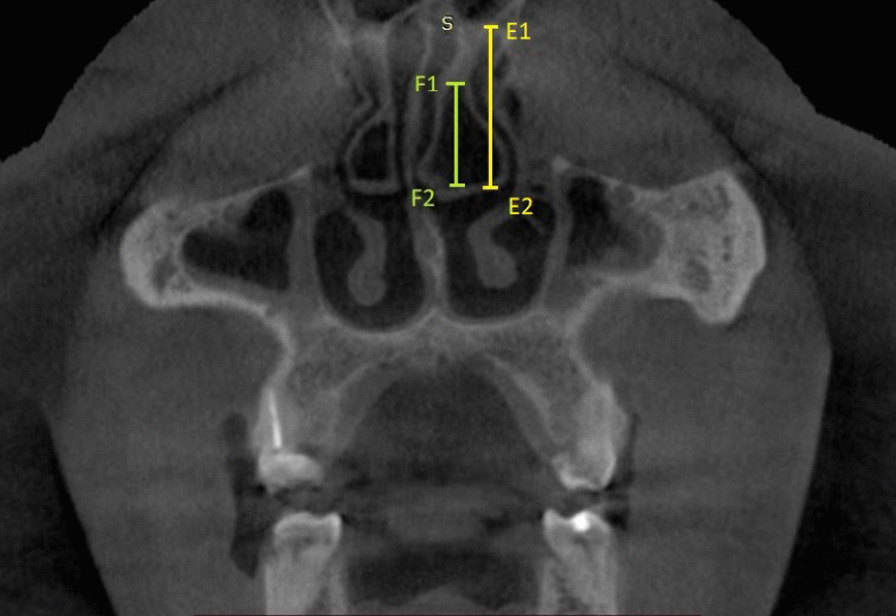
Materials and methods: A retrospective study was conducted using CBCT scans of 200 study subjects. The study subjects were divided into four groups based on the presence of CB and NSD. Septal deviation angle (SDA), palatal interalveolar length (PIL), palatal depth (PD) and maxillopalatal arch angle (MPAA) were measured in the study groups.
Results: The presence of NSD and CB was associated with significant (p < 0.001) differences in the palatal dimensions of the study subjects. The PIL and MPA (p < 0.001) were significantly reduced (p < 0.001), whereas the PD was significantly increased (p < 0.001) in study subjects with NSD and CB. There was no significant change in the palatal dimensions between the unilateral and bilateral types of CB. Among the palatal dimensions, the PIL had the most significant association (R2 = 0.53) with SDA and CB. There was a significant correlation between the palatal dimensions and SDA when CB was present along with NSD.
Conclusion: Based on the results of this study, it can be concluded that the presence of NSD and CB have a significant effect on the palatal dimensions and, therefore, they may be associated with skeletal malocclusion.
Keywords: Concha bullosa; Cone beam computed tomography; Nasal septum; Palate; Turbinate.
© 2021. The Author(s).
Conflict of interest statement
The authors declare that they have no competing interests.
Figures
References
-
- Occasi F, Perri L, Saccucci M, Di Carlo G, Ierardo G, Luzzi V, De Castro G, Brindisi G, Loffredo L, Duse M, Polimeni A, Zicari AM. Malocclusion and rhinitis in children: an easy-going relationship or a yet to be resolved paradox? A systematic literature revision. Ital J Pediatr. 2018;44(1):100. doi: 10.1186/s13052-018-0537-2. - DOI - PMC - PubMed
Publication types
MeSH terms
LinkOut - more resources
Full Text Sources
Medical
