


TLR2 and TLR4 in Parkinson's disease pathogenesis: the environment takes a toll on the gut
- PMID: 34814947
- PMCID: PMC8609261
- DOI: 10.1186/s40035-021-00271-0
TLR2 and TLR4 in Parkinson's disease pathogenesis: the environment takes a toll on the gut
Abstract
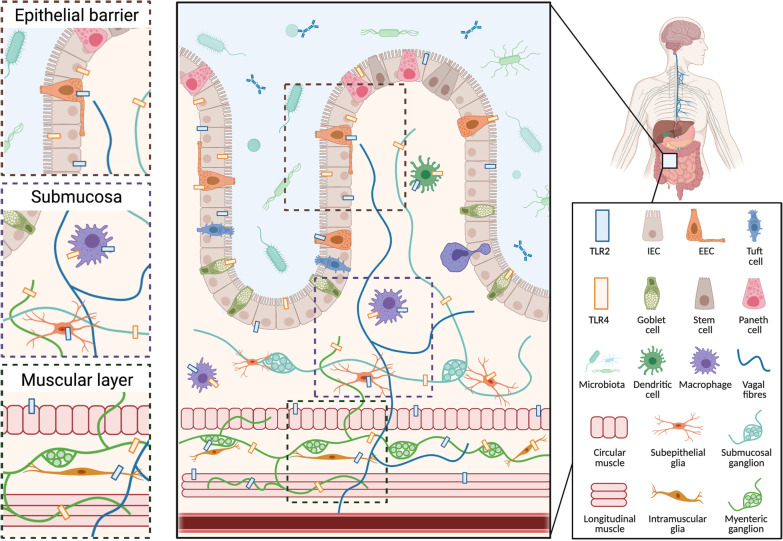
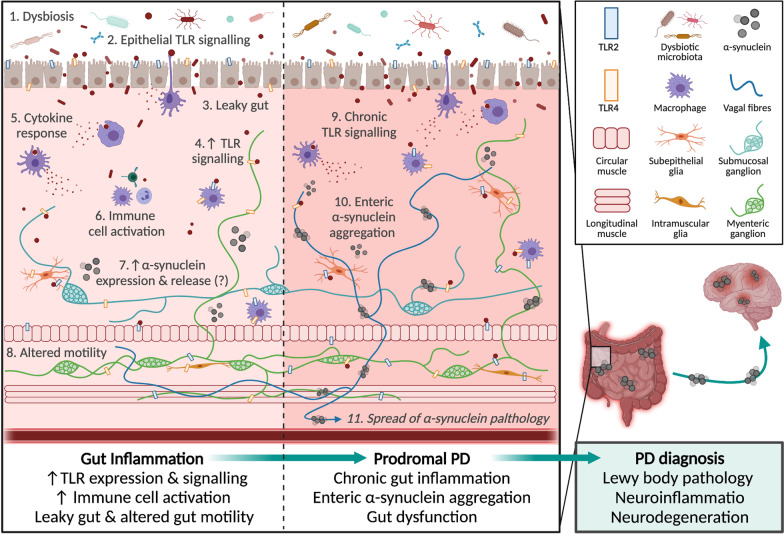
Parkinson's disease (PD) is an incurable, devastating disorder that is characterized by pathological protein aggregation and neurodegeneration in the substantia nigra. In recent years, growing evidence has implicated the gut environment and the gut-brain axis in the pathogenesis and progression of PD, especially in a subset of people who exhibit prodromal gastrointestinal dysfunction. Specifically, perturbations of gut homeostasis are hypothesized to contribute to α-synuclein aggregation in enteric neurons, which may spread to the brain over decades and eventually result in the characteristic central nervous system manifestations of PD, including neurodegeneration and motor impairments. However, the mechanisms linking gut disturbances and α-synuclein aggregation are still unclear. A plethora of research indicates that toll-like receptors (TLRs), especially TLR2 and TLR4, are critical mediators of gut homeostasis. Alongside their established role in innate immunity throughout the body, studies are increasingly demonstrating that TLR2 and TLR4 signalling shapes the development and function of the gut and the enteric nervous system. Notably, TLR2 and TLR4 are dysregulated in patients with PD, and may thus be central to early gut dysfunction in PD. To better understand the putative contribution of intestinal TLR2 and TLR4 dysfunction to early α-synuclein aggregation and PD, we critically discuss the role of TLR2 and TLR4 in normal gut function as well as evidence for altered TLR2 and TLR4 signalling in PD, by reviewing clinical, animal model and in vitro research. Growing evidence on the immunological aetiology of α-synuclein aggregation is also discussed, with a focus on the interactions of α-synuclein with TLR2 and TLR4. We propose a conceptual model of PD pathogenesis in which microbial dysbiosis alters the permeability of the intestinal barrier as well as TLR2 and TLR4 signalling, ultimately leading to a positive feedback loop of chronic gut dysfunction promoting α-synuclein aggregation in enteric and vagal neurons. In turn, α-synuclein aggregates may then migrate to the brain via peripheral nerves, such as the vagal nerve, to contribute to neuroinflammation and neurodegeneration typically associated with PD.
Keywords: Gut barrier; Gut homeostasis; Gut-brain axis; Parkinson’s disease; TLR2; TLR4; α-Synuclein.
© 2021. The Author(s).
Conflict of interest statement
The authors declare no financial or non-financial competing interests.
Figures
References
-
- Burgueño JF, Abreu MT. Epithelial Toll-like receptors and their role in gut homeostasis and disease. Nat Rev Gastroenterol Hepatol. 2020;17(5):263–278. - PubMed
-
- Kouli A, Horne CB, Williams-Gray CH. Toll-like receptors and their therapeutic potential in Parkinson’s disease and α-synucleinopathies. Brain Behav Immun. 2019;81:41–51. - PubMed
Publication types
MeSH terms
Substances
LinkOut - more resources
Full Text Sources
Medical
