


Case Reports
doi: 10.1016/j.eucr.2021.101937.
eCollection 2022 Jan.
Radical excision of inguinal condyloma acuminatum following 51 years of untreated growth, found to be squamous cell carcinoma
Affiliations
- PMID: 34815944
- PMCID: PMC8593438
- DOI: 10.1016/j.eucr.2021.101937
Item in Clipboard
Case Reports
Radical excision of inguinal condyloma acuminatum following 51 years of untreated growth, found to be squamous cell carcinoma
Urol Case Rep.
.
Abstract
Giant condyloma acuminatum, caused by herpes simplex virus infection, is a large cauliflower shaped lesion that has a propensity to infiltrate surrounding tissues with paradoxically benign microscopic/histological appearance. This lesion is often benign, though it does have the potential for malignant transformation. Here we present a case that demonstrates this potential and describes the pathological and histological findings in detail. The report concludes with the clinical reasoning for considering surgical resection in these patients.
Keywords: Condyloma; HSV; Pathology slides; Squamous cell carcinoma.
© 2021 Published by Elsevier Inc.
Figures
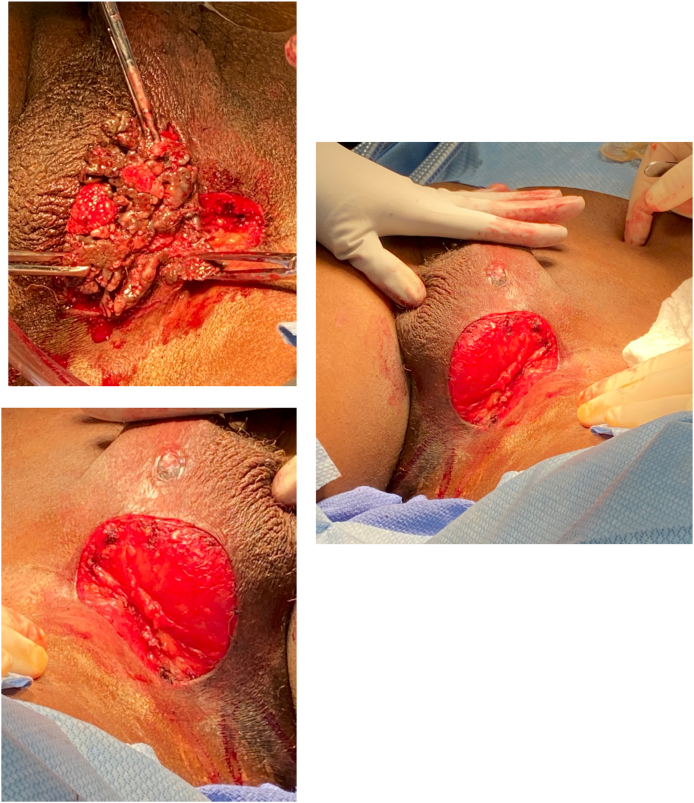
Intraoperative pictures showing the condyloma retracted and the margins after excision. The satellite lesion is seen on the scrotum superomedial to the primary lesion.
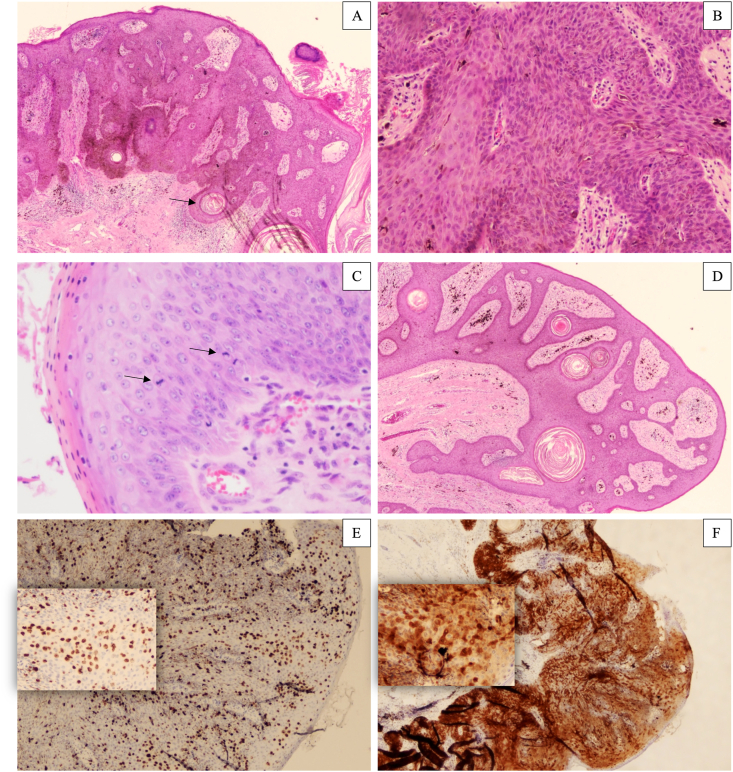
In situ well differentiated squamous carcinoma, A. Low power view of the lesion, keratin pearl is seen (arrow); B&C. High power view shows increased N/C ratio, pleomorphic epithelial cell with increased mitotic figures (arrow); D. Background of seborrhoic keratosis; E. Ki-67 index (proliferation index) reveals focal full thickness staining in the lesion, note that staining pattern is nuclear; F. p16 immunochemical stain displays en block full thickness positivity; correlates with oncogenic HPV infection.
References
-
- Duncan L.D., Winkler M., Carlson E.R., Heidel R.E., Kang E., Webb D. p16 immunohistochemistry can be used to detect human papillomavirus in oral cavity squamous cell carcinoma. J Oral Maxillofac Surg. 2013 Aug;71(8):1367–1375. doi: 10.1016/j.joms.2013.02.019. Epub 2013 May 1. PMID: 23642549. - DOI - PubMed
-
- Ates M., Akbulut S., Tuncer A., Sahin E., Karabulut E., Sarici K.B. Squamous cell carcinoma arising from perianal buschke-lowenstein tumor (giant condyloma acuminatum): comprehensive literature review. J Gastrointest Cancer. 2021 Oct 25 doi: 10.1007/s12029-021-00713-y. Epub ahead of print. PMID: 34694593. - DOI - PubMed
Publication types
LinkOut - more resources
Full Text Sources
