


Global, regional, and national burden of kidney, bladder, and prostate cancers and their attributable risk factors, 1990-2019
- PMID: 34819142
- PMCID: PMC8611255
- DOI: 10.1186/s40779-021-00354-z
Global, regional, and national burden of kidney, bladder, and prostate cancers and their attributable risk factors, 1990-2019
Abstract
Background: The burden of kidney, bladder, and prostate cancers has changed in recent decades. This study aims to investigate the global and regional burden of, and attributable risk factors for genitourinary cancers during the past 30 years.
Methods: We extracted data of kidney, bladder, and prostate cancers from the Global Burden of Disease 2019 database, including incidence, mortality, disability-adjusted life-years (DALYs), and attributable risk factors from 1990 to 2019. Estimated annual percentage changes (EAPC) were calculated to assess the changes in age-standardized incidence rate, age-standardized mortality rate (ASMR), and age-standardized DALYs rate (ASDR). The associations between cancers burden and socio-demographic index (SDI) were also analyzed.
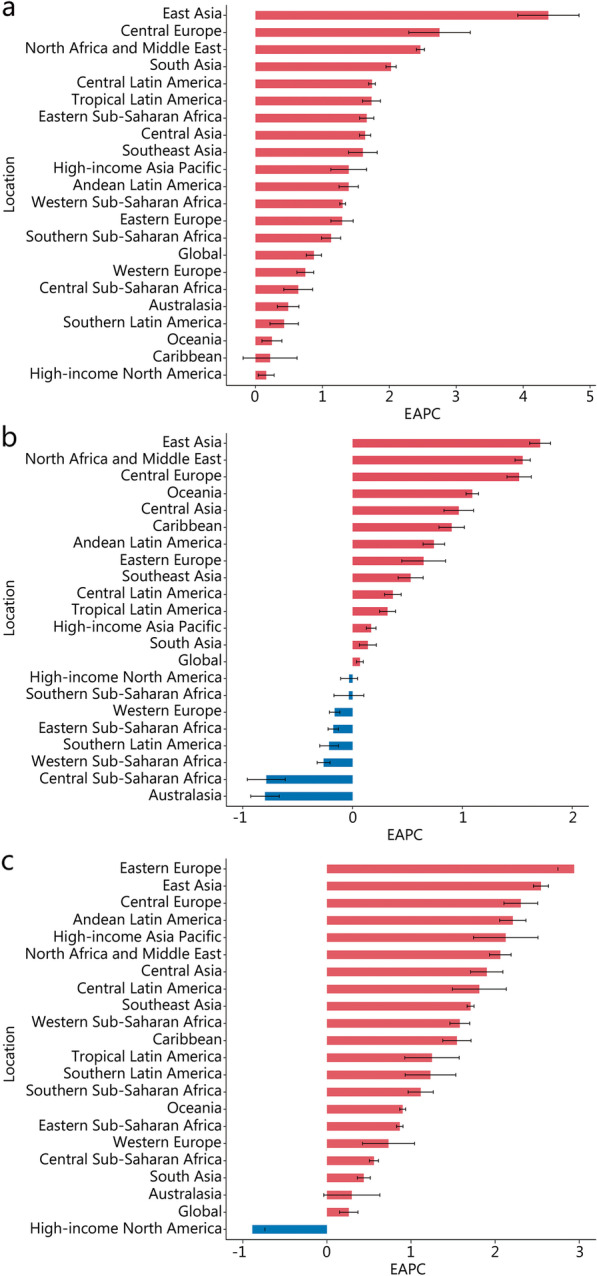
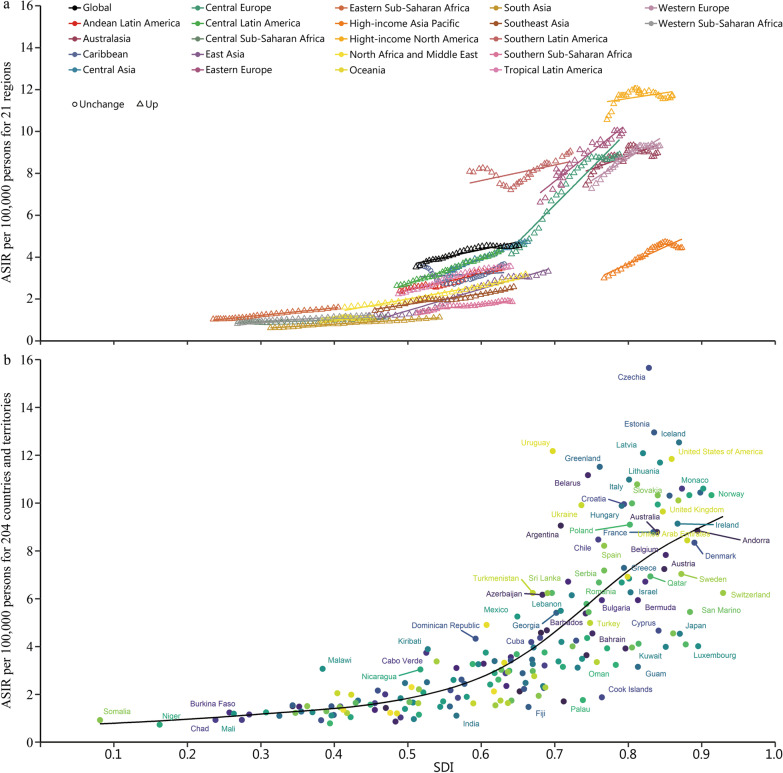
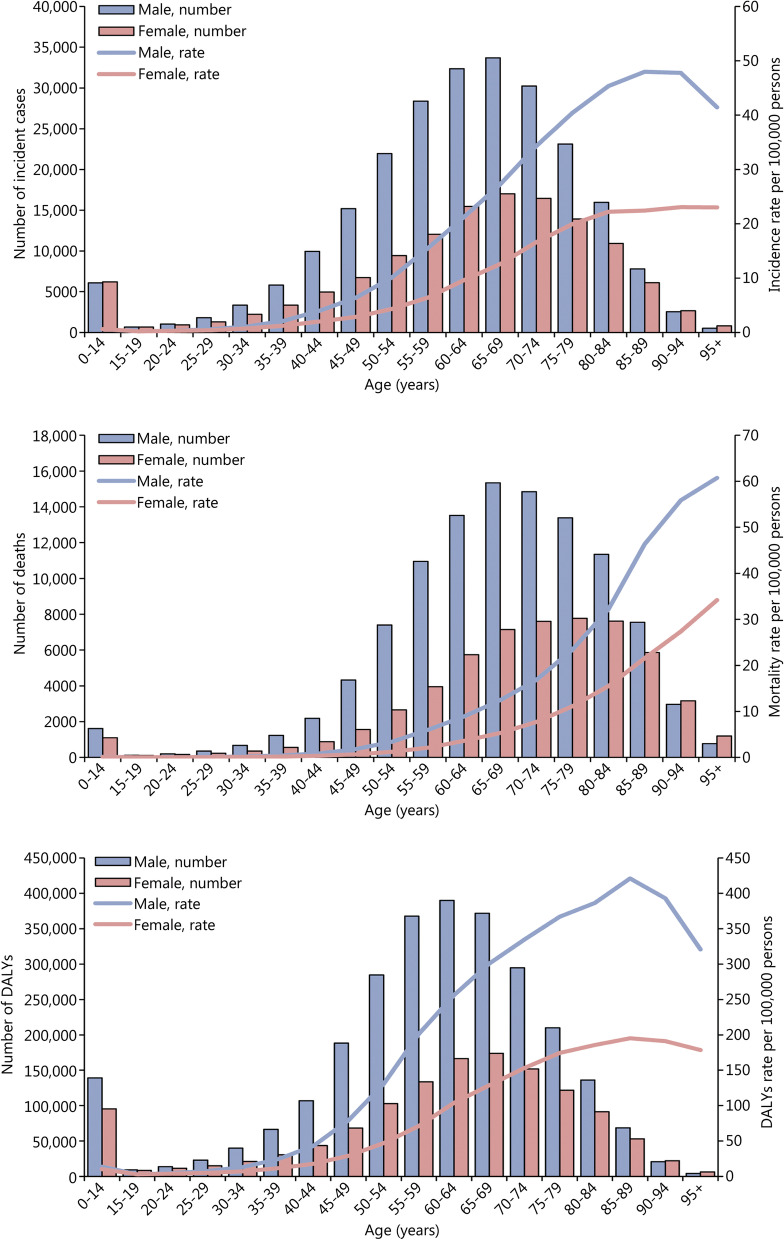
Results: Compared with 1990, the global incident cases in 2019 were higher by 154.78%, 123.34%, and 169.11% for kidney, bladder, and prostate cancers, respectively. During the 30-year study period, there was a downward trend in ASMR and ASDR for bladder cancer (EAPC = - 0.68 and - 0.83, respectively) and prostate cancer (EAPC = - 0.75 and - 0.71, respectively), but an upward trend for kidney cancer (EAPC = 0.35 and 0.12, respectively). Regions and countries with higher SDI had higher incidence, mortality, and DALYs for all three types of cancers. The burden of bladder and prostate cancers was mainly distributed among older men, whereas the burden of kidney cancer increased among middle-aged men. Smoking related mortality and DALYs decreased, but high body mass index (BMI) and high fasting plasma glucose (FPG) related mortality and DALYs increased among kidney, bladder, and prostate cancers during the study period.
Conclusions: Kidney, bladder, and prostate cancers remain major global public health challenges, but with distinct trend for different disease entity across different regions and socioeconomic status. More proactive intervention strategies, at both the administrative and academic levels, based on the dynamic changes, are needed.
Keywords: Bladder cancer; Disability-adjusted life-years; Genitourinary cancer; Global Burden of Disease; Incidence; Kidney cancer; Mortality; Prostate cancer.
© 2021. The Author(s).
Conflict of interest statement
The authors declare that they have no competing interests.
Figures
References
-
- Fitzmaurice C, Abate D, Abbasi N, Abbastabar H, Abd-Allah F, Abdel-Rahman O, et al. Global, regional, and national cancer incidence, mortality, years of life lost, years lived with disability, and disability-adjusted life-years for 29 cancer groups, 1990 to 2017: a systematic analysis for the Global Burden of Disease Study. JAMA Oncol. 2019;5(12):1749–1768. doi: 10.1001/jamaoncol.2019.2996. - DOI - PMC - PubMed
MeSH terms
LinkOut - more resources
Full Text Sources
Medical
Miscellaneous
