Review
. 2021 Oct 11;35(4):238-249.
doi: 10.1055/s-0041-1735818. eCollection 2021 Nov.

Mandibular Fractures: Diagnosis and Management

Affiliations
Review

Mandibular Fractures: Diagnosis and Management

Kanvar Panesar et al. Semin Plast Surg. .

Abstract

Accurate evaluation, diagnosis, and management of mandibular fractures is essential to effectively restore an individual's facial esthetics and function. Understanding of surgical anatomy, fracture fixation principles, and the nuances of specific fractures with respect to various patient populations can aid in adequately avoiding complications such as malocclusion, non-union, paresthesia, and revision procedures. This article reviews comprehensive mandibular fracture assessment, mandibular surgical anatomy, fracture fixation principles, management considerations, and commonly encountered complications. In addition, this article reviews emerging literature examining 3-dimensional printing and intraoperative imaging.

Keywords: craniomaxillofacial trauma; facial trauma; mandible; mandibular fracture; maxillofacial injury.


Conflict of interest statement

Conflict of Interest None declared.

Figures
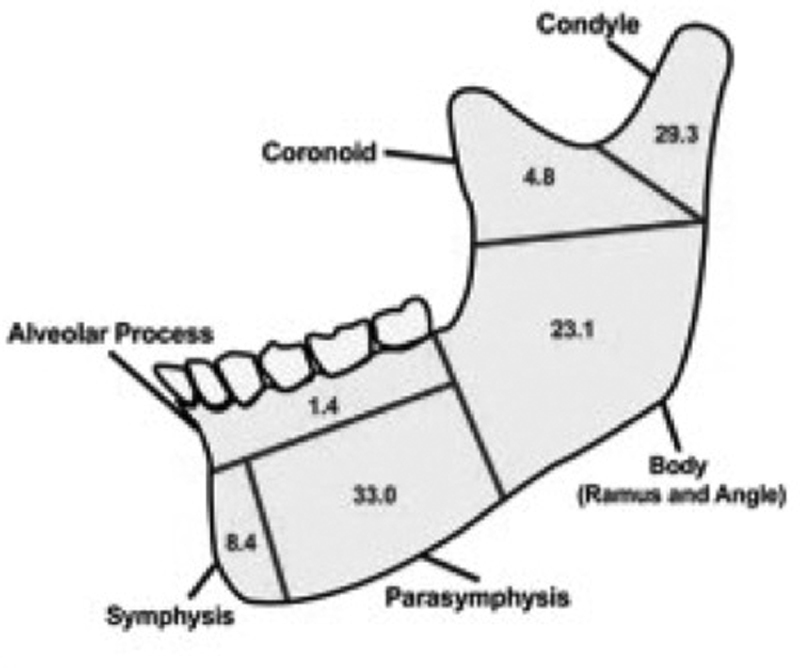
Fig. 1
Fig. 1
Frequency of mandibular fracture by location (Image courtesy: Avery et al. 80 ).
Fig. 2
Fig. 2
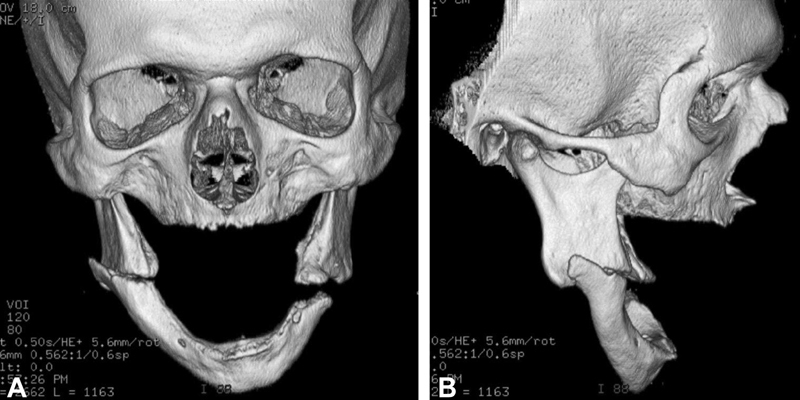
Bilateral mandibular fractures in an edentulous 55-year-old man. The anterior mandibular segment was pulled inferiorly by the suprahyoid muscles and resulted in airway obstruction.
Fig. 3
Fig. 3
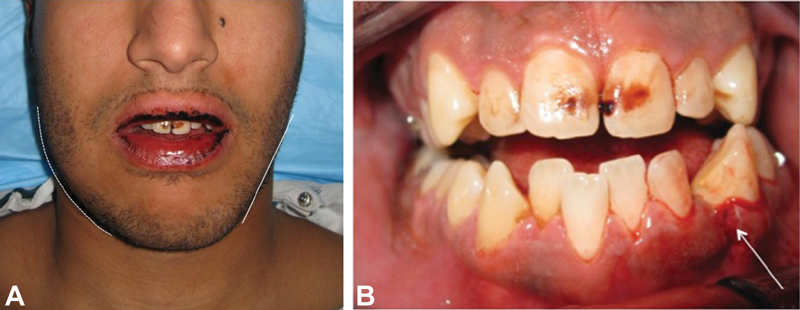
Frontal and intraoral views of a 19-year-old male patient with bilateral mandibular fractures involving the right mandibular angle and left mandibular parasymphysis. There is asymmetry of the lower facial soft tissues, with loss of the mandibular inferior border contour on the right (dashed line) relative to the left (solid line). Intraorally, there is a gingival laceration and step at the parasymphysis, between the left mandibular canine and lateral incisor (arrow).
Fig. 4
Fig. 4
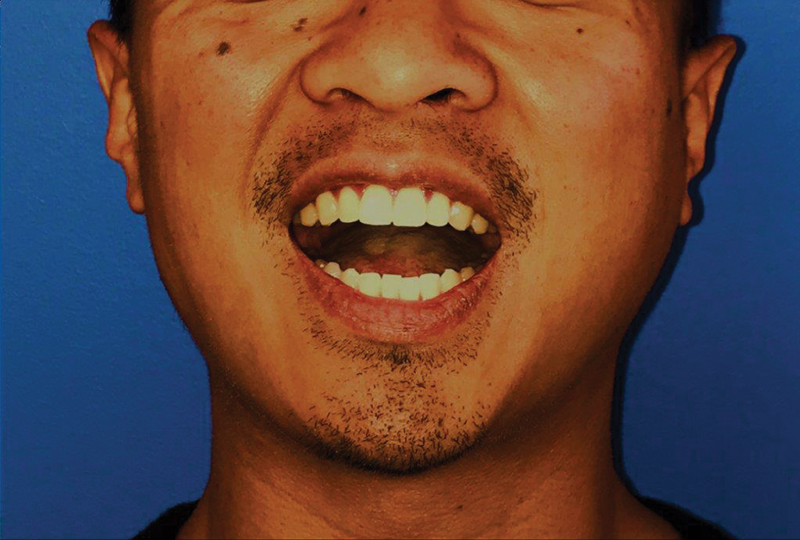
Trismus (limited mouth opening) may be a frequent exam finding in patients with mandibular fractures, particularly those involving the angle or ramus-condyle unit. This patient sustained a left-sided subcondylar fracture. Maximal incisal opening was 20 mm. The mandibular dental midline deviates toward the fracture with opening, due to the unopposed motion of the right lateral pterygoid muscle.
Fig. 5
Fig. 5
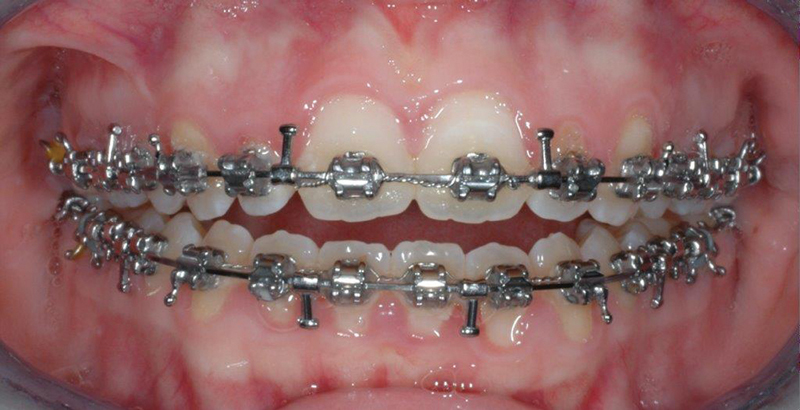
Assessment of premorbid occlusion is readily accomplished with careful history and, if available, dental or orthodontic records. Anterior open bites may be the result of bilateral fractures involving the condyles with posterior shortening of the rami. Anterior open bites that are premorbid may be identified by the presence of mammelons (rounded protuberances on the incisal edges) on the incisors, as seen in this orthognathic surgery patient.
Fig. 6
Fig. 6
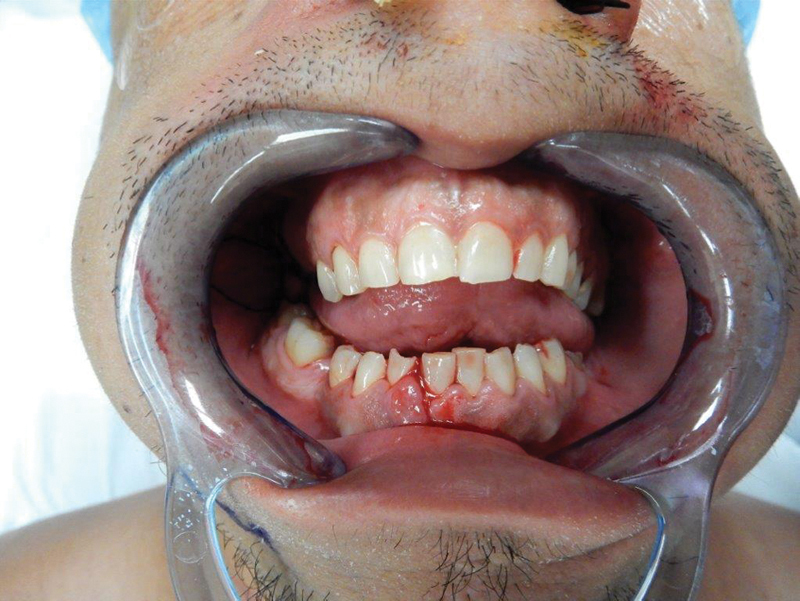
Intraoral assessment may reveal the site of the fracture. Gingival lacerations, vestibular or sublingual ecchymoses, and/or steps at the occlusal plane suggest a bony injury. Bimanual palpation across the suspected fracture site may demonstrate independent mobility of the mandibular segments. The presenting anterior open bite is likely related to the trauma, as there is evidence of wear on the incisal edges of the anterior dentition.
Fig. 7
Fig. 7
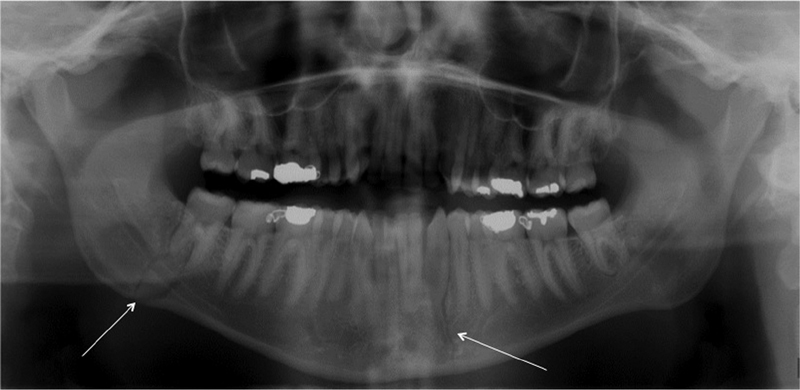
Panoramic radiographs may be useful for demonstrating fractures of the mandible, but frequently do not provide sufficient detail regarding displacement in multiple dimensions. This patient has right mandibular angle and left mandibular parasymphysis fractures, which are easily visualized on the panoramic view (arrows).
Fig. 8
Fig. 8
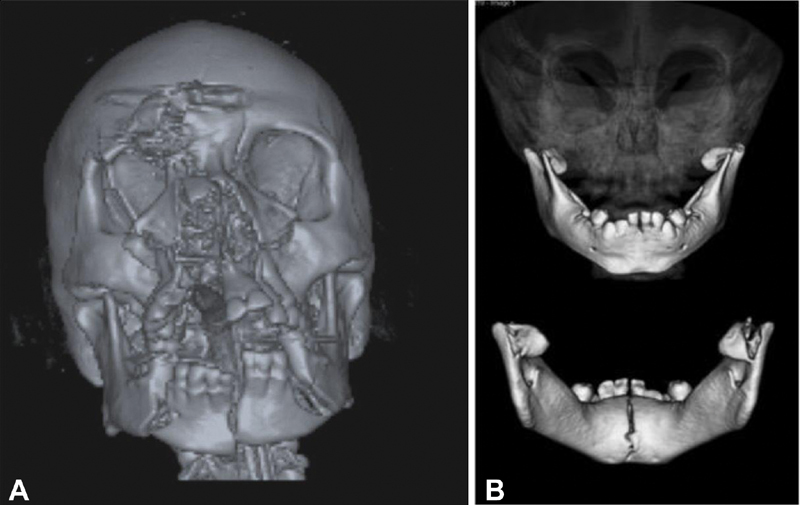
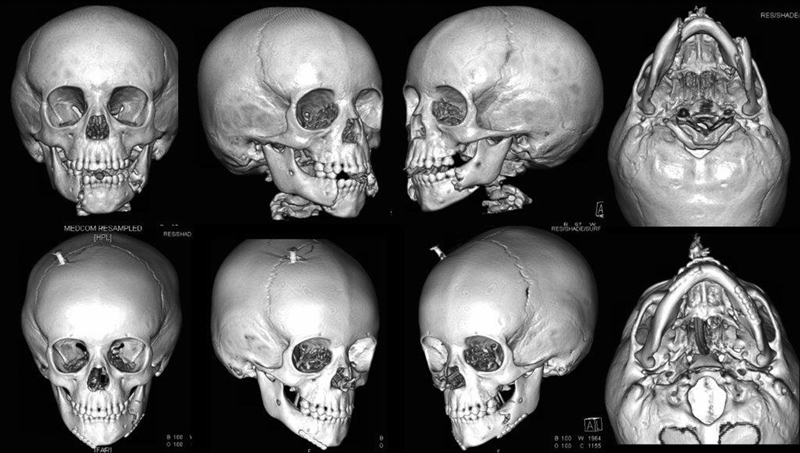
Multi-detector computed tomography scans have emerged as the gold standard for diagnosing mandibular injuries and are particularly useful in the setting of complex injuries such as high energy mechanisms ( A , facial gunshot wound). Three-dimensional imaging is also useful in pediatric patients, where plain film imaging may not be tolerated or may be non-diagnostic due to the overlap between developing teeth and fracture sites ( B , bilateral condylar head fractures and greenstick symphyseal fracture in an infant).
Fig. 9
Fig. 9
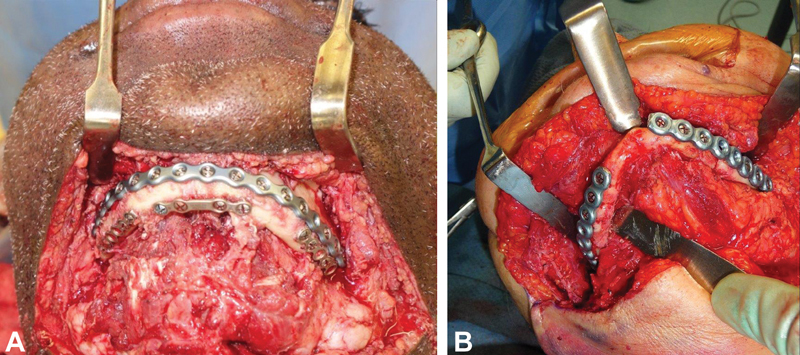
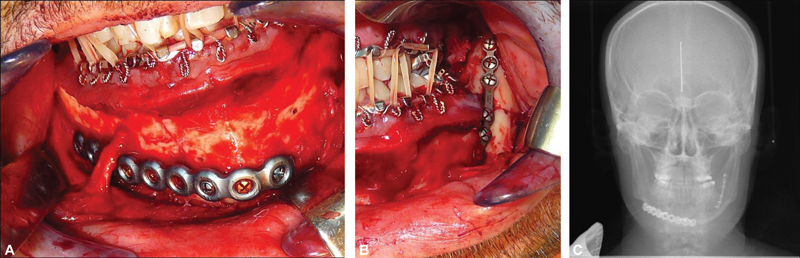
Various methods exist for obtaining rigid fixation of mandibular fractures. In high energy injuries, such as this comminuted mandibular fracture secondary to a gunshot wound ( A ), interfragmentary fixation was used to align the different segments of the mandibular and rigid fixation was achieved with the addition of a locking plate along the inferior border. In edentulous patients, reconstruction plates with bicortical screws should be placed as laterally and inferiorly as possible, to avoid interference with denture fabrication ( B ).
Fig. 10
Fig. 10
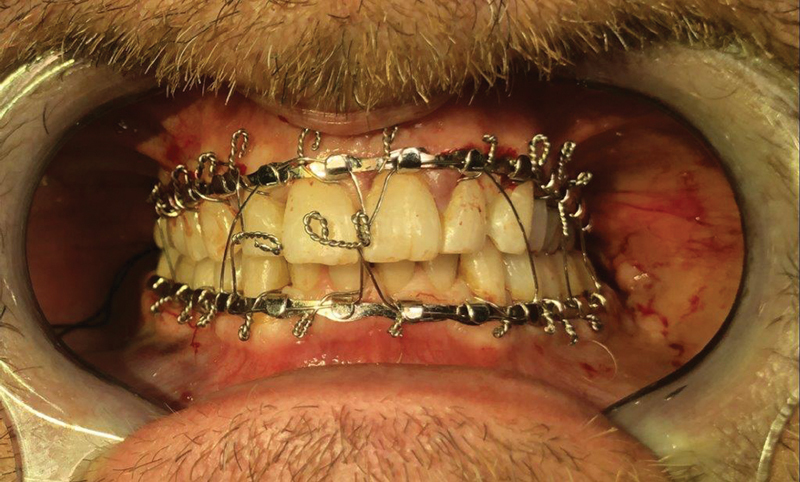
Intermaxillary fixation typically utilizes appliances that allow for coordinated alignment of the maxillary and mandibular dental arches. Intermaxillary fixation can be achieved with stainless steel wire loops, as shown here, or heavy elastics.
Fig. 11
Fig. 11
Varied fixation strategies were used in this patient with a right mandibular body and left mandibular angle fracture. The body fracture was fixed with a single 2.3 mm thick locking plate with bicortical screws ( A ). The left mandibular angle fracture was managed using the Champy technique, a method of semi-rigid fixation that is frequently used for management of angle fractures that are favorably oriented. The technique utilizes a single miniplate with screws placed along the internal oblique ridge proximally and external oblique ridge distally ( B ). The proximal and distal screws are located at near 90 degree angles to each other ( C ).
Fig. 12
Fig. 12
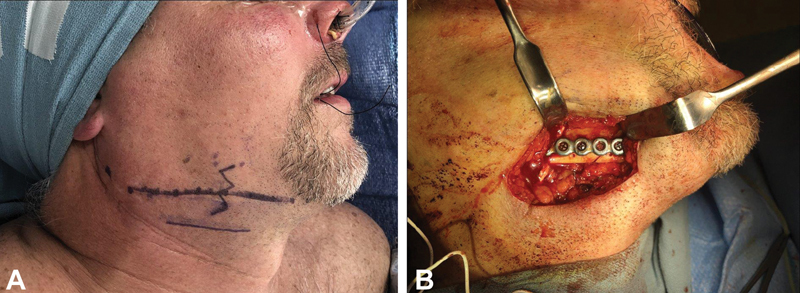
The transcervical, or Risdon, incision is typically placed 1.5–2 cm below the inferior border of the mandible ( A ), to prevent iatrogenic injury to the marginal mandibular nerve, which will run superior to this. When planning the extraoral approach in the setting of a displaced fracture, it is critical to place the incision at the anticipated location of the inferior border, as displacement will alter the position of the inferior border relative to its native location. Transcervical approaches to the mandible are frequently employed to allow adequate visualization of the buccal, inferior, and lingual aspects of the fracture ( B ).
Fig. 13
Fig. 13
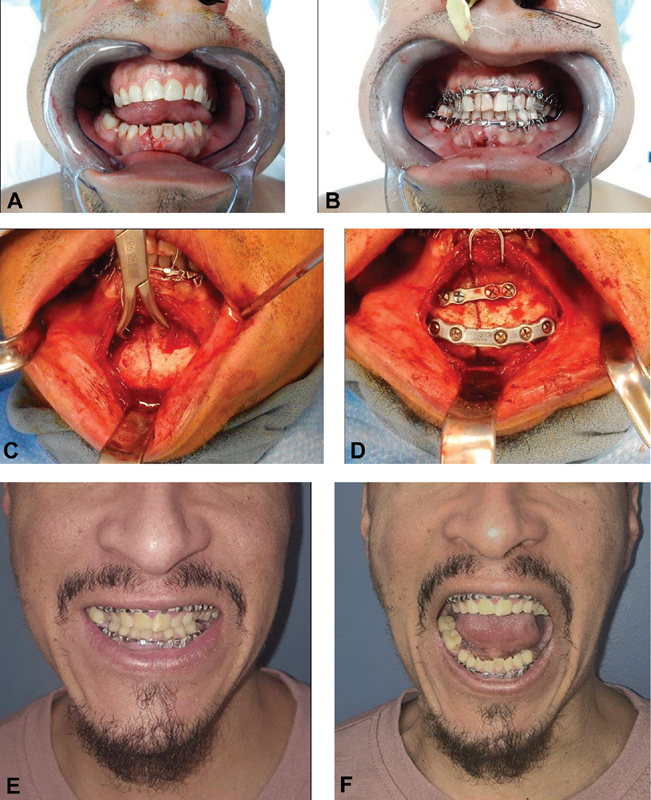
This patient sustained symphyseal and bilateral mandibular condylar fractures following an assault. The symphyseal fracture was managed with open reduction and placement of rigid internal fixation. The condylar fractures were managed with closed reduction and use of intermaxillary fixation with wires for 2 weeks, then heavy elastics for two weeks with initaition of jaw stretching exercises, and two weeks of night-time elastics with jaw stretching exercises 3 times daily. At 6 weeks post-operatively, the patient had a stable occlusion consistent with the preinjury state and preserved maximal incisal opening of 45 mm without deviation or pain.
Fig. 14
Fig. 14
This two-year-old patient sustained displaced bilateral mandibular body fractures following a motor vehicle collision. The fractures were managed with open reduction and placement of internal fixation using miniplates with monocortical screws placed at the inferior border. Following appropriate healing, as evidenced clinically by lack of tenderness or mobility at the fracture sites and uniform mandibular movement, the plates were removed.
Fig. 15
Fig. 15
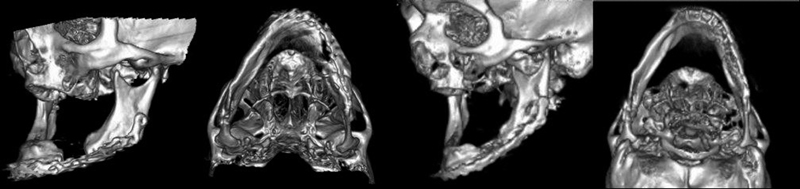
This edentulous patient developed an infected non-union following ORIF of a left mandibular body fracture. He was treated initially with resection of the involved devitalized bone and placement of a spanning reconstruction plate (left and center left). Following tailored treatment with intravenous antibiotics, the segmental defect was reconstructed using autologous iliac crest bone graft (center right and right).

References

    1. Kim K, Ibrahim A MS, Koolen P GL, Lee B T, Lin S J. Trends in facial fracture treatment using the American College of Surgeons National Surgical Quality Improvement Program database. Plast Reconstr Surg. 2014;133(03):627–638. - PubMed
    1. Afrooz P N, Bykowski M R, James I B, Daniali L N, Clavijo-Alvarez J A. The Epidemiology of Mandibular Fractures in the United States, Part 1: A Review of 13,142 Cases from the US National Trauma Data Bank. J Oral Maxillofac Surg. 2015;73(12):2361–2366. - PubMed
    1. Iida S, Kogo M, Sugiura T, Mima T, Matsuya T. Retrospective analysis of 1502 patients with facial fractures. Int J Oral Maxillofac Surg. 2001;30(04):286–290. - PubMed
    1. Kaura S, Kaur P, Bahl R, Bansal S, Sangha P. Retrospective Study of Facial Fractures. Ann Maxillofac Surg. 2018;8(01):78–82. - PMC - PubMed
    1. Kim B J, Lee S I, Chung C M. A Retrospective Analysis of 303 Cases of Facial Bone Fracture: Socioeconomic Status and Injury Characteristics. Arch Craniofac Surg. 2015;16(03):136–142. - PMC - PubMed