


Use of Ketamine Infusions for Treatment of Complex Regional Pain Syndrome: A Systematic Review
- PMID: 34820225
- PMCID: PMC8601938
- DOI: 10.7759/cureus.18910
Use of Ketamine Infusions for Treatment of Complex Regional Pain Syndrome: A Systematic Review
Abstract
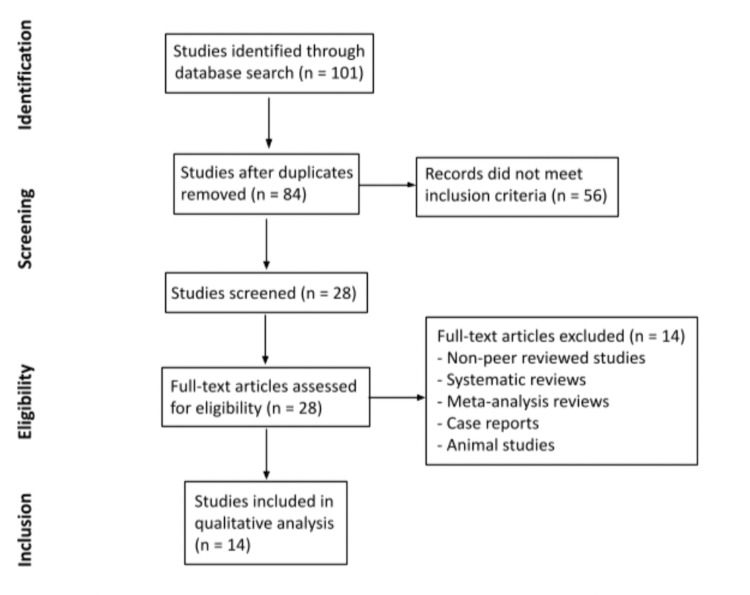
This systematic review aims to review clinical studies on the use of ketamine infusion for patients with treatment-resistant complex regional pain syndrome (CRPS). The following systematic review was registered on the International Prospective Register of Systematic Reviews (PROSPERO) (CRD42021228470). Studies for the systematic review were identified through three databases: PubMed, Cumulative Index of Nursing and Allied Health Literature (CINAHL), and Cochrane Reviews. Inclusion criteria for studies consisted of randomized clinical trials or cohort studies that conducted trials on the use of ketamine infusion for pain relief in patients with CRPS. Exclusion criteria for studies included any studies that were systematic reviews, meta-analyses, case reports, literature reviews, or animal studies. In the included studies, the primary outcome of interest was the post-drug administration pain score. In this systematic review, 14 studies met the inclusion criteria and were reviewed. In these studies, the dosage of ketamine infusion used ranged from 0.15 mg/kg to 7 mg/kg with the primary indication being the treatment of CRPS. In 13 of the studies, ketamine infusion resulted in a decrease in pain scores and relief of symptoms. Patients who received ketamine infusion for treatment-resistant CRPS self-reported adequate pain relief with treatment. This suggests that ketamine infusion may be a useful form of treatment for patients with no significant pain relief with other conservative measures. Future large-scale studies, including randomized double-blind placebo-controlled trials on the use of ketamine infusion for CRPS, must be conducted in a large-scale population to further assess the effectiveness of ketamine infusion in these populations.
Keywords: chronic pain; complex regional pain syndrome (crps); infusion; ketamine; pain syndrome.
Copyright © 2021, Chitneni et al.
Conflict of interest statement
The authors have declared that no competing interests exist.
Figures
References
-
- Prevalence of specific types of pain diagnoses in a sample of United States adults. Murphy KR, Han JL, Yang S, et al. https://www.painphysicianjournal.com/current/pdf?article=NDExNQ%3D%3D&jo... Pain Physician. 2017;20:0–68. - PubMed
-
- Ketalar (ketamine hydrochloride) injection. [ Dec; 2020 ];http://www.accessdata.fda.gov/drugsatfda_docs/label/2017/016812s043lbl.pdf 2020
Publication types
LinkOut - more resources
Full Text Sources
Medical
Miscellaneous