


Mechanisms and Efficacy of Intravenous Lipid Emulsion Treatment for Systemic Toxicity From Local Anesthetics
- PMID: 34820396
- PMCID: PMC8606423
- DOI: 10.3389/fmed.2021.756866
Mechanisms and Efficacy of Intravenous Lipid Emulsion Treatment for Systemic Toxicity From Local Anesthetics
Abstract
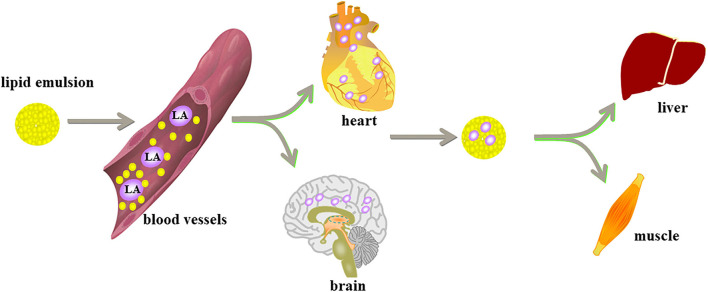
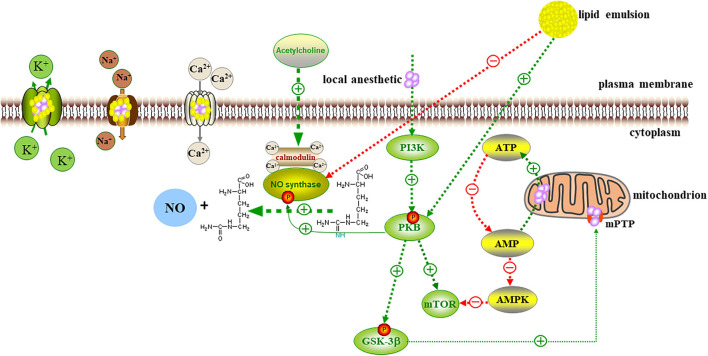
Local anesthetics are widely used clinically for perioperative analgesia to achieve comfort in medical treatment. However, when the concentration of local anesthetics in the blood exceeds the tolerance of the body, local anesthetic systemic toxicity (LAST) will occur. With the development and popularization of positioning technology under direct ultrasound, the risks and cases of LAST associated with direct entry of the anesthetic into the blood vessel have been reduced. Clinical occurrence of LAST usually presents as a series of severe toxic reactions such as myocardial depression, which is life-threatening. In addition to basic life support (airway management, advanced cardiac life support, etc.), intravenous lipid emulsion (ILE) has been introduced as a treatment option in recent years and has gradually become the first-line treatment for LAST. This review introduces the mechanisms of LAST and identifies the clinical symptoms displayed by the central nervous system and cardiovascular system. The paper features the multimodal mechanism of LAST reversal by ILE, describes research progress in the field, and identifies other anesthetics involved in the resuscitation process of LAST. Finally, the review presents key issues in lipid therapy. Although ILE has achieved notable success in the treatment of LAST, adverse reactions and contraindications also exist; therefore, ILE requires a high degree of attention during use. More in-depth research on the treatment mechanism of ILE, the resuscitation dosage and method of ILE, and the combined use with other resuscitation measures is needed to improve the efficacy and safety of clinical resuscitation after LAST in the future.
Keywords: bupivacaine; lipid emulsion; local anesthetic systemic toxicity; mechanism; resuscitation.
Copyright © 2021 Liu, Zhang, Yu, Niu and Yu.
Conflict of interest statement
The authors declare that the research was conducted in the absence of any commercial or financial relationships that could be construed as a potential conflict of interest.
Figures
References
Publication types
LinkOut - more resources
Full Text Sources
