


The emerging role of proteases in α1-antitrypsin deficiency and beyond
- PMID: 34820446
- PMCID: PMC8607071
- DOI: 10.1183/23120541.00494-2021
The emerging role of proteases in α1-antitrypsin deficiency and beyond
Abstract
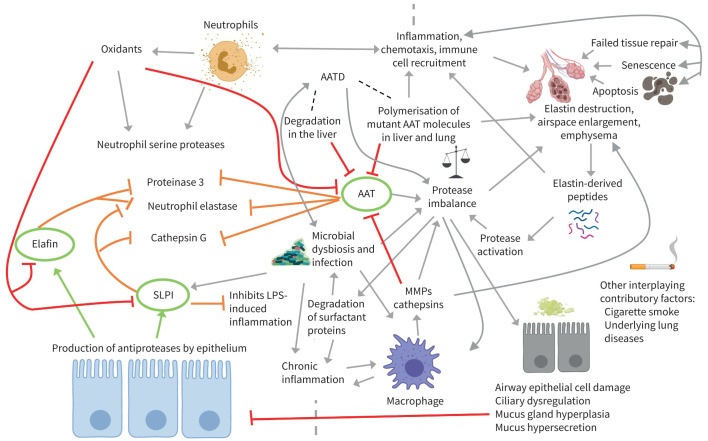
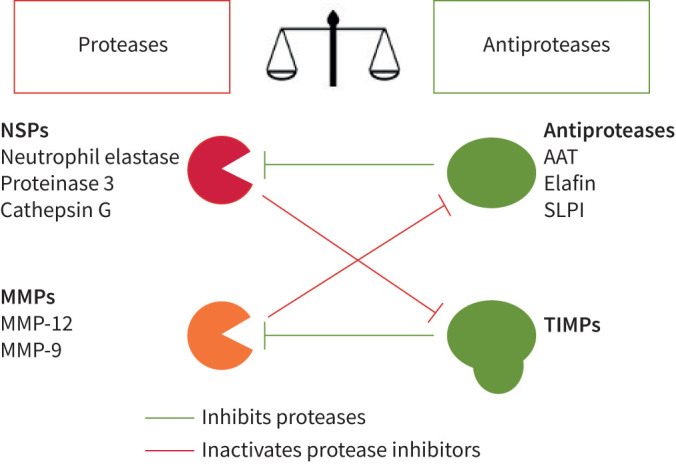
α1-Antitrypsin deficiency (AATD) has been historically under-recognised and under-diagnosed; recently it has begun to receive greater interest in terms of attempts at deeper elucidation of pathology and treatment options. However, the concept of disease phenotypes within AATD (emphysema, chronic bronchitis, bronchiectasis or a combination of phenotypes) has not been proposed or studied. Of the three neutrophil serine proteases, neutrophil elastase was historically believed to be the sole contributor to disease pathology in AATD. Recently, Proteinase-3 has been increasingly studied as an equal, if not greater, contributor to the disease process. Cathepsin G, however, has not been extensively evaluated in this area. Matrix metalloproteinases have also been mentioned in the pathogenesis of AATD but have not been widely explored. This article considers the available evidence for differential protease activity in patients with AATD, including the contribution to distinct phenotypes of the disease. Owing to limited literature in this area, extrapolations from studies of other chronic lung diseases with similar phenotypes, including COPD and bronchiectasis, have been made. We consider a new framework of understanding defined by protease-driven endotypes of disease which may lead to new opportunities for precision medicine.
Copyright ©The authors 2021.
Conflict of interest statement
Conflict of interest: A. Fazleen has nothing to disclose. Conflict of interest: T. Wilkinson reports grants and personal fees from AstraZeneca during the conduct of the study; and personal fees from and a directorship of MMH, grants and personal fees from GSK, AZ and Synairgen, and personal fees from BI, outside the submitted work.
Figures
References
-
- Laurell CB, Eriksson S. The electrophoretic α1-globulin pattern of serum in α1-antitrypsin deficiency. Scand J Clin Lab Invest 2009; 15: 132–140. doi: 10.1080/00365516309051324 - DOI
Publication types
LinkOut - more resources
Full Text Sources