


Analysis of the potential inappropriate use of medications in pediatric outpatients in China
- PMID: 34823520
- PMCID: PMC8614069
- DOI: 10.1186/s12913-021-07300-8
Analysis of the potential inappropriate use of medications in pediatric outpatients in China
Abstract
Background: The appropriate use of medications is essential in children. Yet, detailed information on how drugs are being prescribed and dispensed to pediatric populations is not documented in China.
Aim: The study objective was to analyze the details of medicine use and categorize the types of inappropriate use of medications on children.
Methods: A retrospective cross-sectional study was conducted on the prescriptions of pediatric outpatients aged < 18 years from 2019 to 2020 at a major Chinese tertiary academic center. Each age group's demographic and clinical characteristics were collected, and the ratios of inappropriate prescriptions were analyzed.
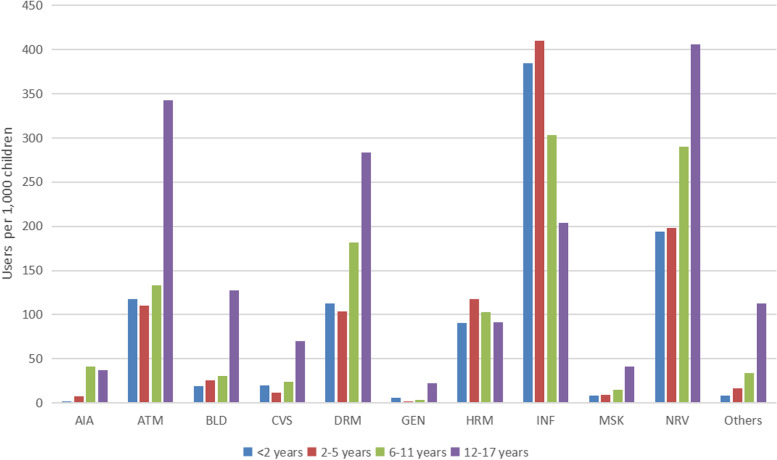
Results: The total number of pediatric outpatients was 652,152, and 49.37% (322000) were prescribed medications, in which the most widely used medicines were respiratory, anti-infectives, and Traditional Chinese Medicines (TCMs). The prevalence rate of inappropriate prescriptions reached 20.49%, and in 2019 it was higher (21.71%) than that in 2020 (18.36%). The top three common inappropriate categories were indication-related off-label drug use, improper administration frequency, and overdosing, accounting for 67.93, 17.80 and 11.06% of all inappropriate prescriptions, respectively. The inappropriate prescriptions were more likely seen in patients aged 2-5 years and respiratory medicines.
Conclusions: The study findings indicate that inappropriate drug use in pediatric outpatients is still common, and great attention needs to be paid. More prospective trials are required to identify the effectiveness, safety, and necessity of off-label drug use of medicines in children.
Keywords: Drug utilization; Inappropriate medicine use; Outpatient; Pediatric; Prescription.
© 2021. The Author(s).
Conflict of interest statement
The authors declare that they have no competing interests.
Figures
References
-
- National Bureau of Statistics. Main Data Bulletin of the Seventh National Population Census. 2010 .http://www.stats.gov.cn/tjsj/zxfb/202105/t20210510_1817181.html. Accessed 3 June 2021.
-
- Wang XL, Cao LJ, Liang YG. Establishing risk management system and insurance system for pediatric drugs in China. China Food Drug Administration Magazine. 2021;1:28–34.
-
- Xu XW, Wang YM, Li DK. Exploration of rational drug use in pediatrics. Chin J Clin Pharm. 2001;10(2):125–128.
-
- Berthe-Aucejo A, Nguyen PKH, Angoulvant F, Bellettre X, Albaret P, Weil T, et al. Retrospective study of irrational prescribing in French paediatric hospital: prevalence of inappropriate prescription detected by pediatrics: omission of prescription and inappropriate prescription (POPI) in the emergency unit and in the ambulatory setting. BMJ Open. 2019;9(3):e019186. doi: 10.1136/bmjopen-2017-019186. - DOI - PMC - PubMed
MeSH terms
Substances
LinkOut - more resources
Full Text Sources
Medical
