


MicroRNA 146a is associated with diabetic complications in type 1 diabetic patients from the EURODIAB PCS
- PMID: 34823560
- PMCID: PMC8614036
- DOI: 10.1186/s12967-021-03142-4
MicroRNA 146a is associated with diabetic complications in type 1 diabetic patients from the EURODIAB PCS
Abstract
Background: MicroRNA-146a-5p (miR-146a-5p) is a key regulator of inflammatory processes. Expression of miR-146a-5p is altered in target organs of diabetic complications and deficiency of miR-146a-5p has been implicated in their pathogenesis. We investigated if serum miR-146a-5p levels were independently associated with micro/macrovascular complications of type 1 diabetes (DM1).
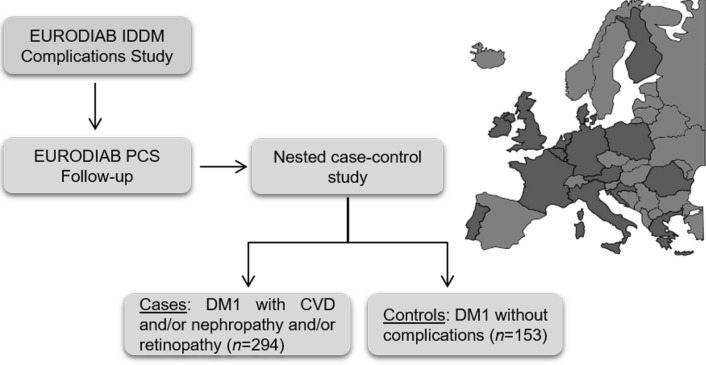
Methods: A nested case-control study from the EURODIAB PCS of 447 DM1 patients was performed. Cases (n = 294) had one or more complications of diabetes, whereas controls (n = 153) did not have any complication. Total RNA was isolated from all subjects and miR-146a-5p levels measured by qPCR. Both the endogenous controls U6 snRNA and the spike (Cel-miR-39) were used to normalize the results. Logistic regression analysis was carried out to investigate the association of miR-146a-5p with diabetes complications.
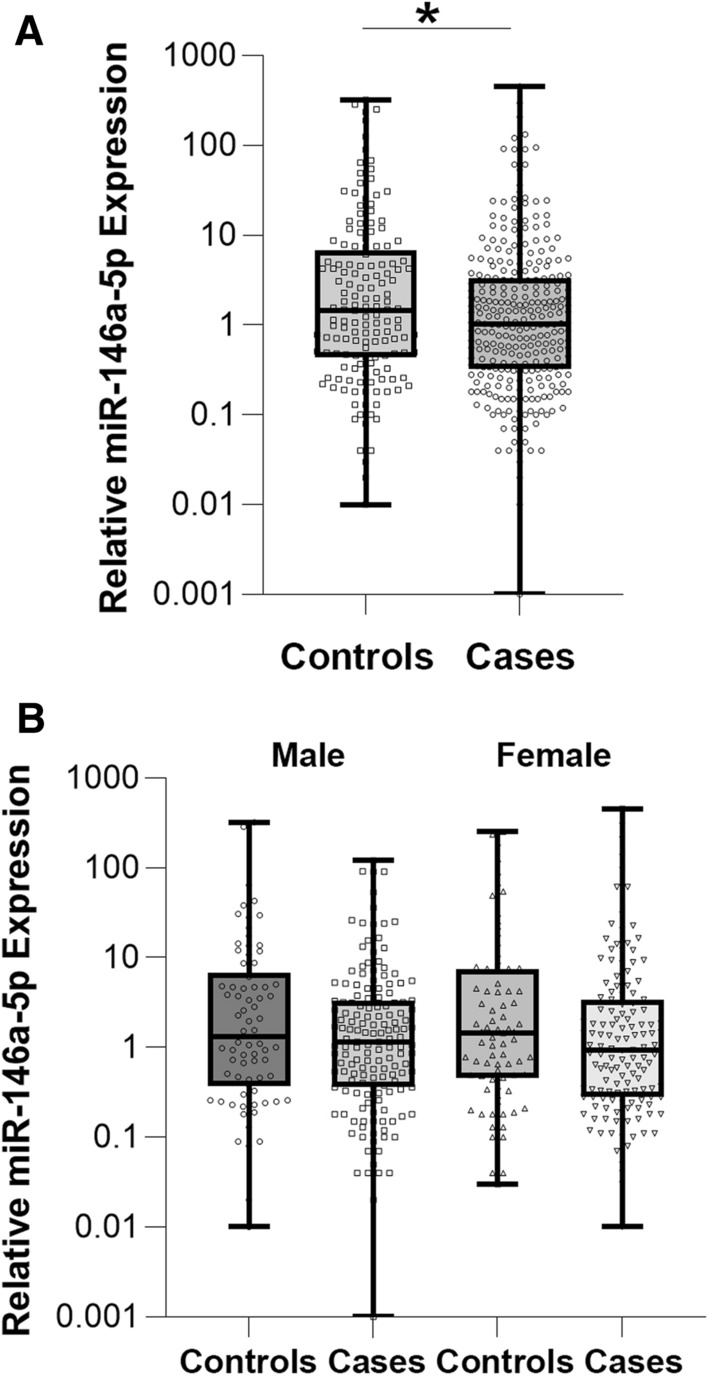
Results: MiR-146a-5p levels were significantly lower in cases [1.15 (0.32-3.34)] compared to controls [1.74 (0.44-6.74) P = 0.039]. Logistic regression analysis showed that levels of miR-146a-5p in the upper quartile were inversely associated with reduced odds ratio (OR) of all complications (OR 0.34 [95% CI 0.14-0.76]) and particularly with cardiovascular diseases (CVD) (OR 0.31 [95% CI 0.11-0.84]) and diabetic retinopathy (OR 0.40 [95% CI 0.16-0.99]), independently of age, sex, diabetes duration, A1c, hypertension, AER, eGFR, NT-proBNP, and TNF-α.
Conclusions: In this large cohort of DM1 patients, we reported an inverse and independent association of miR-146a-5p with diabetes chronic complications and in particular with CVD and retinopathy, suggesting that miR-146a-5p may be a novel candidate biomarker of DM1 complications.
Keywords: Cardiovascular diseases; MicroRNAs; Retinopathy; Type 1 diabetes.
© 2021. The Author(s).
Conflict of interest statement
The authors declare no conflict of interest. The funders had no role in the design of the study; in the collection, analyses, or interpretation of data; in the writing of the manuscript, or in the decision to publish the results.
Figures
References
Publication types
MeSH terms
Substances
LinkOut - more resources
Full Text Sources
Medical
Research Materials
Miscellaneous
