Deep Learning Enables 60% Accelerated Volumetric Brain MRI While Preserving Quantitative Performance: A Prospective, Multicenter, Multireader Trial
- PMID: 34824098
- PMCID: PMC8805755
- DOI: 10.3174/ajnr.A7358
Deep Learning Enables 60% Accelerated Volumetric Brain MRI While Preserving Quantitative Performance: A Prospective, Multicenter, Multireader Trial
Abstract
Background and purpose: In this prospective, multicenter, multireader study, we evaluated the impact on both image quality and quantitative image-analysis consistency of 60% accelerated volumetric MR imaging sequences processed with a commercially available, vendor-agnostic, DICOM-based, deep learning tool (SubtleMR) compared with that of standard of care.
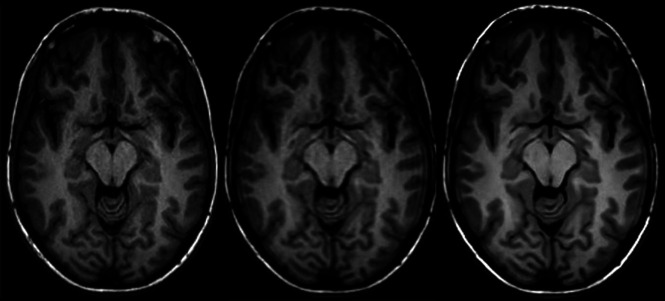
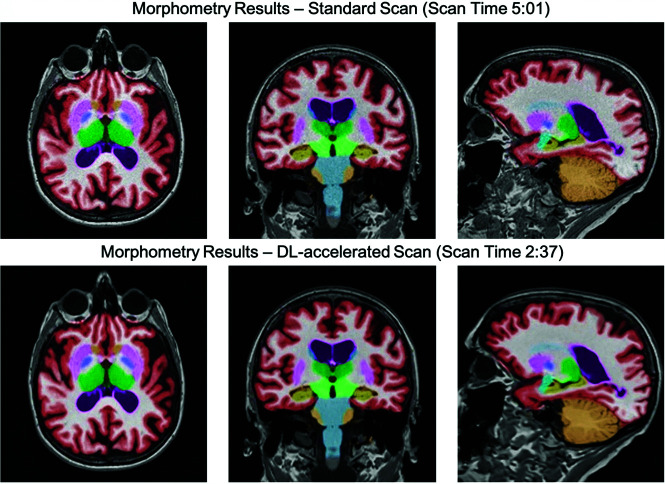
Materials and methods: Forty subjects underwent brain MR imaging examinations on 6 scanners from 5 institutions. Standard of care and accelerated datasets were acquired for each subject, and the accelerated scans were enhanced with deep learning processing. Standard of care, accelerated scans, and accelerated-deep learning were subjected to NeuroQuant quantitative analysis and classified by a neuroradiologist into clinical disease categories. Concordance of standard of care and accelerated-deep learning biomarker measurements were assessed. Randomized, side-by-side, multiplanar datasets (360 series) were presented blinded to 2 neuroradiologists and rated for apparent SNR, image sharpness, artifacts, anatomic/lesion conspicuity, image contrast, and gray-white differentiation to evaluate image quality.
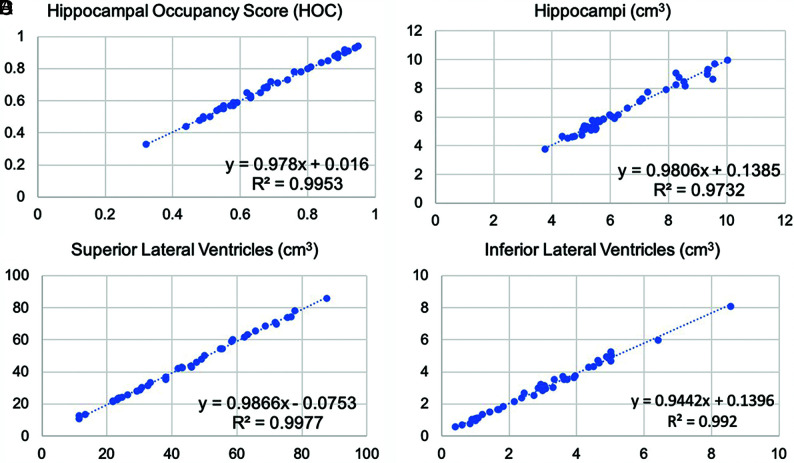
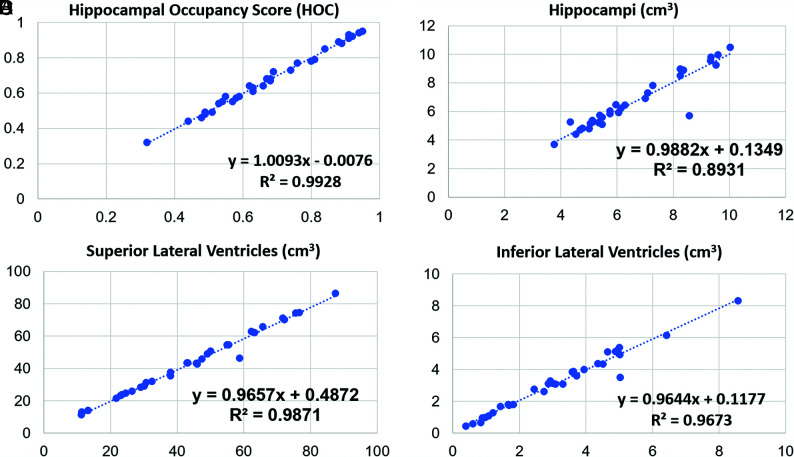
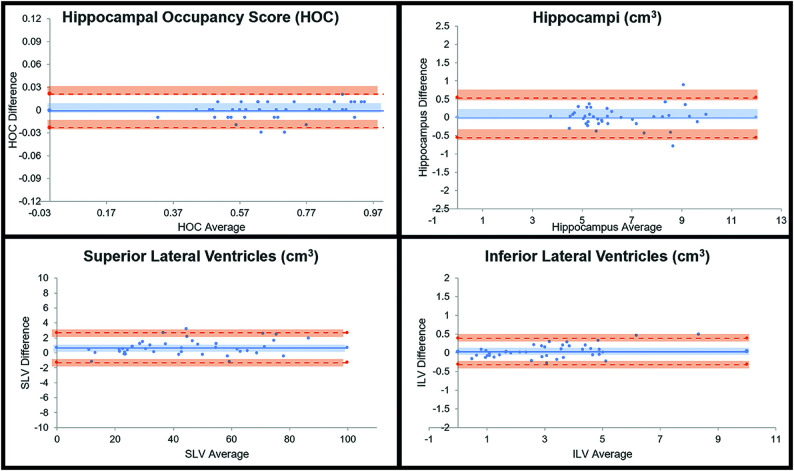
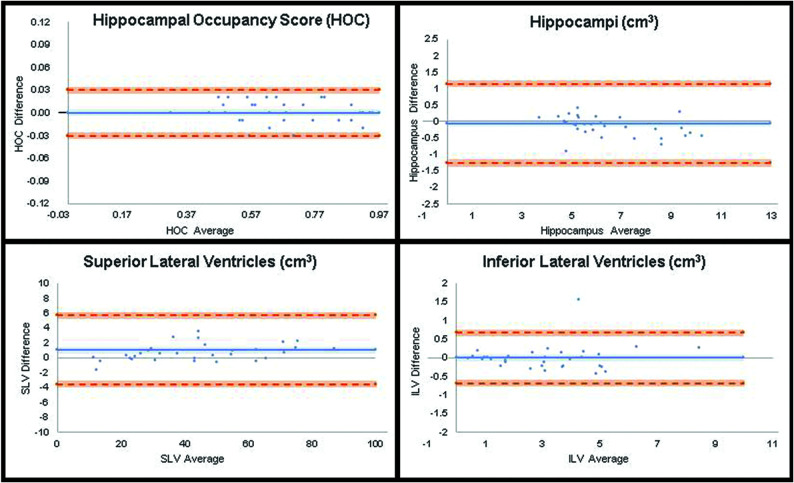
Results: Accelerated-deep learning was statistically superior to standard of care for perceived quality across imaging features despite a 60% sequence scan-time reduction. Both accelerated-deep learning and standard of care were superior to accelerated scans for all features. There was no difference in quantitative volumetric biomarkers or clinical classification for standard of care and accelerated-deep learning datasets.
Conclusions: Deep learning reconstruction allows 60% sequence scan-time reduction while maintaining high volumetric quantification accuracy, consistent clinical classification, and what radiologists perceive as superior image quality compared with standard of care. This trial supports the reliability, efficiency, and utility of deep learning-based enhancement for quantitative imaging. Shorter scan times may heighten the use of volumetric quantitative MR imaging in routine clinical settings.
© 2021 by American Journal of Neuroradiology.
Figures
References
-
- Tanenbaum LN, Bash S, Johnson B, et al. Deep learning reconstructed, 40% faster spine MR examinations match or exceed the quality of standard of care exams. In: Proceedings of the Annual Meeting of the Radiological Society of North America; November 29 to December 5, 2020; Virtual
-
- Tanenbaum LN, Bash S, Gibbs W, et al. CNN based deep learning enhances brain 3D FLAIR perceived quality, SNR and resolution at ∼30% less scan time. In: Proceedings of the Annual Meeting of the American Society of Neuroradiology, May 30 to June 4, 2020; Virtual
Publication types
MeSH terms
LinkOut - more resources
Full Text Sources