


Molecular Detection of Fluoroquinolone Resistance among Multidrug-, Extensively Drug-, and Pan-Drug-Resistant Campylobacter Species in Egypt
- PMID: 34827280
- PMCID: PMC8614916
- DOI: 10.3390/antibiotics10111342
Molecular Detection of Fluoroquinolone Resistance among Multidrug-, Extensively Drug-, and Pan-Drug-Resistant Campylobacter Species in Egypt
Abstract
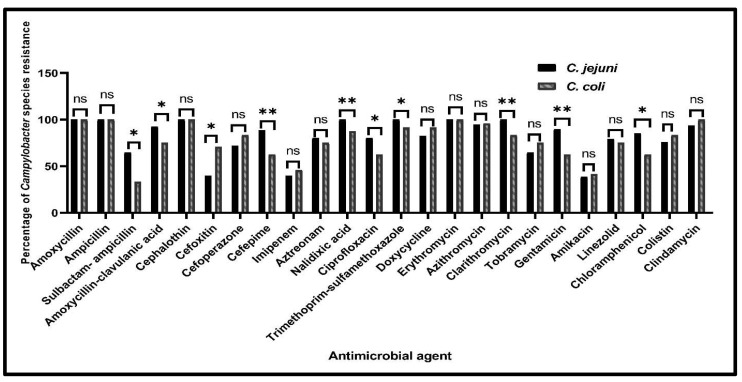
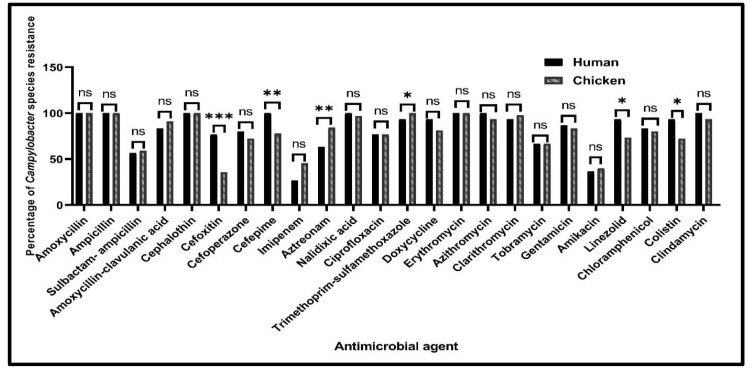
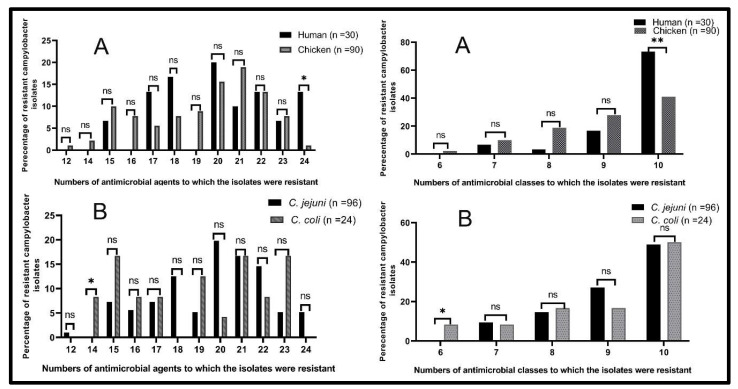
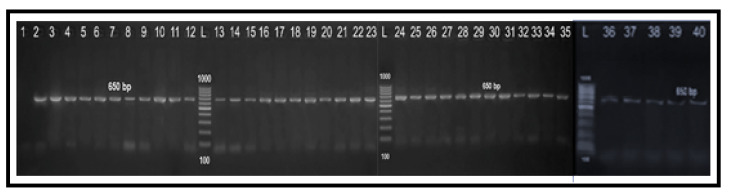
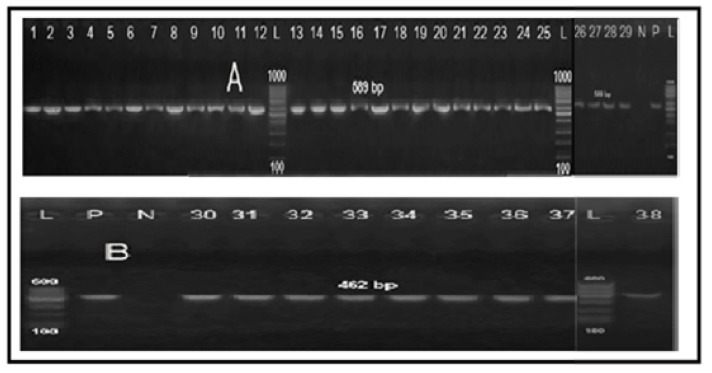
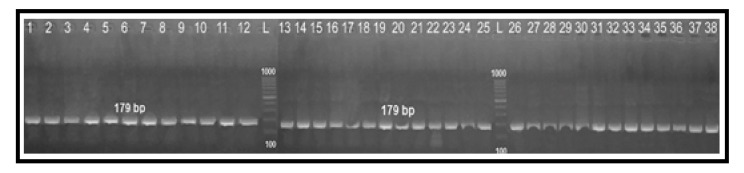
In recent times, resistant foodborne pathogens, especially of the Campylobacter species, have created several global crises. These crises have been compounded due to the evolution of multidrug-resistant (MDR) bacterial pathogens and the emergence of extensively drug-resistant (XDR) and pan-drug-resistant (PDR) strains. Therefore, this study aimed to investigate the development of resistance and the existence of both XDR and PDR among Campylobacter isolates. Moreover, we explored the use of the polymerase chain reaction-restriction fragment length polymorphism (PCR-RFLP) technique for the detection of fluoroquinolone (FQ)-resistant Campylobacter isolates. A total of 120 Campylobacter isolates were identified depending on both phenotypic and genotypic methods. Of note, cefoxitin and imipenem were the most effective drugs against the investigated Campylobacter isolates. Interestingly, the majority of our isolates (75%) were MDR. Unfortunately, both XDR and PDR isolates were detected in our study with prevalence rates of 20.8% and 4.2%, respectively. All FQ-resistant isolates with ciprofloxacin minimum inhibitory concentrations ≥4 µg/mL were confirmed by the genetic detection of gyrA chromosomal mutation via substitution of threonine at position 86 to isoleucine (Thr-86-to-Ile) using the PCR-RFLP technique. Herein, PCR-RFLP was a more practical and less expensive method used for the detection of FQ resistant isolates. In conclusion, we introduced a fast genetic method for the identification of FQ-resistant isolates to avoid treatment failure through the proper description of antimicrobials.
Keywords: Campylobacter species; FQ resistant; PCR-RFLP; PDR; gyrA.
Conflict of interest statement
The authors declare no conflict of interest.
Figures
References
-
- EFSA (European Food Safety Authority) Scientific opinion on quantification of the risk posed by broiler meat to human campylobacteriosis in the EU. EFSA J. 2010;8:1437. doi: 10.2903/j.efsa.2010.1437. - DOI
-
- Ammar A.M., El-Naenaeey E.-S.Y., El-Hamid M.I.A., El-Gedawy A.A., El-Malt R.M.S. Campylobacter as a Major Foodborne Pathogen: A Review of Its Characteristics, Pathogenesis, Antimicrobial Resistance and Control. J. Microbiol. Biotechnol. Food Sci. 2021;10:609–619. doi: 10.15414/JMBFS.2021.10.4.609-619. - DOI
Grants and funding
LinkOut - more resources
Full Text Sources
