


Food Myths or Food Facts? Study about Perceptions and Knowledge in a Portuguese Sample
- PMID: 34829026
- PMCID: PMC8623929
- DOI: 10.3390/foods10112746
Food Myths or Food Facts? Study about Perceptions and Knowledge in a Portuguese Sample
Abstract
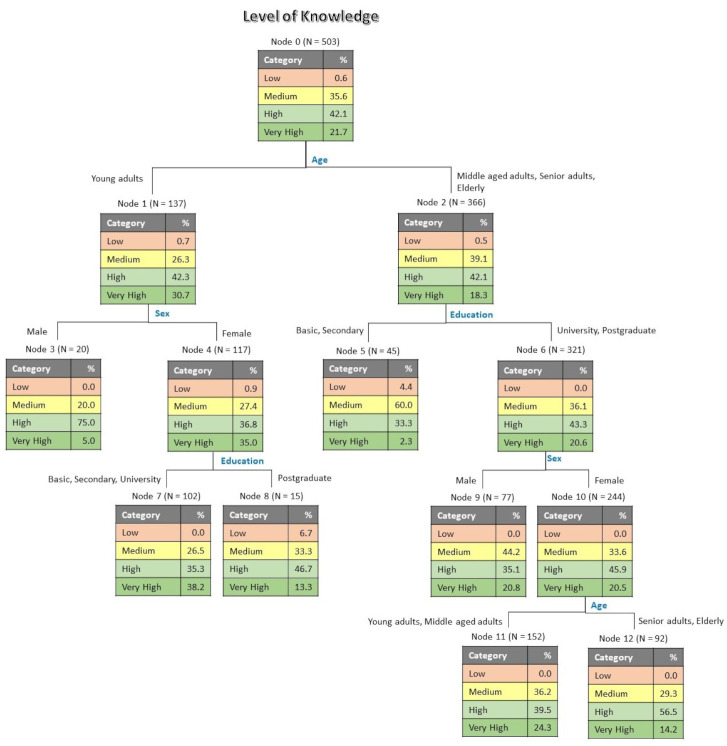
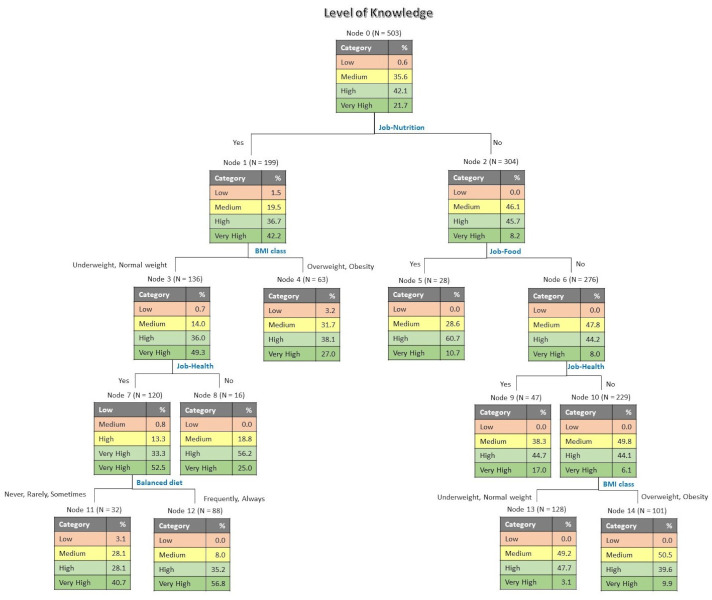
Food myths are nutritional concepts poorly justified or even contradict existing scientific evidence that individuals take as the truth. Knowledge in nutrition is an important tool in tackling misinformation and in the promotion of adequate food choices. This study aimed to investigate the beliefs and perceptions of a sample of the Portuguese population regarding a series of food myths and facts, evaluating, consequently, the level of knowledge and the main sources of information. The research was conducted on a sample of 503 participants, using a questionnaire disclosed online, by email, and social networks, between May and June of 2021. Thirty statements, some true and others false, were analyzed to assess people's perceptions. Based on the respondents' answers, a score was calculated for each statement, allowing to differentiate the correct (positive score) from incorrect (negative score) perceptions. The results showed that most statements obtained positive scores, corresponding to correct perceptions. Moreover, the level of knowledge was measured, being very high for 21.7% of the participants and high for 42.1%. The main sources where the participants acquire nutritional information are scientific journals (43.3%), website of the Portuguese General Health Office (DGS) (31.4%), and technical books (31.0%), which is concordant with the level of trust in these sources. Hence, it was concluded that, despite the levels of nutritional knowledge, there are still several food myths that need to be debunked, through the proper channels, in order to promote healthy, balanced, and adequate eating behaviors.
Keywords: food myths; health; nutritional knowledge; sources of information.
Conflict of interest statement
The authors declare no conflict of interest.
Figures
References
-
- Tucker K.L. Reference Module in Biomedical Sciences. Elsevier; Amsterdam, The Netherlands: 2014. Human Nutrition.
-
- Jiang Y., King J.M., Prinyawiwatkul W. A review of measurement and relationships between food, eating behavior and emotion. Trends Food Sci. Technol. 2014;36:15–28. doi: 10.1016/j.tifs.2013.12.005. - DOI
-
- Cunha L.M., Cabral D., Moura A.P., de Almeida M.D.V. Application of the Food Choice Questionnaire across cultures: Systematic review of cross-cultural and single country studies. Food Qual. Prefer. 2018;64:21–36. doi: 10.1016/j.foodqual.2017.10.007. - DOI
Grants and funding
LinkOut - more resources
Full Text Sources
