


Recent Perspectives in the Management of Fungal Keratitis
- PMID: 34829196
- PMCID: PMC8621027
- DOI: 10.3390/jof7110907
Recent Perspectives in the Management of Fungal Keratitis
Abstract
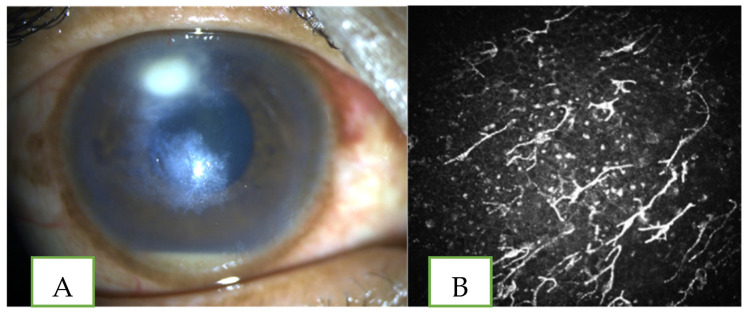
Mycotic keratitis is common in warm, humid regions with a varying profile of pathogenic fungi according to geographical origin, socioeconomic status, and climatic condition. Clinical diagnosis can be challenging in difficult cases and those refractory to treatment. Fungal hyphae on microscopic examination and culture isolation have been the gold standard in the laboratory diagnosis of fungal keratitis. A culture isolate of the aetiological fungus is essential to perform antifungal susceptibility testing. As the culture isolation of fungi is time-consuming, causing delays in the initiation of treatment, newer investigative modalities such as in vivo confocal microscopy and molecular diagnostic methods have recently gained popularity. Molecular diagnostic techniques now help to obtain a rapid diagnosis of fungal keratitis. Genomic approaches are based on detecting amplicons of ribosomal RNA genes, with internal transcribed spacers being increasingly adopted. Metagenomic deep sequencing allows for rapid and accurate diagnosis without the need to wait for the fungus to grow. This is also helpful in identifying new emerging strains of fungi causing mycotic keratitis. A custom-tear proteomic approach will probably play an important diagnostic role in future in the management of mycotic keratitis. Positive repeat cultures are being suggested as an important gauge indicative of a poor prognosis. Positive repeat fungal cultures help to modify a treatment regimen by increasing its frequency, providing the addition of another topical and oral antifungal agent along with close follow-up for perforation and identifying need for early therapeutic keratoplasty. The role of collagen crosslinking in the treatment of fungal keratitis is not convincingly established. Rapid detection by multiplex PCR and antifungal susceptibility testing of the pathogenic fungi, adopted into a routine management protocol of fungal keratitis, will help to improve treatment outcome. Early therapy is essential in minimizing damage to the corneal tissue, thereby providing a better outcome. The role of conventional therapy with polyenes, systemic and targeted therapy of antifungal agents, newer azoles and echinocandins in fungal keratitis has been widely studied in recent times. Combination therapy can be more efficacious in comparison to monotherapy. Given the diversity of fungal aetiology, the emergence of new corneal pathogenic fungi with varying drug susceptibilities, increasing the drug resistance to antifungal agents in some genera and species, it is perhaps time to adopt recent molecular methods for precise identification and incorporate antifungal susceptibility testing as a routine.
Keywords: PCR; antifungal susceptibility testing; azoles; echinocandins; fungal keratitis; metagenomic deep sequencing; mycotic; polyenes; refractory keratitis; repeat culture; tear genomics; therapeutic keratoplasty.
Conflict of interest statement
The authors declare no conflict of interest.
Figures
References
Publication types
LinkOut - more resources
Full Text Sources
Research Materials
