


Dendritic Cells and Cancer Immunotherapy: The Adjuvant Effect
- PMID: 34830221
- PMCID: PMC8620771
- DOI: 10.3390/ijms222212339
Dendritic Cells and Cancer Immunotherapy: The Adjuvant Effect
Abstract
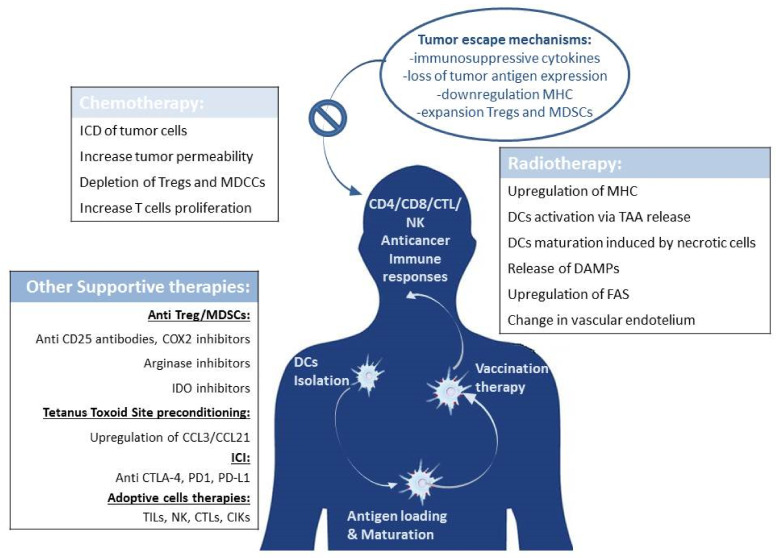
Dendritic cells (DCs) are immune specialized cells playing a critical role in promoting immune response against antigens, and may represent important targets for therapeutic interventions in cancer. DCs can be stimulated ex vivo with pro-inflammatory molecules and loaded with tumor-specific antigen(s). Protocols describing the specific details of DCs vaccination manufacturing vary widely, but regardless of the employed protocol, the DCs vaccination safety and its ability to induce antitumor responses is clearly established. Many years of studies have focused on the ability of DCs to provide overall survival benefits at least for a selection of cancer patients. Lessons learned from early trials lead to the hypothesis that, to improve the efficacy of DCs-based immunotherapy, this should be combined with other treatments. Thus, the vaccine's ultimate role may lie in the combinatorial approaches of DCs-based immunotherapy with chemotherapy and radiotherapy, more than in monotherapy. In this review, we address some key questions regarding the integration of DCs vaccination with multimodality therapy approaches for cancer treatment paradigms.
Keywords: adjuvant therapy; cancer; dendritic cells; immunotherapy.
Conflict of interest statement
The authors declare no conflict of interest.
Figures
References
Publication types
MeSH terms
Substances
LinkOut - more resources
Full Text Sources
Medical
