


Evidence of G-Protein-Coupled Receptors (GPCR) in the Parasitic Protozoa Plasmodium falciparum-Sensing the Host Environment and Coupling within Its Molecular Signaling Toolkit
- PMID: 34830263
- PMCID: PMC8620569
- DOI: 10.3390/ijms222212381
Evidence of G-Protein-Coupled Receptors (GPCR) in the Parasitic Protozoa Plasmodium falciparum-Sensing the Host Environment and Coupling within Its Molecular Signaling Toolkit
Abstract
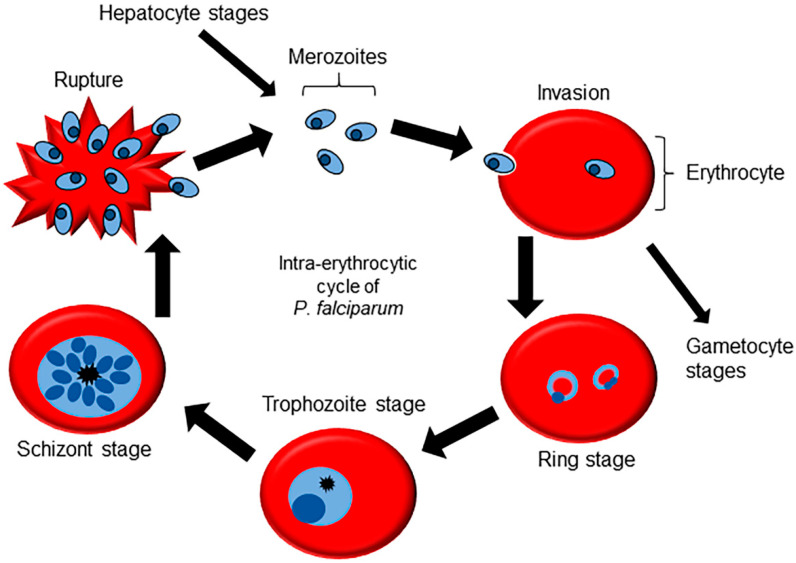
Throughout evolution, the need for single-celled organisms to associate and form a single cluster of cells has had several evolutionary advantages. In complex, multicellular organisms, each tissue or organ has a specialty and function that make life together possible, and the organism as a whole needs to act in balance and adapt to changes in the environment. Sensory organs are essential for connecting external stimuli into a biological response, through the senses: sight, smell, taste, hearing, and touch. The G-protein-coupled receptors (GPCRs) are responsible for many of these senses and therefore play a key role in the perception of the cells' external environment, enabling interaction and coordinated development between each cell of a multicellular organism. The malaria-causing protozoan parasite, Plasmodium falciparum, has a complex life cycle that is extremely dependent on a finely regulated cellular signaling machinery. In this review, we summarize strong evidence and the main candidates of GPCRs in protozoan parasites. Interestingly, one of these GPCRs is a sensor for K+ shift in Plasmodium falciparum, PfSR25. Studying this family of proteins in P. falciparum could have a significant impact, both on understanding the history of the evolution of GPCRs and on finding new targets for antimalarials.
Keywords: GPCRs; Plasmodium falciparum; calcium; cell signaling; synchronization.
Conflict of interest statement
The authors declare no conflict of interest.
Figures
References
Publication types
MeSH terms
Substances
Grants and funding
LinkOut - more resources
Full Text Sources
