


Long-Term Results of Kidney Transplantation in the Elderly: Comparison between Different Donor Settings
- PMID: 34830587
- PMCID: PMC8618615
- DOI: 10.3390/jcm10225308
Long-Term Results of Kidney Transplantation in the Elderly: Comparison between Different Donor Settings
Abstract
With scarce organ supply, a selection of suitable elderly candidates for transplant is needed, as well as auditing the long-term outcomes after transplant. We conducted an observational cohort study among our patient cohort >60 years old with a long follow up. (1).
Patients and methods: We used our database to study the results after transplant for 593 patients >60 years old who underwent a transplant between 2000-2017. The outcome was compared between live donor (LD; n = 257) recipients, an old-to-old (OTO, n = 215) group using an extended criteria donor (ECD) kidney, and a young-to-old (YTO, n = 123) group using a standard-criteria donor. The Kaplan-Meir method was used to calculate the patient and graft survival and Cox regression analysis in order to find risk factors associated with death. (2).
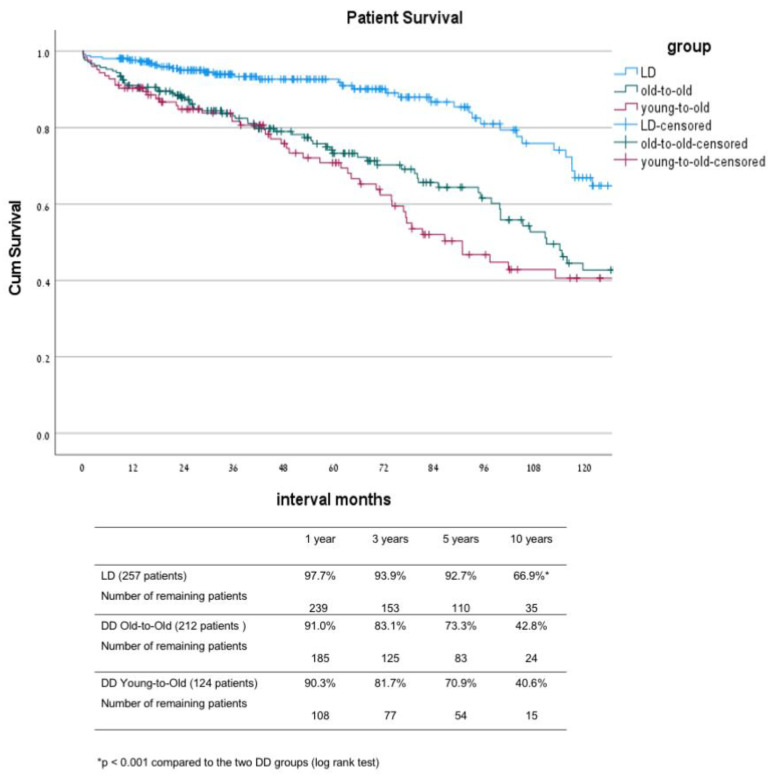
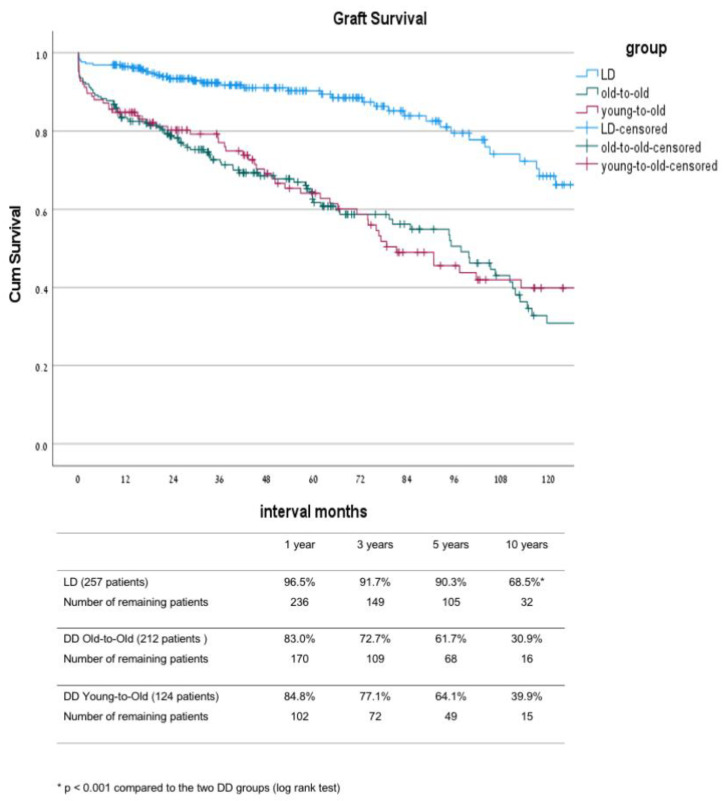
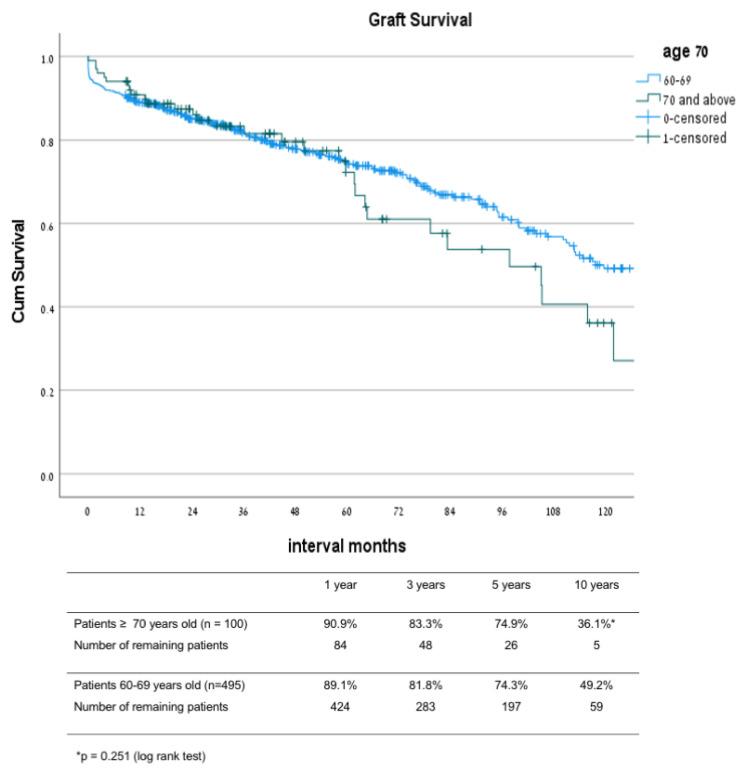
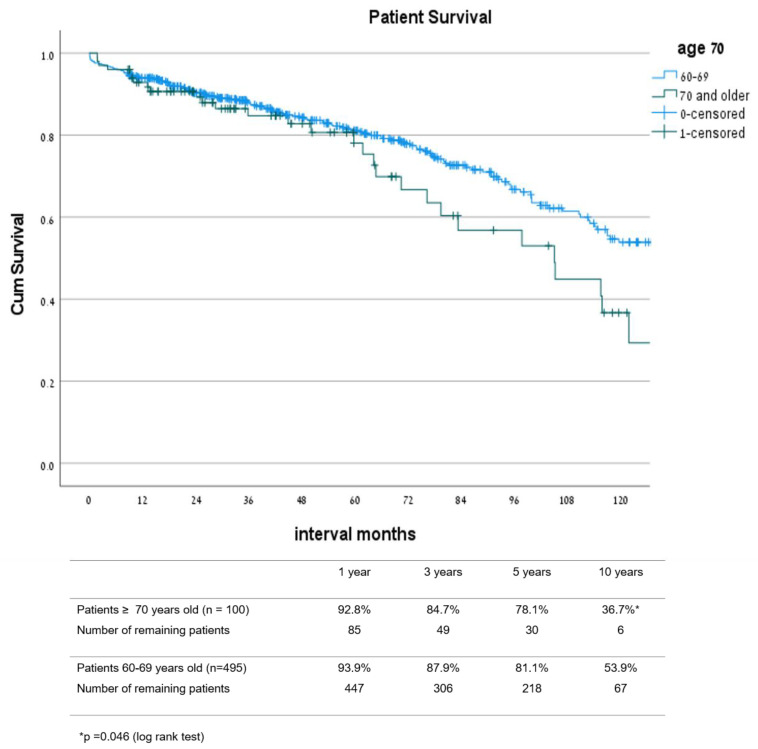
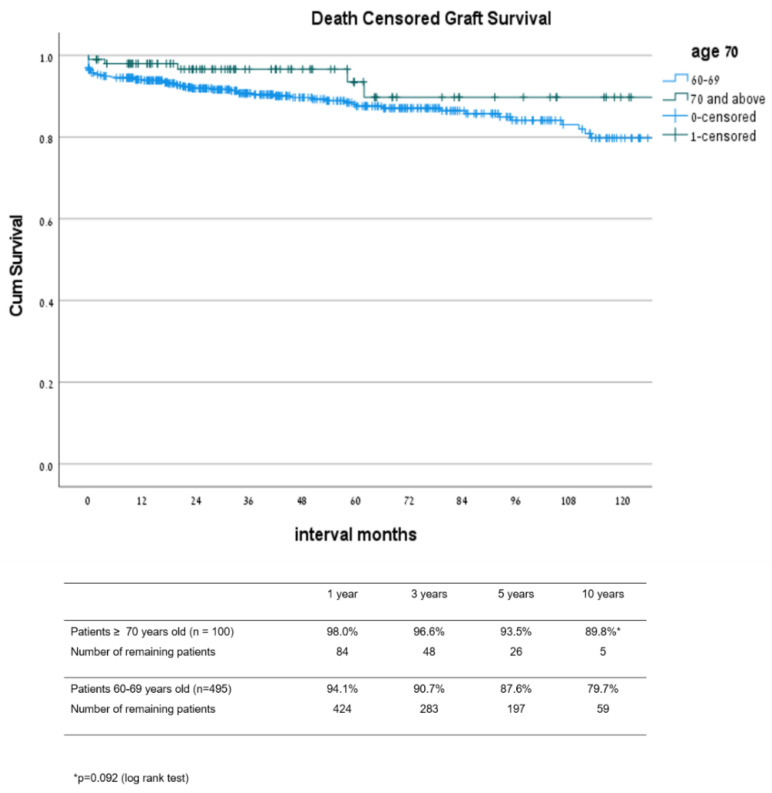
Results: The 5- and 10-year patient survival was significantly better in the LD group (92.7% and 66.9%) compared with the OTO group (73.3% and 42.8%) and YTO group (70.9% and 40.6%) (p < 0.0001). The 5- and 10-year graft survival rates were 90.3% and 68.5% (LD), 61.7% and 30.9% (OTO), and 64.1% and 39.9%, respectively (YTO group; p < 0.0001 between the LD and the two DD groups). There was no difference in outcome between patients in their 60's and their 70's. Factors associated with mortality included: age (HR-1.060), DM (HR-1.773), IHD (HR-1.510), and LD/DD (HR-2.865). (3).
Conclusions: Our 17-years of experience seems to justify the rational of an old-to-old allocation policy in the elderly population. Live-donor transplant should be encouraged whenever possible. Each individual decision of elderly candidates for transplant should be based on the patient's comorbidity and predicted life expectancy.
Keywords: dialysis; elderly; expanded criteria donor; kidney transplantation.
Conflict of interest statement
The authors declare no conflict of interest.
Figures
References
-
- Kasiske B.L., Cangro C.B., Hariharan S., Hricik D.E., Kerman R.H., Roth D., Rush D.N., Vazquez M.A., Weir M.R., American Society of Transplantation The evaluation of renal transplantation candidates—Clinical practice guidelines. Am. J. Transplant. 2001;1:3–95. - PubMed
-
- Wolfe R.A., Ashby V.B., Milford E.L., Ojo A.O., Ettenger R.E., Agodoa L.Y.C., Held P.J., Port F.K. Comparison of mortality in all patients on dialysis, patients on dialysis awaiting transplantation, and recipients of a first cadaveric transplant. N. Engl. J. Med. 1999;341:1725–1730. doi: 10.1056/NEJM199912023412303. - DOI - PubMed
-
- Harhay M.N., Rao M.K., Woodside K.J., Johansen K.L., Lentine K.L., Tullius S.G., Parsons R.F., Alhamad T., Berger J., Cheng X.S., et al. An overview of frailty in kidney transplantation: Measurement, management and future considerations. Nephrol. Dial. Transpl. 2020;35:1099–1112. doi: 10.1093/ndt/gfaa016. - DOI - PMC - PubMed
LinkOut - more resources
Full Text Sources
Research Materials
