


Thermo-Physiological Comfort Properties of Sportswear with Different Combination of Inner and Outer Layers
- PMID: 34832265
- PMCID: PMC8624076
- DOI: 10.3390/ma14226863
Thermo-Physiological Comfort Properties of Sportswear with Different Combination of Inner and Outer Layers
Abstract
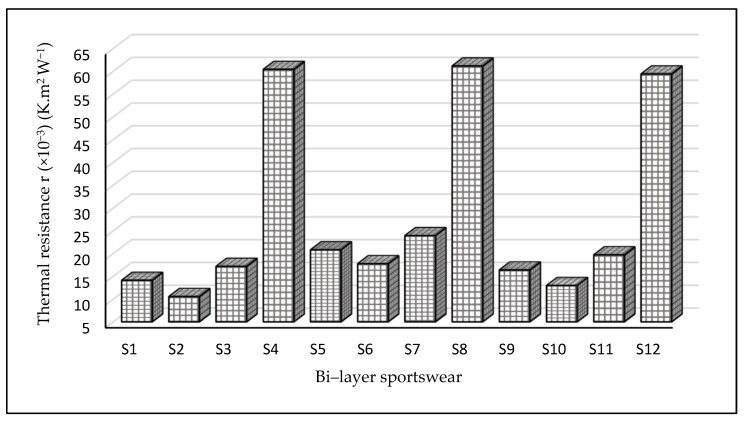
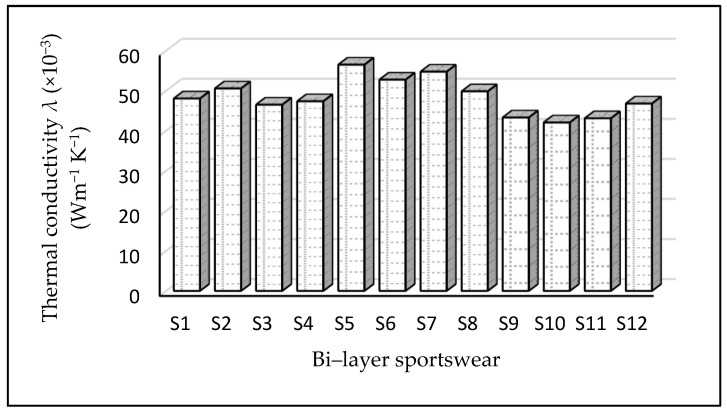
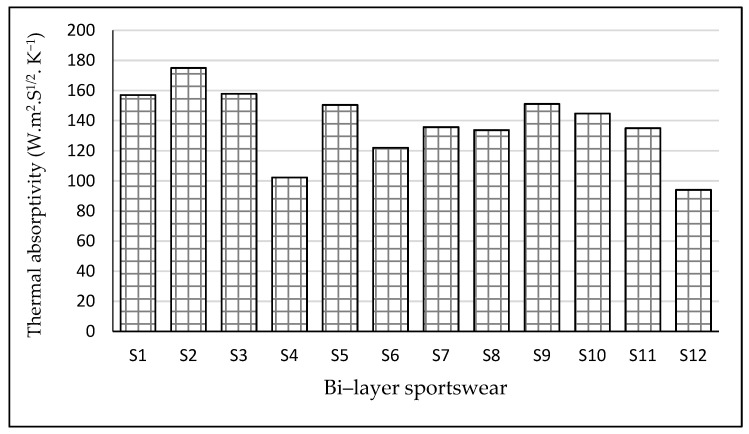
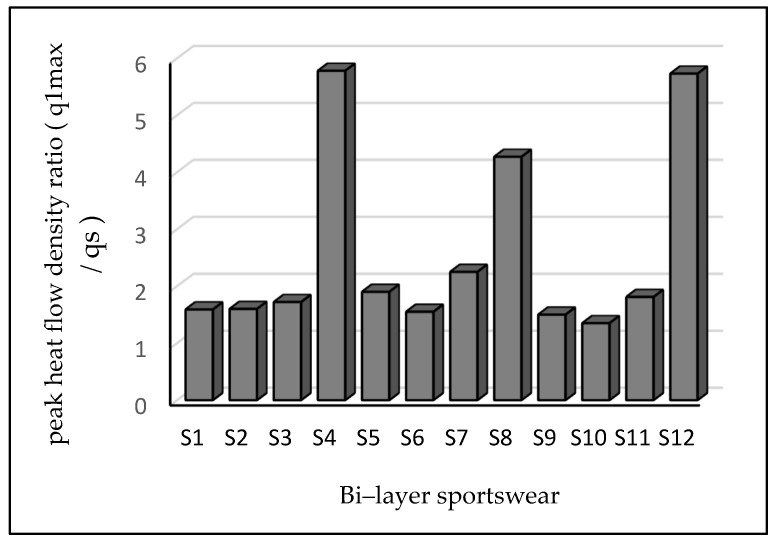
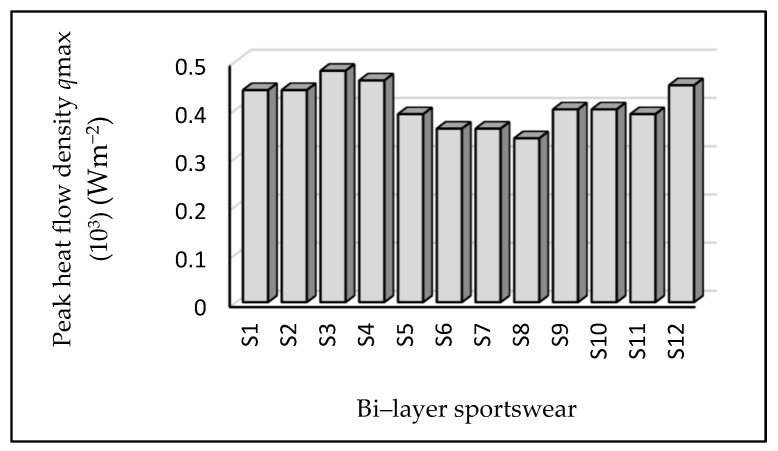
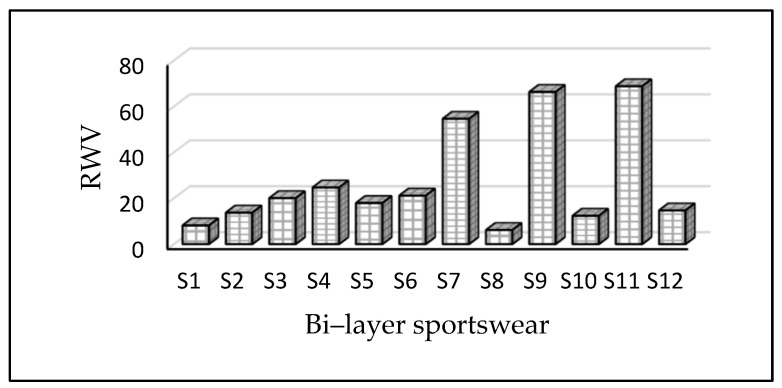
Consumers expect high-performance functionality from sportswear. To meet athletic and leisure-time activity requirements, further research needs to be carried out. Sportswear layers and their specific thermal qualities, as well as the set and air layer between materials, are all important factors in sports clothing. This research aims to examine the thermal properties of sports fabrics, and how they are affected by structure parameters and maintained with different layers. Three inner and four outer layers of fabric were used to make 12 sets of sportswear in this study. Before the combination of outer and inner layers, thermal properties were measured for each individual layer. Finally, the thermal resistance, thermal conductivity, thermal absorptivity, peak heat flow density ratio, stationary heat flow density, and water vapor permeability of bi-layered sportswear were evaluated and analyzed. The findings show that sportswear made from a 60% cotton/30% polyester/10% elastane inner layer and a 100% polyester outer layer had the maximum thermal resistance of 61.16 (×103 K·m2 W-1). This performance was followed by the sample made from a 90% polyester/10% elastane inner layer and a 100% polyester outer layer, and the sample composed of a 100% elastane inner layer and a 100% polyester outer layer, which achieved a thermal resistance value of 60.41 and 59.41 (×103 K·m2 W-1), respectively. These results can be explained by the fact that thicker textiles have a higher thermal resistance. This high-thermal-resistance sportswear fabric is appropriate for the winter season. Sportswear with a 90% polyester/10% elastane inner layer had worse water vapor resistance than sportswear with a 60% cotton/30% polyester/10% elastane and a 100% elastane layer. Therefore, these sports clothes have a higher breathability and can provide the wearers with very good comfort. According to the findings, water vapor permeability of bi-layered sportswear is influenced by geometric characteristics and material properties.
Keywords: bi-layered sportswear; peak heat flow density ratio; sportswear; stationary heat flow density; thermal absorptivity; thermal conductivity; thermal resistance; water vapor permeability.
Conflict of interest statement
The authors declare no conflict of interest.
Figures
References
-
- Kanat Z.E. Waterproof and Water Repellent Textiles and Clothing. Elsevier; Amsterdam, The Netherlands: 2018. Sportswear; pp. 367–390.
-
- Uttam D. Active sportswear fabrics. Int. J. Res. Appl. Sci. Eng. Technol. 2013;2:34–40.
-
- Shishoo R. Textiles in Sport. Woodhead Publishing; Sawston, UK: 2005.
-
- Rossi R.M. Textiles for Sportswear. Elsevier; Amsterdam, The Netherlands: 2015. Cold weather sports clothing; pp. 197–212.
-
- Harnett P.R., Mehta P.N. A survey and comparison of laboratory test methods for measuring wicking. Text. Res. J. 1984;54:471–478. doi: 10.1177/004051758405400710. - DOI
Grants and funding
LinkOut - more resources
Full Text Sources
