


Activators and Inhibitors of Protein Kinase C (PKC): Their Applications in Clinical Trials
- PMID: 34834162
- PMCID: PMC8621927
- DOI: 10.3390/pharmaceutics13111748
Activators and Inhibitors of Protein Kinase C (PKC): Their Applications in Clinical Trials
Abstract
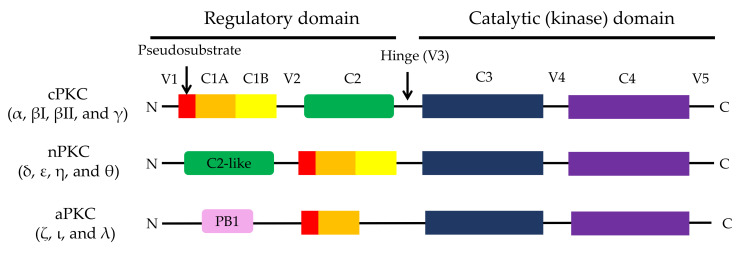
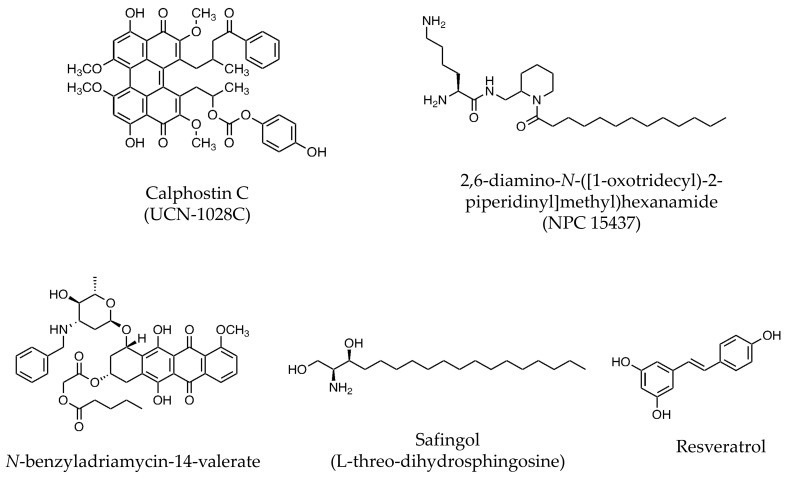
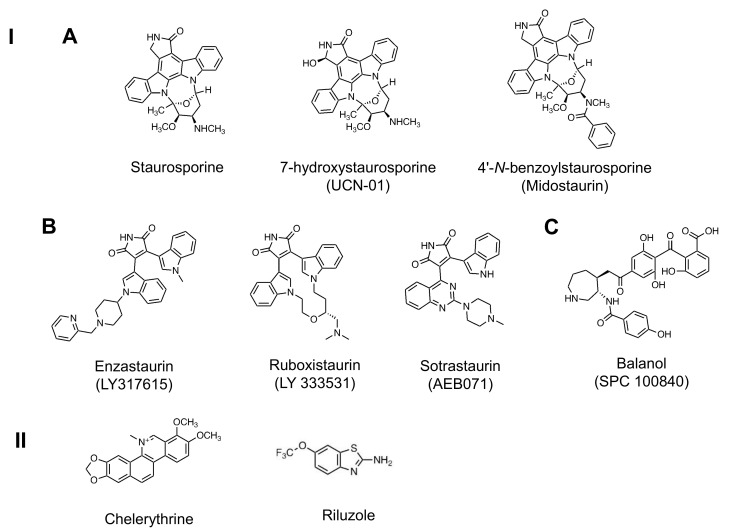
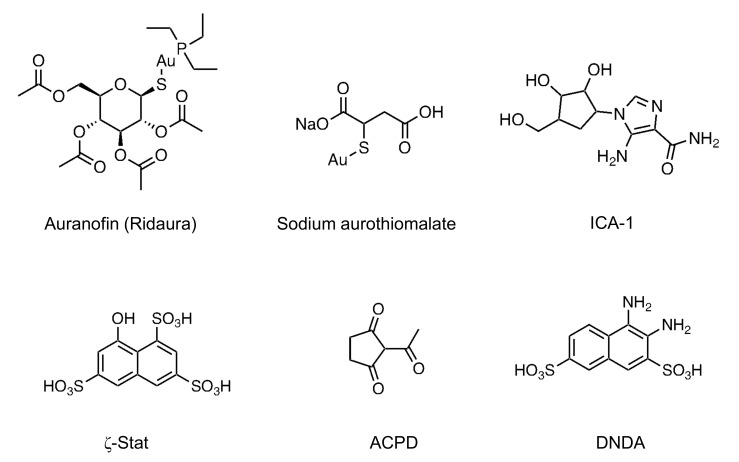
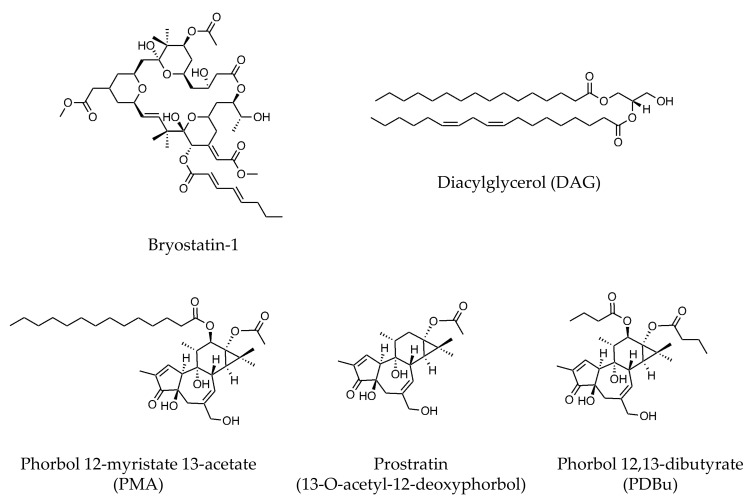
Protein kinase C (PKC), a family of phospholipid-dependent serine/threonine kinase, is classed into three subfamilies based on their structural and activation characteristics: conventional or classic PKC isozymes (cPKCs; α, βI, βII, and γ), novel or non-classic PKC isozymes (nPKCs; δ, ε, η, and θ), and atypical PKC isozymes (aPKCs; ζ, ι, and λ). PKC inhibitors and activators are used to understand PKC-mediated intracellular signaling pathways and for the diagnosis and treatment of various PKC-associated diseases, such as cancers, neurological diseases, cardiovascular diseases, and infections. Many clinical trials of PKC inhibitors in cancers showed no significant clinical benefits, meaning that there is a limitation to design a cancer therapeutic strategy targeting PKC alone. This review will focus on the activators and inhibitors of PKC and their applications in clinical trials.
Keywords: activator; cancer; clinical trial; inhibitor; protein kinase C; signaling pathway.
Conflict of interest statement
The authors declare no conflict of interest.
Figures
References
-
- Kang J.H. Protein kinase c (PKC) isozymes and cancer. New J. Sci. 2014;2014:231418. doi: 10.1155/2014/231418. - DOI
Publication types
Grants and funding
LinkOut - more resources
Full Text Sources
