Review
. 2021 Nov 2;13(11):1838.
doi: 10.3390/pharmaceutics13111838.

Role of Photobiomodulation Therapy in Neurological Primary Burning Mouth Syndrome. A Systematic Review and Meta-Analysis of Human Randomised Controlled Clinical Trials

Affiliations
Review

Role of Photobiomodulation Therapy in Neurological Primary Burning Mouth Syndrome. A Systematic Review and Meta-Analysis of Human Randomised Controlled Clinical Trials

Reem Hanna et al. Pharmaceutics. .

Abstract

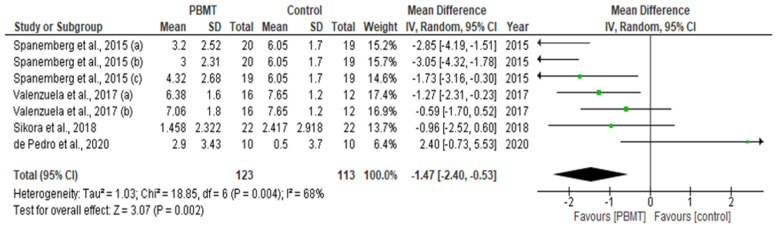
Mitochondrial homeostasis is crucial for energy production and neuronal survival in neurological primary burning mouth syndrome (npBMS). Photobiomodulation therapy (PBMT) has been utilised in npBMS management, however, its role of intervention remains controversial. The aim of this systematic review and meta-analysis of CRD 42020198921 PROSPERO registration reference was to oversee and determine the efficacy of PBMT in patients with npBMS, identifying the gaps and bridge them by proposing recommendations for future studies purposes. PRISMA guidelines and Cochrane Collaboration recommendations followed. Various search engines employed to analyse a total of 351 studies of which 12 were included. A wide range of utilised PBM wavelengths was between 635-980 nm and the power output ranged between 30 mW and 4000 mW. A high risk of bias (RoB) was noted in 7 out of 12 included studies (58.3%), as results of qualitative analysis. Meta-analysis findings of 4 out of 12 studies showed statistically significant intergroup differences (SSID) for visual analogue scale (VAS) values (MD = -1.47; 95% CI = -2.40 to -0.53; Z = 3.07 (p = 0.002) whereas meta-analysis on 5 out of 12 studies revealed SSID for anxiety/depression and quality of life (MD = -1.47; 95% CI = -2.40 to -0.53; Z = 3.07 (p = 0.002), favouring PBMT group to the control treatment strategies. Despite the inconsistency and diversity in PBM parameters (wavelength, power, light source, spot size, emission mode, energy per point, total energy) and treatment protocols (exposure time, number of sessions, time interval between sessions, treatment duration)-majority of the included studies showed positive PBM results. The high RoB and meta-analytical heterogeneity in the eligible studies warrant the necessity to perform well-designed and robust RCTs after acknowledging the drawbacks of the available scientific literature and addressing our suggested recommendations highlighted in our review.

Keywords: RCT; mitochondrial homeostasis; molecular mechanisms; neuropathic pain; outcome measures; oxidative stress; photobiomodulation; primary burning mouth syndrome; transmucosal; trigeminal nerve inflammation.


Conflict of interest statement

The authors declare no conflict of interest.

Figures
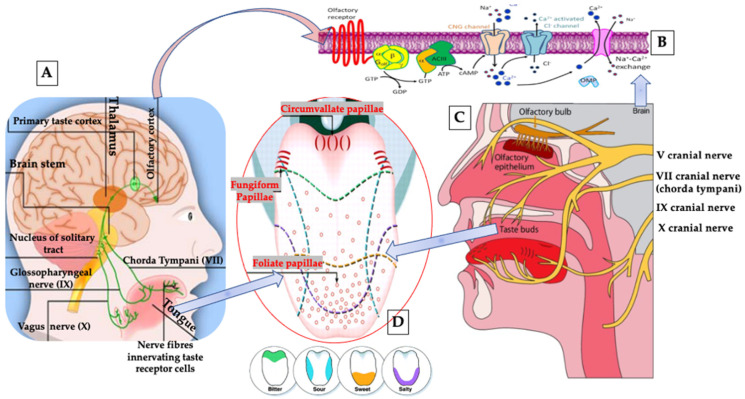
Figure 9
Figure 9
(AD) Shows the correlation between taste and smell senses dysfunction in patients with burning mouth syndrome (BMS), even though taste and smell are separate senses with their own receptor organs, they are intimately entwined. Olfactory information passes to adjacent parts of the orbital cortex, where the combination of odour and taste information helps create the perception of flavour [100,102,103]. As shown in (A), taste signals go from the mouth, via cranial nerves, to the medulla oblongata in the brainstem, then up to the thalamus and on to the cortex, where the sensation becomes a perception. The distribution of trigeminal nerve (V3), glossopharyngeal nerve (IX), Vagus nerve (X) and chorda tympani (branch of the facial nerve (VII)) innervating the tongue. As shown in (B), shows the mechanism of action of smell sense where the olfactory bulb connects directly to the limbic system, the brain area that regulates emotion. As shown in (C), the distribution of the V3 nerve. As shown in (D), the distribution of the of four basic tastes (sweet, bitter, sour, salty) on the tongue according to their associated papillae (circumvallate, fungiform, foliate). Sweet, salty and bitter tastes had higher thresholds, but the sour taste had lower thresholds. Sour is the taste that involves the activity of H+ ions directly through channels in the receptor membranes, which also can activate small pain fibres. In addition to peripheral nerve degeneration, a more sensitive perception of acids (for taste and pain) could be related to the peripheral mechanism of BMS. List of the abbreviations are listed in Supplementary File S2.
Figure 10
Figure 10
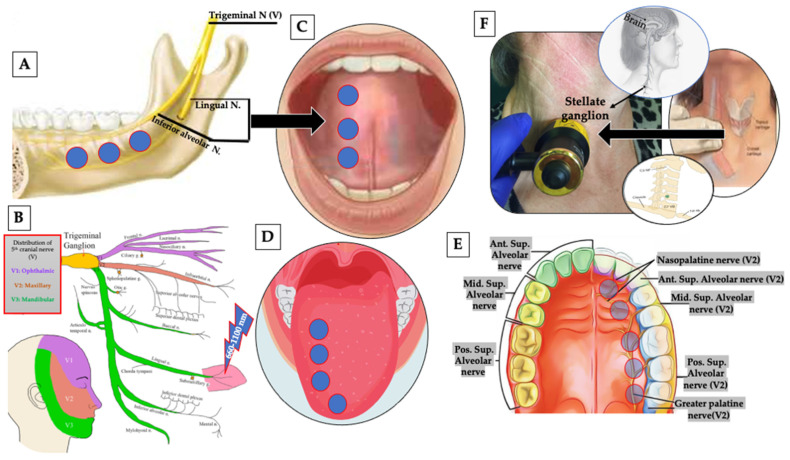
(AF) Schematic representation of the proposed suggested number and allocations of the trigger points for PBM irradiation in unilateral BMS management. They are based on evidence derived from literature and expert opinion and are intended only to provide clinical guidance and serve as a starting point for extensive research. The blue circle represents the trigger points allocations and their number for unilateral symptoms. In case of bilateral symptoms, the same number of trigger points applies on both sides. As shown in (A), the allocation of the trigger points along the distribution of the lingual nerve (N), chorda tympani (branch of the facial N.) and inferior alveolar N, where the rationale number of the trigger points along the distribution of each nerve is three, depending on the diameter of the beam. As shown in (B), the trigeminal ganglion where V3 branches [ophthalmic (V1), Maxillary (V2), mandibular (V3)] emerge and their associated innervations. Irradiation of the ventral (C) dorsal (D) surfaces of tongue with wavelengths between 660–110 nm. As shown in (E), the hard and soft palate and their innervations as well the distribution of the trigger points along the distribution of the associated nerves. With regards the upper buccal mucosa of anterior, middle and posterior teeth (target areas), the allocation of the trigger points along the distribution of the nerves for their respected areas (E). As shown in (F), the extraoral approach of irradiation targets the stellate ganglion to reduce the abnormally increased sympathetic activities. Additionally, it illustrated in (F) the stellate ganglion landmark technique: The patient sits in a supine position with slight extension of the neck. The head is turned to the opposite side, applying the laser or LED probe on the meeting point of the clavicle with sternocleidomastoid muscle. List of the abbreviations are listed in Supplementary File S2.
Figure 1
Figure 1
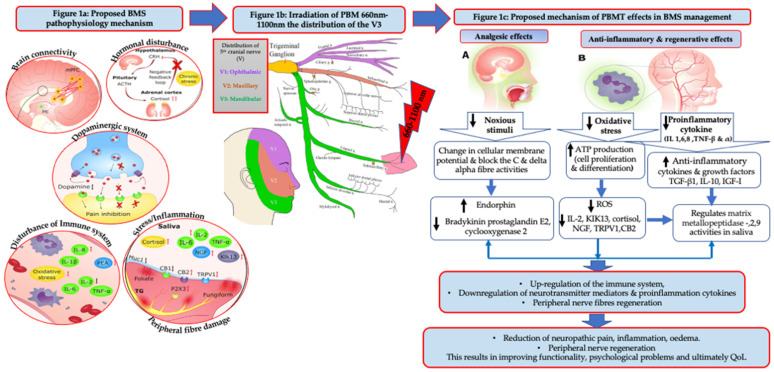
(ac). Schematic representation of the proposed BMS pathophysiology mechanism (a) and PBM-irradiation of the tongue (main target) where it shows the irradiation of the V3 distributions (b) and proposed mechanism of action of PBM in BMS management (c). In Figure 1c, “A“ represents the analgesic effects of PBMT whereas “B” represents the anti-inflammatory and regenerative effects of PBMT. Abbreviations: BMS: burning mouth syndrome; IL: Interleukin; TNF-β and α: transforming necrosis factor-beta and alpha; NGF: nerve growth factor; TRPV-1: transient receptor potential cation channel subfamily V member 1; ROS: reactive oxygen species; ATP: adenosine triphosphate; MMP-1,2,9: matrix metalloproteinases-1,2,9; PBM: photobiomodulation; nm: nanometre; V3: mandibular branch of the 5th cranial nerve (trigeminal nerve).
Figure 2
Figure 2
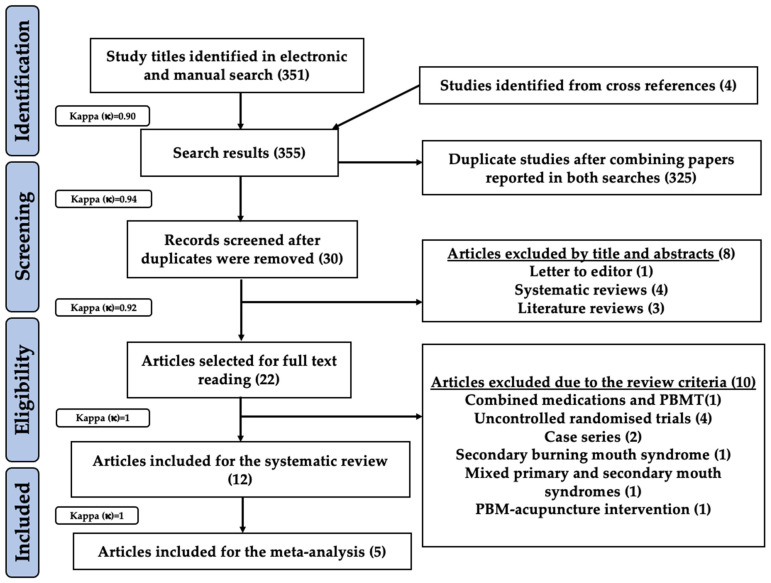
PRISMA flow-chart of selected criteria for the eligible articles.
Figure 3
Figure 3
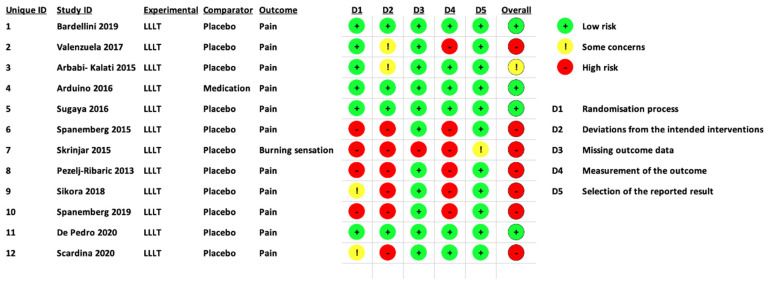
Risk of bias assessment summary of the included studies based on the consensual answers of two individual assessors (R.H. and S.D.).
Figure 4
Figure 4
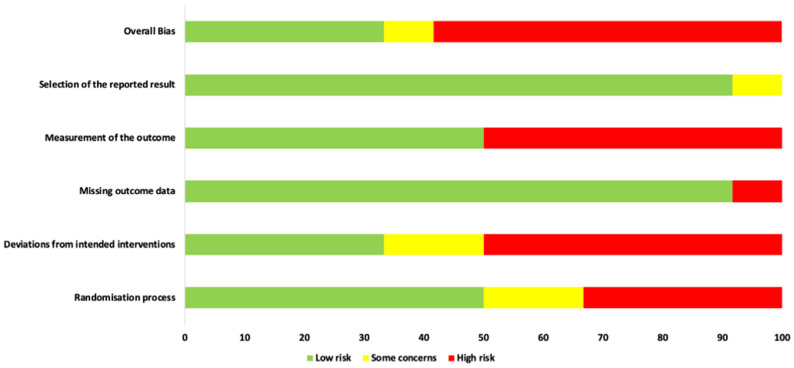
Risk of bias assessment graph of the included studies expressed as percentages based on the consensual answers of two individual assessors (R.H. and S.D.).
Figure 5
Figure 5
Forest plot for primary outcome qualitative pain/burning sensation reduction assessment (VAS) from baseline up to the final follow-up timepoint.
Figure 6
Figure 6
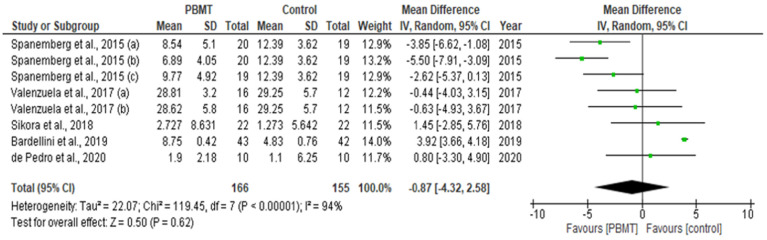
Forest plot for secondary outcome qualitative anxiety/depression and QoL assessment (OHIP) from baseline up to the final follow-up timepoint.
Figure 7
Figure 7
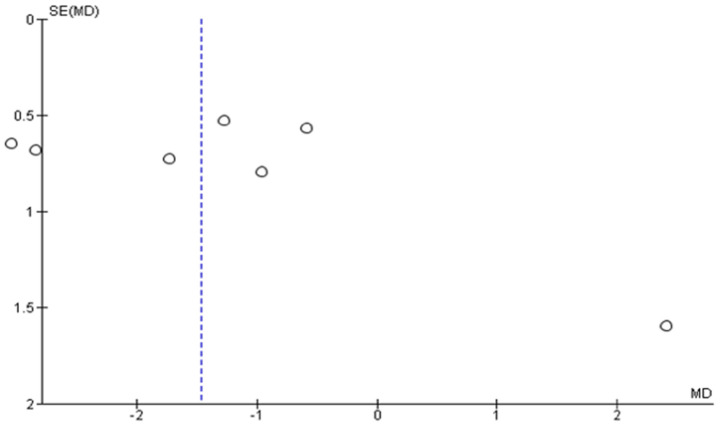
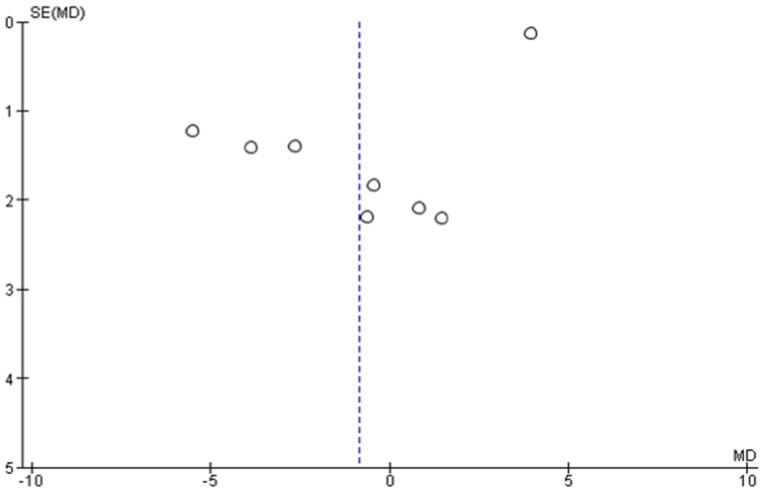
Funnel plot summary for primary outcome qualitative pain/burning sensation reduction assessment (VAS) from baseline up to the final follow-up timepoint.
Figure 8
Figure 8
Funnel plot summary for secondary outcome qualitative anxiety/depression and QoL assessment (OHIP) from baseline up to the final follow-up timepoint.

References

    1. Headache Classification Committee of the International Headache Society (IHS) The International Classification of Headache Disorders. Cephalalgia Int. J. Headache. 2018;38:1–211. doi: 10.1177/0333102417738202. - DOI - PubMed
    1. Woda A., Navez M.L., Picard P., Gremeau C., Pichard-Leandri E. A possible therapeutic solution for stomatodynia (burning mouth syndrome) J. Orofac. Pain. 1998;12:272–278. - PubMed
    1. Moisset X., Calbacho V., Torres P., Gremeau-Richard C., Dallel R. Co-occurrence of Pain Symptoms and Somatosensory Sensitivity in Burning Mouth Syndrome: A Systematic Review. PLoS ONE. 2016;11:e0163449. doi: 10.1371/journal.pone.0163449. - DOI - PMC - PubMed
    1. Headache Classification Committee of the International Headache Society (IHS) The International Classification of Headache Disorders, 3rd edition (beta version) Cephalalgia. 2013;33:629–808. doi: 10.1177/0333102413485658. - DOI - PubMed
    1. Merskey H., Bogduk N. Classification of Chronic Pain. International Association for the Study of Pain Press; Seattle, WA, USA: 1994. pp. 209–214.

LinkOut - more resources