


Comparative Chemical Profiles and Phytotoxic Activity of Essential Oils of Two Ecospecies of Pulicaria undulata (L.) C.A.Mey
- PMID: 34834729
- PMCID: PMC8624369
- DOI: 10.3390/plants10112366
Comparative Chemical Profiles and Phytotoxic Activity of Essential Oils of Two Ecospecies of Pulicaria undulata (L.) C.A.Mey
Abstract
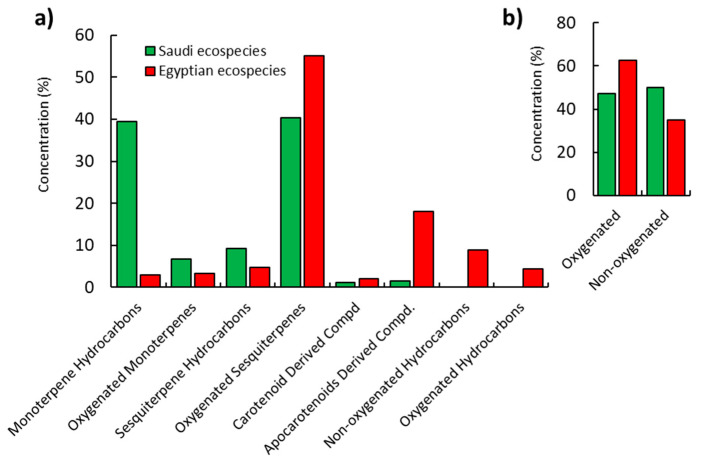
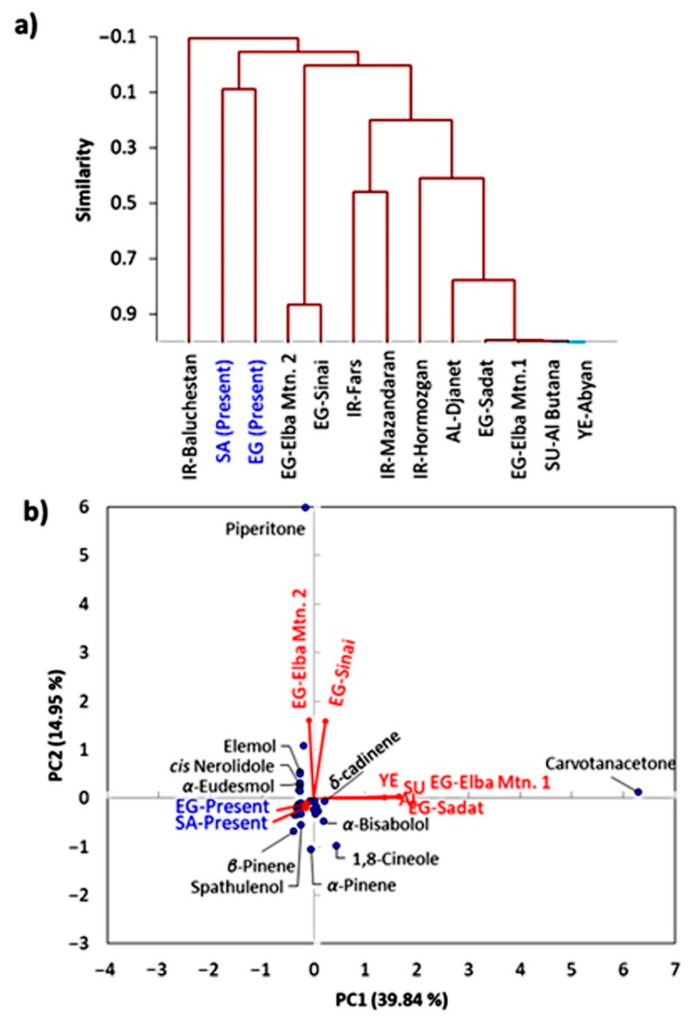
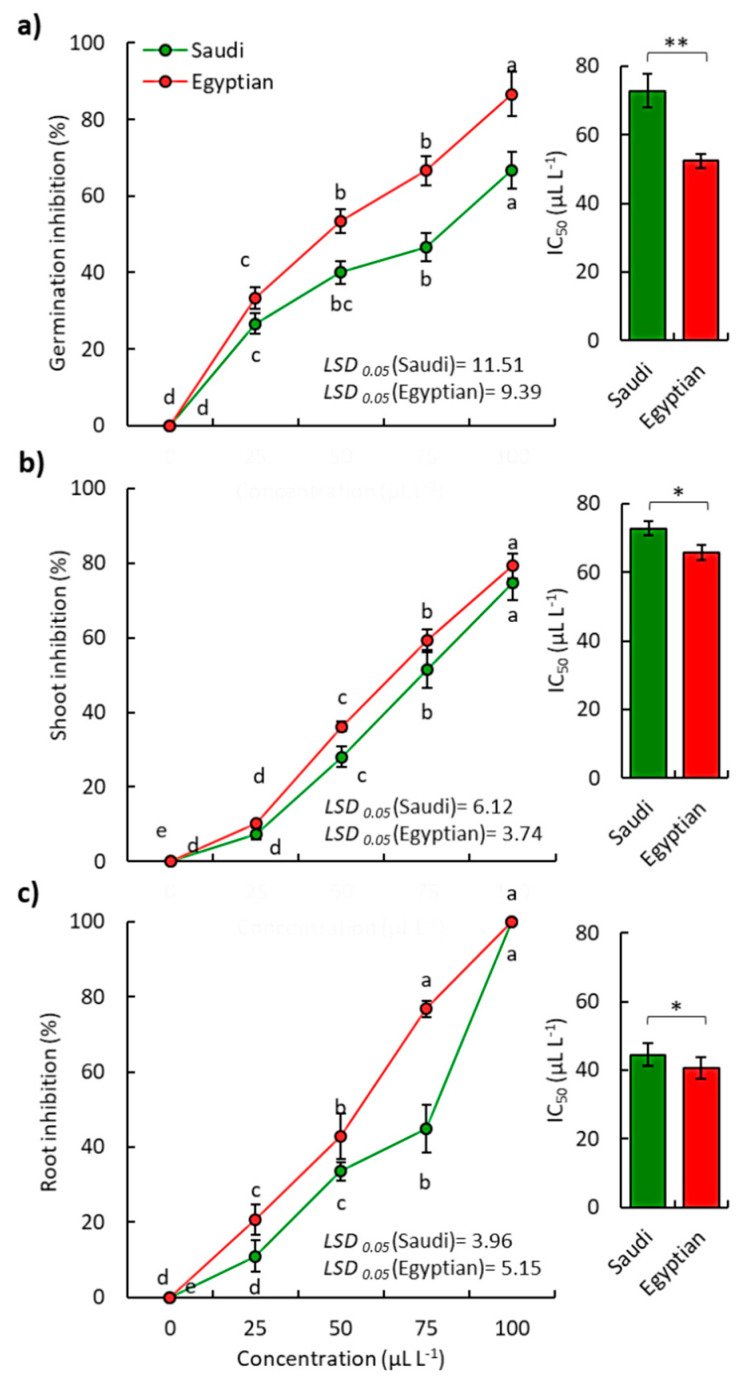
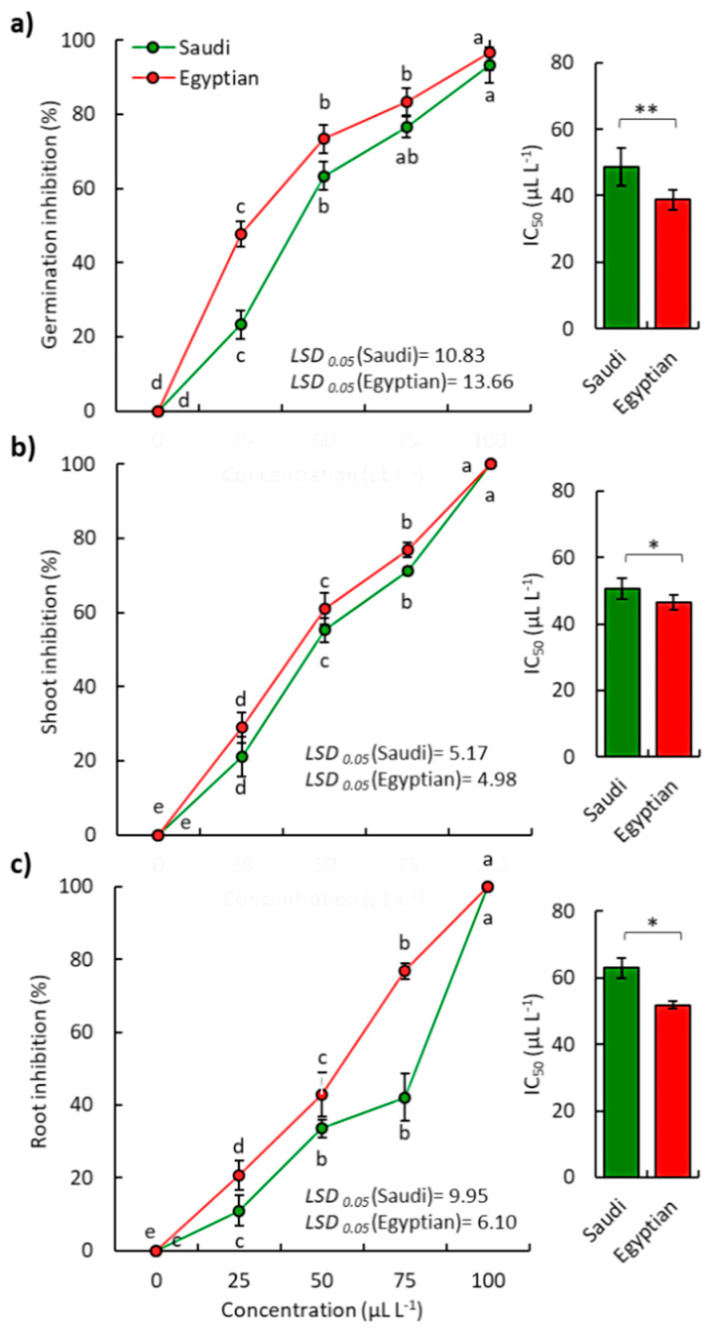
The Asteraceae (Compositae) family is one of the largest angiosperm families that has a large number of aromatic species. Pulicaria undulata is a well-known medicinal plant that is used in the treatment of various diseases due to its essential oil (EO). The EO of both Saudi and Egyptian ecospecies were extracted via hydrodistillation, and the chemical compounds were identified by GC-MS analysis. The composition of the EOs of Saudi and Egyptian ecospecies, as well as other reported ecospecies, were chemometrically analyzed. Additionally, the phytotoxic activity of the extracted EOs was tested against the weeds Dactyloctenium aegyptium and Bidens pilosa. In total, 80 compounds were identified from both ecospecies, of which 61 were Saudi ecospecies, with a preponderance of β-pinene, isoshyobunone, 6-epi-shyobunol, α-pinene, and α-terpinolene. However, the Egyptian ecospecies attained a lower number (34 compounds), with spathulenol, hexahydrofarnesyl acetone, α-bisabolol, and τ--cadinol as the main compounds. The chemometric analysis revealed that the studied ecospecies and other reported species were different in their composition. This variation could be attributed to the difference in the environmental and climatic conditions. The EO of the Egyptian ecospecies showed more phytotoxic activity against D. aegyptium and B. pilosa than the Saudi ecospecies. This variation might be ascribed to the difference in their major constituents. Therefore, further study is recommended for the characterization of authentic materials of these compounds as allelochemicals against various weeds, either singular or in combination.
Keywords: Asteraceae; Pulicaria crispa; allelopathy; chemometric analysis; chemotype.
Conflict of interest statement
The authors declare no conflict of interest.
Figures
References
-
- Assaeed A., Elshamy A., El Gendy A.E.-N., Dar B., Al-Rowaily S., Abd-ElGawad A. Sesquiterpenes-rich essential oil from above ground parts of Pulicaria somalensis exhibited antioxidant activity and allelopathic effect on weeds. Agronomy. 2020;10:399. doi: 10.3390/agronomy10030399. - DOI
-
- Al-Maqtari Q.A., Mahdi A.A., Al-Ansi W., Mohammed J.K., Wei M., Yao W. Evaluation of bioactive compounds and antibacterial activity of Pulicaria jaubertii extract obtained by supercritical and conventional methods. J. Food Meas. Charact. 2020;15:449–456. doi: 10.1007/s11694-020-00652-5. - DOI
-
- Elshamy A.I., Mohamed T.A., Marzouk M.M., Hussien T.A., Umeyama A., Hegazy M.E.F., Efferth T. Phytochemical constituents and chemosystematic significance of Pulicaria jaubertii E. Gamal-Eldin (Asteraceae) Phytochem. Lett. 2018;24:105–109. doi: 10.1016/j.phytol.2018.01.021. - DOI
-
- Hegazy M.-E.F., Matsuda H., Nakamura S., Yabe M., Matsumoto T., Yoshikawa M. Sesquiterpenes from an Egyptian herbal medicine, Pulicaria undulate, with inhibitory effects on nitric oxide production in RAW264. 7 macrophage cells. Chem. Pharm. Bull. 2012;60:363–370. doi: 10.1248/cpb.60.363. - DOI - PubMed
Grants and funding
LinkOut - more resources
Full Text Sources
Miscellaneous
