


Potential Protective Effects of Equol (Soy Isoflavone Metabolite) on Coronary Heart Diseases-From Molecular Mechanisms to Studies in Humans
- PMID: 34835997
- PMCID: PMC8622975
- DOI: 10.3390/nu13113739
Potential Protective Effects of Equol (Soy Isoflavone Metabolite) on Coronary Heart Diseases-From Molecular Mechanisms to Studies in Humans
Abstract
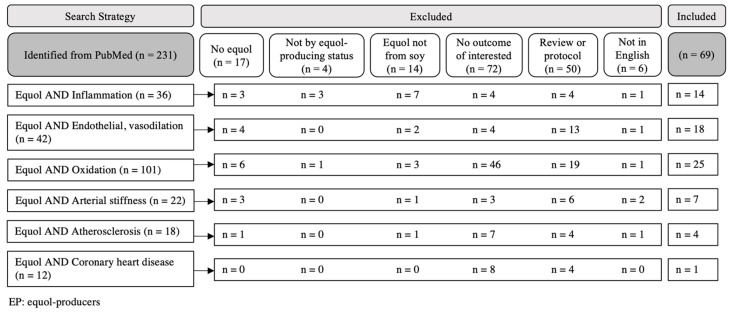
Equol, a soy isoflavone-derived metabolite of the gut microbiome, may be the key cardioprotective component of soy isoflavones. Systematic reviews have reported that soy isoflavones have no to very small effects on traditional cardiovascular disease risk factors. However, the potential mechanistic mode of action of equol on non-traditional cardiovascular risk factors has not been systematically reviewed. We searched the PubMed through to July 2021 by using terms for equol and each of the following markers: inflammation, oxidation, endothelial function, vasodilation, atherosclerosis, arterial stiffness, and coronary heart disease. Of the 231 records identified, 69 articles met the inclusion criteria and were summarized. Our review suggests that equol is more lipophilic, bioavailable, and generally more potent compared to soy isoflavones. Cell culture, animal, and human studies show that equol possesses antioxidative, anti-inflammatory, and vasodilatory properties and improves arterial stiffness and atherosclerosis. Many of these actions are mediated through the estrogen receptor β. Overall, equol may have a greater cardioprotective benefit than soy isoflavones. Clinical studies of equol are warranted because equol is available as a dietary supplement.
Keywords: arterial stiffness; atherosclerosis; coronary heart disease; endothelial function; equol; flavonoid; inflammation; isoflavones; lipophilicity; oxidation.
Conflict of interest statement
The authors declare no conflict of interest.
Figures
References
-
- WHO W.H.O. Global Health Estimates 2016: Deaths by Cause, Age, Sex, by Country and by Region, 2000–2016. [(accessed on 24 August 2021)]; Available online: https://www.who.int/healthinfo/global_burden_disease/estimates/en/
Publication types
MeSH terms
Substances
Grants and funding
LinkOut - more resources
Full Text Sources
Miscellaneous
