


Energy Metabolism in Relation to Diet and Physical Activity: A South Asian Perspective
- PMID: 34836031
- PMCID: PMC8617748
- DOI: 10.3390/nu13113776
Energy Metabolism in Relation to Diet and Physical Activity: A South Asian Perspective
Abstract
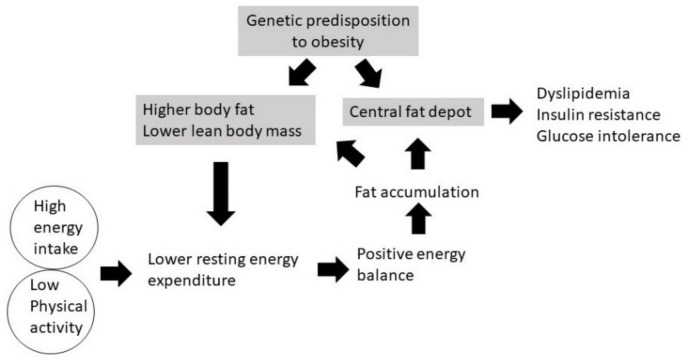
The prevalence of overweight and obesity is on the rise around the world, not only in the West, but also in Asian countries. South Asian countries in particular are experiencing a rapid increase in overweight and obesity, that coexists with the rapid increase in non-communicable diseases linked to obesity such as diabetes and cardiovascular disease than any other country in Asia. The phenomena observed in South Asian countries are due to the size of the population, the ageing of the population, the high degree of urbanization and the lifestyle changes in favor of increased energy consumption and reduced physical activity. The imbalance between energy consumption and energy expenditure results in the development of a positive energy balance that, over time, accumulates in higher body fat. South Asians were reported to have a more unfavorable body composition with a higher percentage of body fat than Caucasians with an equivalent BMI. Body composition is a major determinant of resting energy expenditure. It has been reported that South Asians have a lower resting energy expenditure than Caucasians with the same BMI. Resting energy expenditure accounts for the majority of total daily energy expenditure and, therefore, plays a crucial role in achieving the balance between energy intake and expenditure.
Keywords: South Asian; diet; energy metabolism; physical activity.
Conflict of interest statement
The authors have no conflict of interest to declare.
Figures
References
Publication types
MeSH terms
Grants and funding
LinkOut - more resources
Full Text Sources
Medical
