. 2021 Oct 29;13(11):3885.
doi: 10.3390/nu13113885.

Comparative Analysis of the Impact of Urolithins on the Composition of the Gut Microbiota in Normal-Diet Fed Rats

Affiliations

Comparative Analysis of the Impact of Urolithins on the Composition of the Gut Microbiota in Normal-Diet Fed Rats

Ali Khalaf Al Khalaf et al. Nutrients. .

Abstract

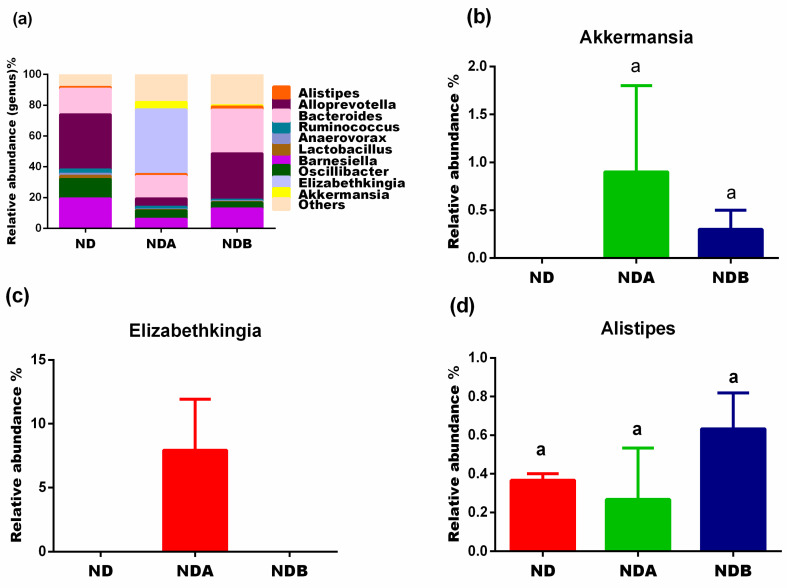
The gut microbiota consists of a community of microorganisms that inhabit the large intestine. These microbes play important roles in maintaining gut barrier integrity, inflammation, lipid and carbohydrate metabolism, immunity, and protection against pathogens. However, recent studies have shown that dysfunction in the gut microbiota composition can lead to the development of several diseases. Urolithin A has recently been approved as a functional food ingredient. In this study, we examined the potentials of urolithin A (Uro-A) and B (Uro-B) in improving metabolic functions and their impact on gut microbiota composition under a metabolically unchallenged state in normal rats. Male Wistar rats (n = 18) were randomly segregated into three groups, with Group 1 serving as the control group. Groups 2 and 3 were administered with 2.5 mg/kg Uro-A and Uro-B, respectively, for four weeks. Our results showed that both Uro-A and B improved liver and kidney functions without affecting body weight. Metagenomic analysis revealed that both Uro-A and B induced the growth of Akkermansia. However, Uro-A decreased species diversity and microbial richness and negatively impacted the composition of pathogenic microbes in normal rats. Taken together, this study showed the differential impacts of Uro-A and B on the gut microbiota composition in normal rats and would thus serve as a guide in the choice of these metabolites as a functional food ingredient or prebiotic.

Keywords: diseases; functional food; gut microbiota; metabolism; polyphenols; rats; urolithins.


Conflict of interest statement

The authors declare no conflict of interest.

Figures
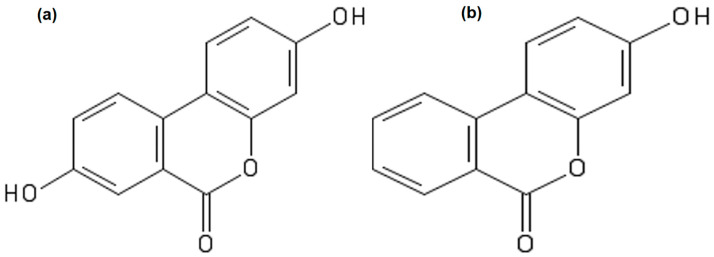
Figure 1
Figure 1
Chemical structure of urolithins. Urolithin A (a), urolithin B (b).
Figure 2
Figure 2
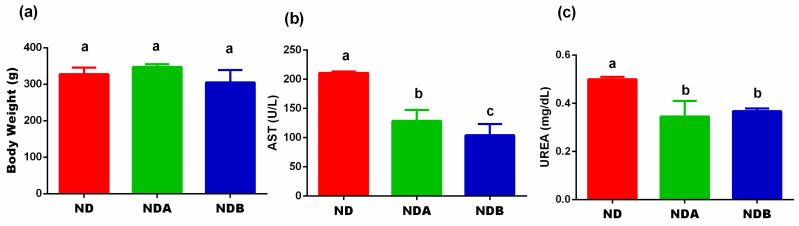
Effects of urolithins on body weight and organ function. Final body weight (a), AST. (b), Urea (c). a,b,c Data are expressed as mean ± SE (n = 6). Mean values bearing different letters are significantly different (p < 0.05).
Figure 3
Figure 3
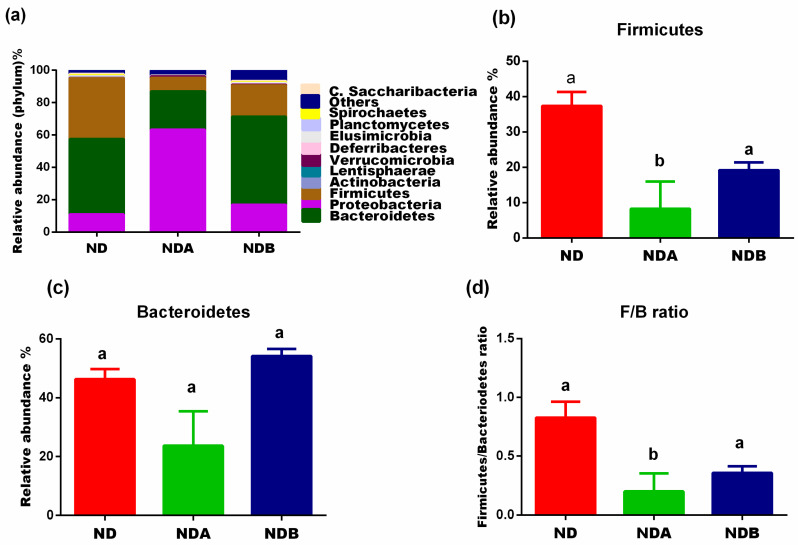
Effects of urolithins on the composition of the gut microbiota at the phylum level. Relative abundance at the phylum level (a), relative levels of the Firmicutes (b), relative levels of the Bacteriodetes (c), Firmicutes/Bacteriodetes ratio (d). a,b Data are expressed as mean ± SE. Mean values bearing different letters are significantly different (p < 0.05).
Figure 4
Figure 4
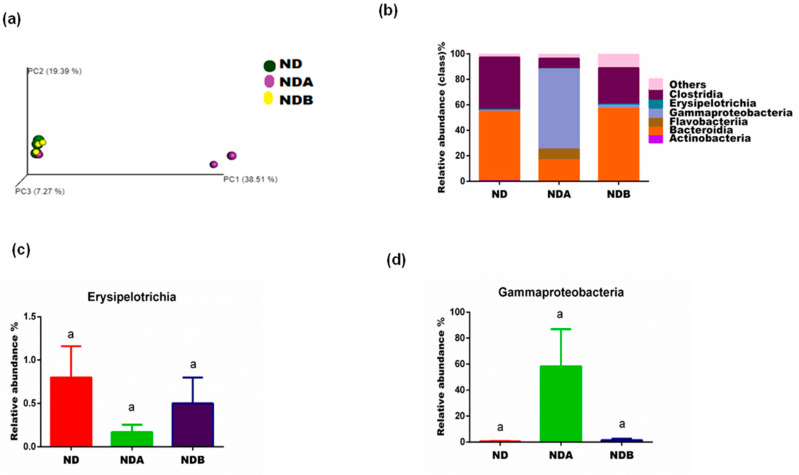
Effects of urolithins on the structure and composition of the gut microbiota. Principal coordinate analysis (a), relative abundance at the class level (b), relative levels of Erysipelotrichia (c), relative levels of Gamma-proteobacteria (d). a Data are expressed as mean ± SE. Mean values bearing different letters are significantly different (p < 0.05).
Figure 5
Figure 5
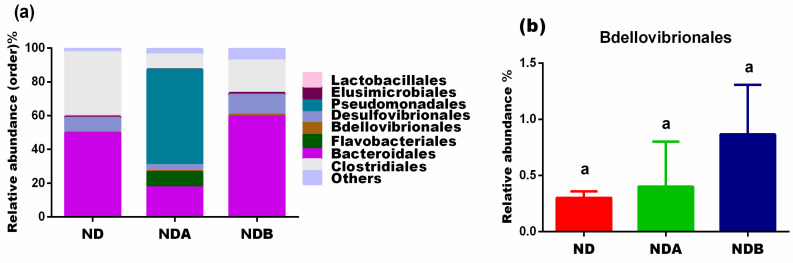
Effects of urolithins on gut microbial composition at the order level. Relative abundance at the order level (a), relative levels of the Bdellovibrionales (b). a Data are expressed as mean ± SE. Mean values bearing different letters are significantly different (p < 0.05).
Figure 6
Figure 6
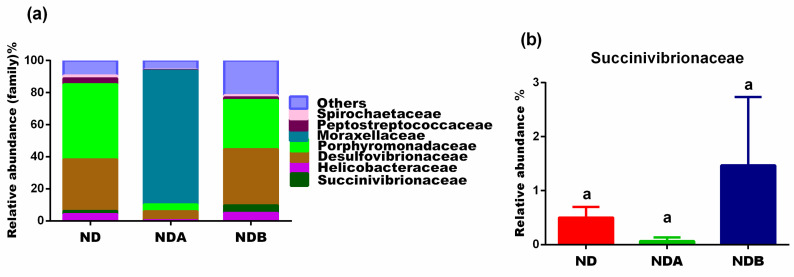
Effects of urolithins on gut microbial composition at the family level. Relative abundance at the family level (a), relative levels of Succinivibrionaceae (b). a Data are expressed as mean ± SE. Mean values bearing different letters are significantly different (p < 0.05).
Figure 7
Figure 7
Effects of urolithins on gut microbial composition at the genus level. Relative abundance at the genus level (a), relative levels of Akkermansia (b), relative levels of Elizabethkingia (c), relative levels of Alistipes (d). a Data are expressed as mean ± SE. Mean values bearing different letters are significantly different (p < 0.05).

References

    1. Lloyd-Price J., Abu-Ali G., Huttenhower C. The healthy human microbiome. Genome Med. 2016;8:51. doi: 10.1186/s13073-016-0307-y. - DOI - PMC - PubMed
    1. Leser T.D., Mølbak L. Better living through microbial action: The benefits of the mammalian gastrointestinal microbiota on the host. Environ. Microbiol. 2009;11:2194–2206. doi: 10.1111/j.1462-2920.2009.01941.x. - DOI - PubMed
    1. Jumpertz R., Le D.S., Turnbraugh P.J., Trinidad C., Bogardus C., Gordon J.I. Energy balance studies reveal associations between gut microbes, calorie load, and nutrient absorption in humans. Am. J. Clin. Nutr. 2011;94:58–65. doi: 10.3945/ajcn.110.010132. - DOI - PMC - PubMed
    1. Purchiaroni F., Tortora A., Gabrielli M., Bertucci F., Gigante G., Ianiro G., Ojetti V., Scarpellini E., Gasbarrini A. The role of intestinal microbiota and the immune system. Eur. Rev. Med. Pharmacol. Sci. 2013;17:323–333. - PubMed
    1. Clara C., Frank B., Justin O.S. Factors Affecting Gastrointestinal Microbiome Development in Neonates. Nutrients. 2018;10:274. - PMC - PubMed

LinkOut - more resources