


Artificial intelligence in oncology: current applications and future perspectives
- PMID: 34837074
- PMCID: PMC8727615
- DOI: 10.1038/s41416-021-01633-1
Artificial intelligence in oncology: current applications and future perspectives
Abstract
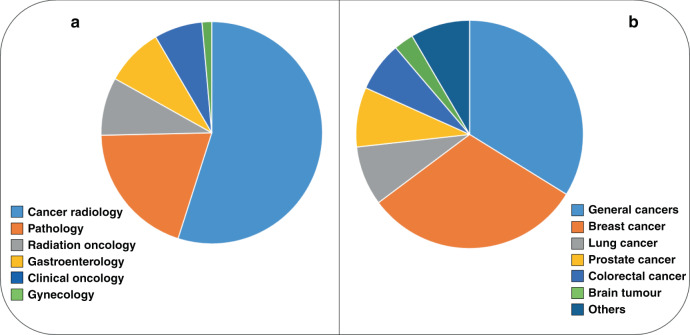
Artificial intelligence (AI) is concretely reshaping the landscape and horizons of oncology, opening new important opportunities for improving the management of cancer patients. Analysing the AI-based devices that have already obtained the official approval by the Federal Drug Administration (FDA), here we show that cancer diagnostics is the oncology-related area in which AI is already entered with the largest impact into clinical practice. Furthermore, breast, lung and prostate cancers represent the specific cancer types that now are experiencing more advantages from AI-based devices. The future perspectives of AI in oncology are discussed: the creation of multidisciplinary platforms, the comprehension of the importance of all neoplasms, including rare tumours and the continuous support for guaranteeing its growth represent in this time the most important challenges for finalising the 'AI-revolution' in oncology.
© 2021. The Author(s).
Conflict of interest statement
The authors declare no competing interests.
Figures
References
-
- Bhinder B, Gilvary C, Madhukar NS, Elemento O. Artificial intelligence in cancer research and precision medicine. Cancer Disco. 2021;11:900–15. doi: 10.1158/2159-8290.CD-21-0090. - DOI - PMC - PubMed
Publication types
MeSH terms
LinkOut - more resources
Full Text Sources
Medical
