. 2022 Mar;11(1):167-183.
doi: 10.1007/s40120-021-00304-w. Epub 2021 Nov 27.

Epidemiology, Demographics, Triptan Contraindications, and Prescription Patterns of Patients with Migraine: A German Claims Database Study

Affiliations

Epidemiology, Demographics, Triptan Contraindications, and Prescription Patterns of Patients with Migraine: A German Claims Database Study

Astrid Gendolla et al. Neurol Ther. 2022 Mar.

Abstract

Introduction: Migraine is a neurological disease with a considerable economic and societal burden that negatively impacts quality of life and productivity. Triptans are potent serotonin receptor agonists widely used to treat migraine attacks. Little is known about German patients with migraine diagnosed with triptan contraindications or those who discontinue triptans.

Methods: This retrospective observational study identifies adults with migraine from a German sickness fund database (2010-2018). Migraine prevalence was calculated for the database population and extrapolated to the German Statutory Health Insurance (SHI) population. Medication use, proportion and demographics of patients with triptan contraindications, prevalence of triptan discontinuation and use of triptans by patients with contraindications were analysed.

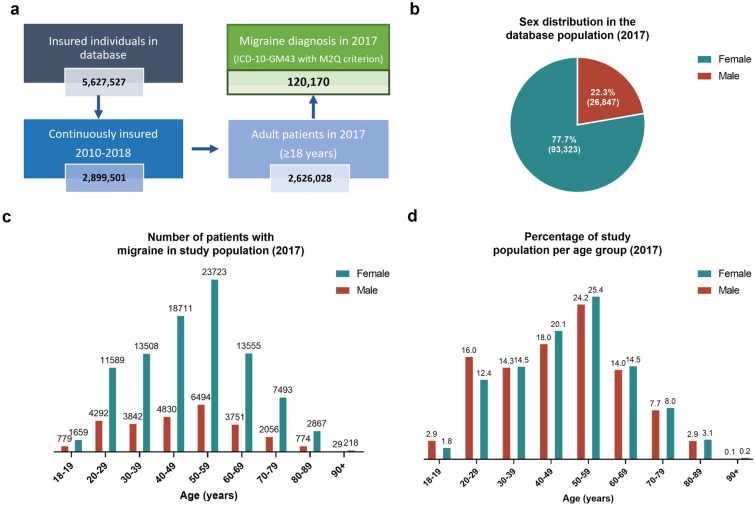
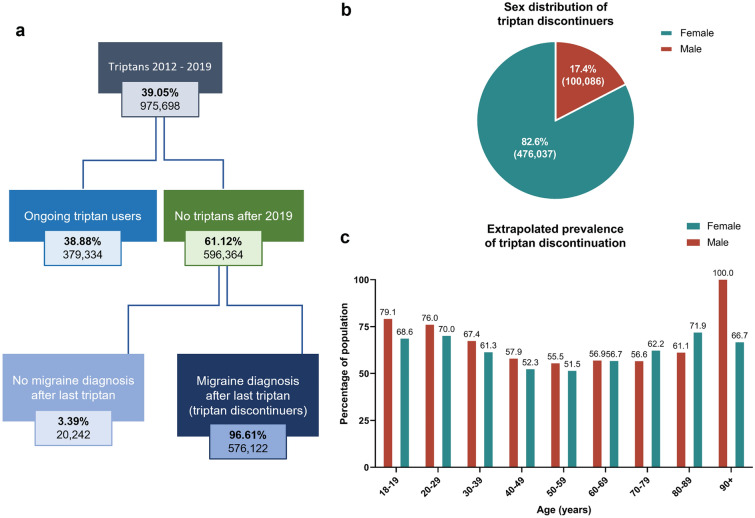
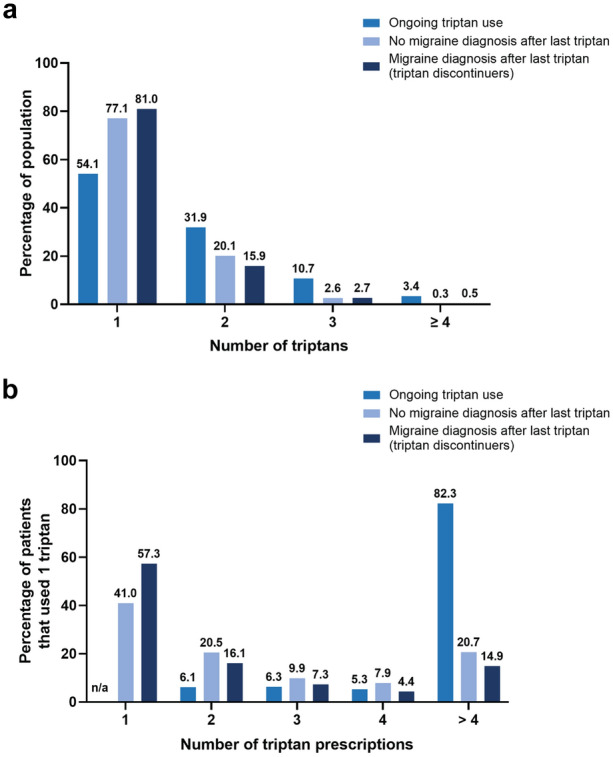
Results: In total 120,170 patients with migraine were identified in the database population, of whom 77.7% were female; migraine prevalence was 2.0% (male) and 7.3% (female), leading to an extrapolated 2,923,979 patients with migraine in the entire German SHI population (2019); of these, 14.5% had ≥ 1 triptan contraindication. The most frequent contraindication was a history of stroke/transient ischaemic attack. However, an extrapolated 25.9% of patients who had a triptan contraindication received a triptan prescription following diagnosis. We calculated that 975,698 patients in the entire German SHI population had ever received a triptan, of whom 596,364 did not receive a triptan prescription in the follow-up year. Of these 596,364 individuals, 96.6% continued to receive a migraine diagnosis after their last triptan prescription. These 'triptan discontinuers' were predominantly female (82.6%). Most patients utilized only one specific triptan, with a large majority of ongoing triptan users who had used this specific triptan receiving > 4 prescriptions.

Conclusion: We confirm the existence of German patients with migraine and unmet therapeutic needs. These are patients diagnosed with triptan contraindications or patients who have discontinued triptan use despite continued migraine attacks. More research is needed to ascertain reasons for triptan discontinuation and the risk of triptan use by patients with contraindications.

Keywords: Claims study; Contraindications; Epidemiology; German population; Migraine; Triptans.


Figures

Fig. 1
Fig. 1
Sample identification and patient demographics. a Flow chart for the identification of the database population. b Sex distribution and absolute numbers of patients with migraine in the database population. c Absolute numbers of male and female patients with migraine per age category. d Age distribution of male and female patient with migraine in the database population. ICD-10-GM International Classification of Disease 10th Edition; German Modification, M2Q criterion at least 2 quarters [“Mindestens zwei Quartale”]
Fig. 2
Fig. 2
Migraine prevalence by age and sex extrapolated to the entire German SHI population. a Prevalence and number of patients with migraine in the German SHI population. b Number of patients with migraine by sex and age category in the German SHI population. SHI German Statutory Health Insurance scheme
Fig. 3
Fig. 3
Triptan contraindications in the entire German SHI migraine population. a Percentage of patients with migraine with ≥ 1 triptan contraindication, extrapolated to the entire German SHI population. b List of the 7 most frequent triptan contraindications in the entire German SHI population. For hypertension only hypertensive crisis, malignant essential hypertension and hypertensive heart/renal disease were considered. c Number of patients with migraine with ≥ 1 tripan contraindication by sex and age categories in the entire German SHI population. d Prevalence of ≥ 1 tripan contraindication in patients with migraine by sex and age categories in the entire German SHI population. SHI Statutory Health Insurance, TIA Transient Ischaemic Attack
Fig. 4
Fig. 4
Use of triptans by patients with contraindications in the entire German SHI migraine population. a Extrapolated percentage and number of patients with migraine in the entire German SHI using triptans despite the presence of ≥ 1 triptan contraindication. b Prevalence of triptan prescriptions in patients with a minimum ≥ 1 triptan contraindication by age and sex category, extrapolated to the entire German SHI population
Fig. 5
Fig. 5
Overview of triptan use patterns and analysis of triptan discontinuation by patients with migraine without triptan contraindications in the entire German SHI population. a Flow chart depicting the use of triptans by German patients with migraine and identification of an extrapolated 576,122 patients who received a migraine diagnosis after discontinuing use of triptans (termed ‘triptan discontinuers’). b Extrapolated numbers and sex distribution of the triptan discontinuer population. c Extrapolated prevalence of triptan discontinuation within the total triptan experienced patient population categorized by age and sex
Fig. 6
Fig. 6
Triptan prescription and use patterns in the database population. a Observed number of different triptans used by patients with migraine in the database population. b Observed percentage of patients with migraine (that used a single triptan) who received 1, 2, 3, 4, or > 4 prescriptions for that single triptan

References

    1. Dodick DW. Migraine. Lancet. 2018;391(10127):1315–1330. doi: 10.1016/S0140-6736(18)30478-1. - DOI - PubMed
    1. GBDH 2016 Headache Collaborators Global, regional, and national burden of migraine and tension-type headache, 1990–2016: a systematic analysis for the Global Burden of Disease Study 2016. Lancet Neurol. 2018;17(11):954–976. doi: 10.1016/S1474-4422(18)30322-3. - DOI - PMC - PubMed
    1. GBD 2017 Disease and Injury Incidence and Prevalence Collaborators Global, regional, and national incidence, prevalence, and years lived with disability for 354 diseases and injuries for 195 countries and territories, 1990–2017: a systematic analysis for the Global Burden of Disease Study 2017. Lancet. 2018;392(10159):1789–1858. doi: 10.1016/S0140-6736(18)32279-7. - DOI - PMC - PubMed
    1. Woldeamanuel YW, Cowan RP. Migraine affects 1 in 10 people worldwide featuring recent rise: a systematic review and meta-analysis of community-based studies involving 6 million participants. J Neurol Sci. 2017;372:307–315. doi: 10.1016/j.jns.2016.11.071. - DOI - PubMed
    1. Steiner TJ, Stovner LJ, Jensen R, Uluduz D, Katsarava Z. Lifting the burden: the global campaign against H. Migraine remains second among the world’s causes of disability, and first among young women: findings from GBD2019. J Headache Pain. 2020;21(1):137. doi: 10.1186/s10194-020-01208-0. - DOI - PMC - PubMed

LinkOut - more resources