


Aging-related fears and their associations with ideal life expectancy
- PMID: 34840544
- PMCID: PMC8607224
- DOI: 10.1007/s10433-021-00661-3
Aging-related fears and their associations with ideal life expectancy
Abstract
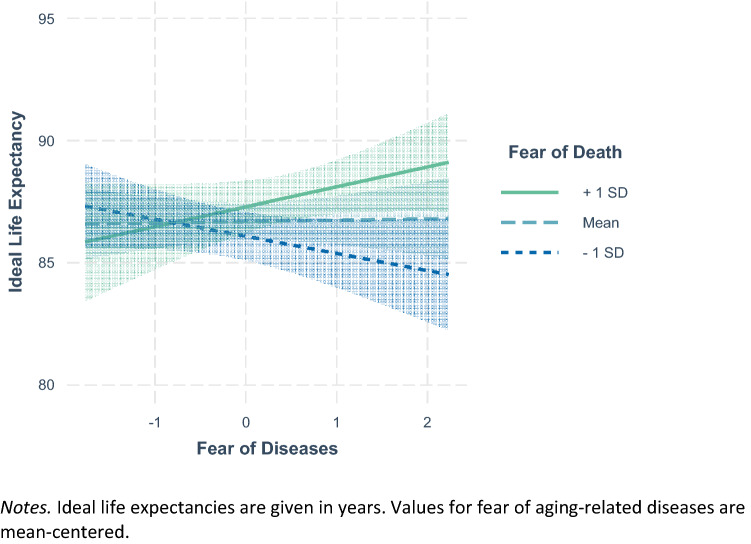
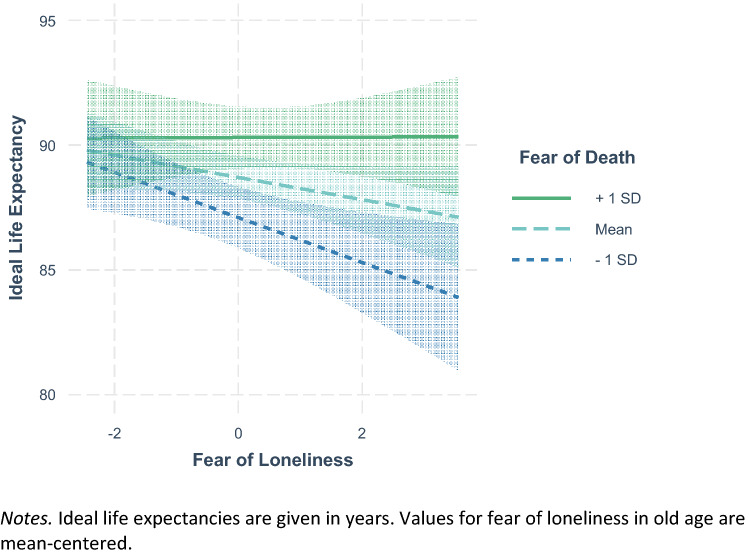
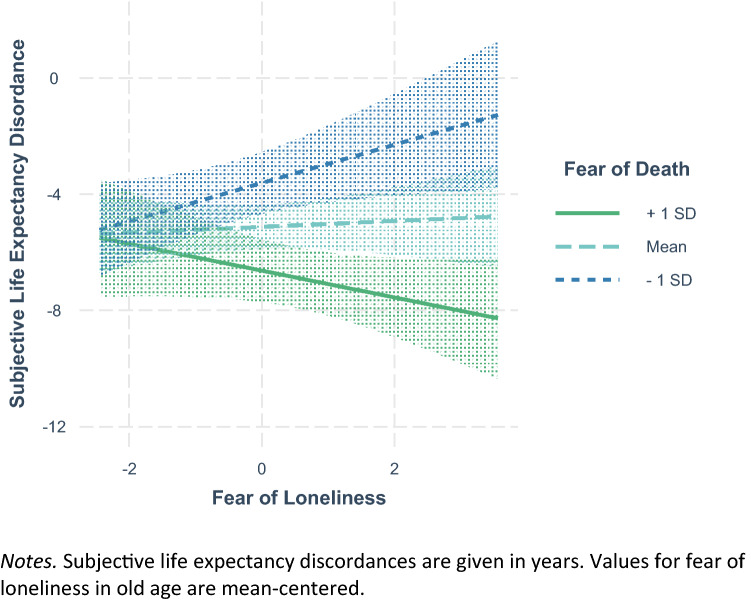
Fears regarding various aspects tend to stimulate individuals to escape or to avoid the sources of the threat. We concluded that fears associated with the future aging process, like the fear of aging-related diseases, the fear of loneliness in old age, and the fear of death, would stimulate patterns of avoidance when it comes to ideal life expectancy. We expected fear of aging-related diseases and fear of loneliness in old age to be related to lower ideal life expectancies. We expected fear of death to be related to higher ideal life expectancies. In two adult lifespan samples [N 1 = 1065 and N 2 = 591; ages ranging from 18 to 95 years, M (SD)1 = 58.1 (17.2) years, M (SD)2 = 52.6 (18.1) years], we were able to support our hypothesis regarding fear of death. We furthermore found significant interactions among the fears, indicating that individuals fearing diseases or loneliness but being unafraid of death opted for the shortest lives. Our results indicate that fears regarding life in very old age might be associated with the wish to avoid this age period; the fear of death was however associated with the wish for particularly long lives, and thus, with distancing oneself from the dreaded event of death. We conclude that fears seem to be associated with how individuals approach old age and with what they wish for in their own future as aged people.
Keywords: Aging-related fears; Fear of death; Ideal life expectancy; Longevity desires.
© The Author(s) 2021.
Conflict of interest statement
Conflict interestThe authors report no conflict of interest.
Figures
References
-
- Adams-Price CE, Smith GR, Giesen JM, Morse LW (2016) The desire for longevity: Development of the Personal Longevity Scale. Educ Gerontol 42:675–685. 10.1080/03601277.2016.1218200
-
- Arber S, Vandrevala T, Daly T, Hampson S. Understanding gender differences in older people’s attitudes towards life-prolonging medical technologies. J Aging Stud. 2008;22:366–375. doi: 10.1016/j.jaging.2008.05.009. - DOI
-
- Arrindell WA, Pickersgill MJ, Merckelbach H, Ardon MA, Cornet FC. Phobic dimensions: III. Factor analytic approaches to the study of common phobic fears: an updated review of findings obtained with adult subjects. Adv Behav Res Ther. 1991;13:73–130. doi: 10.1016/0146-6402(91)90014-2. - DOI
LinkOut - more resources
Full Text Sources
