


Burden of puerperal sepsis and its associated factors in Ethiopia: a systematic review and meta-analysis
- PMID: 34844656
- PMCID: PMC8628469
- DOI: 10.1186/s13690-021-00732-y
Burden of puerperal sepsis and its associated factors in Ethiopia: a systematic review and meta-analysis
Abstract
Background: Puerperal sepsis is a genital tract infection that can occur from amniotic fluid rupture to six weeks after birth. Maternal complication associated with puerperal sepsis includes prolonged hospital stay, septicemia, disseminated intravascular coagulation, pelvic inflammatory disease, infertility, and death. Even though, puerperal sepsis is the fourth leading cause of maternal morbidity and mortality in Ethiopia the overall prevalence of puerperal sepsis and its associated factors are not studied at the national stage. As a result, this systematic review and meta-analysis bring out the pooled prevalence of puerperal sepsis and its associated factors in Ethiopia.
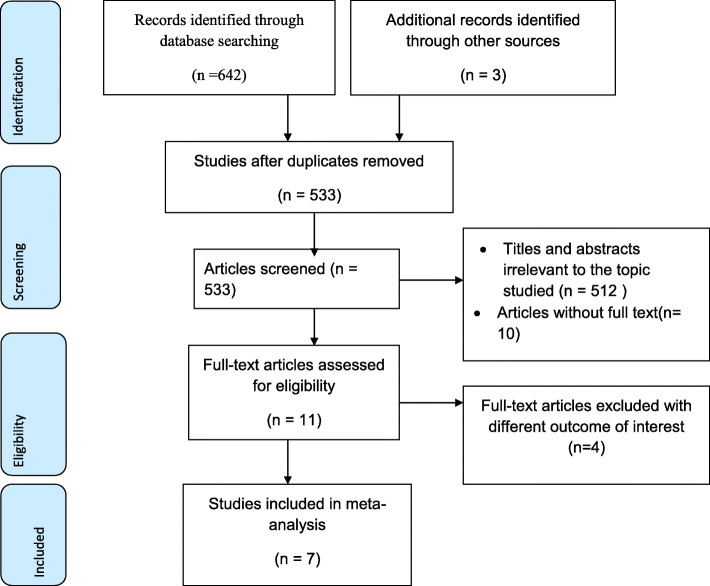
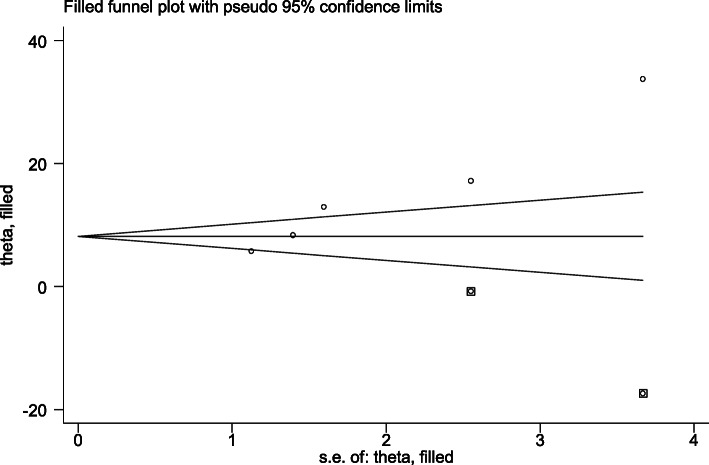
Methods: A variety of data sources such as Pub Med, Web of Science, Science Direct, Embase, Google Scholar, HINARI, and Ethiopian universities online repositories were searched to identify the primary studies which were used for this systematic review and meta-analysis. The article search was conducted from February10/2021-March 10/2021. The quality of the selected primary studies was assessed using the Newcastle - Ottawa quality assessment Scale (NOS). Data extraction was done with Microsoft Excel and then exported to STATA 11 version statistical software for analysis. The Cochran (Q-test) and I2 test statistics were used to assess the heterogeneity of the studies. Publication bias was evaluated by the eggers regression test. Subgroup analysis was performed with region and sample size category.
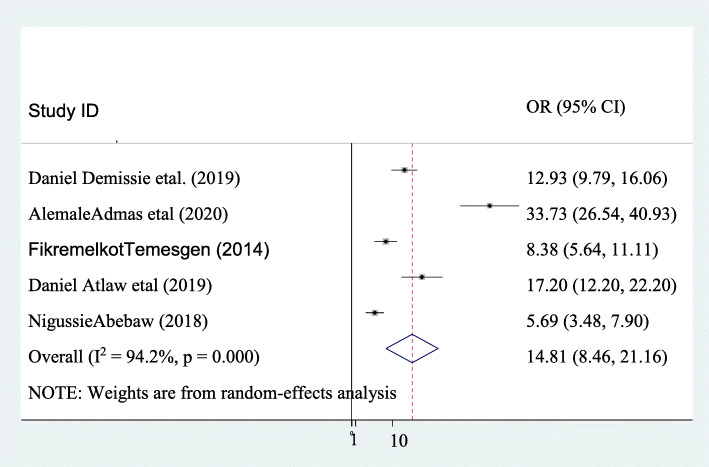
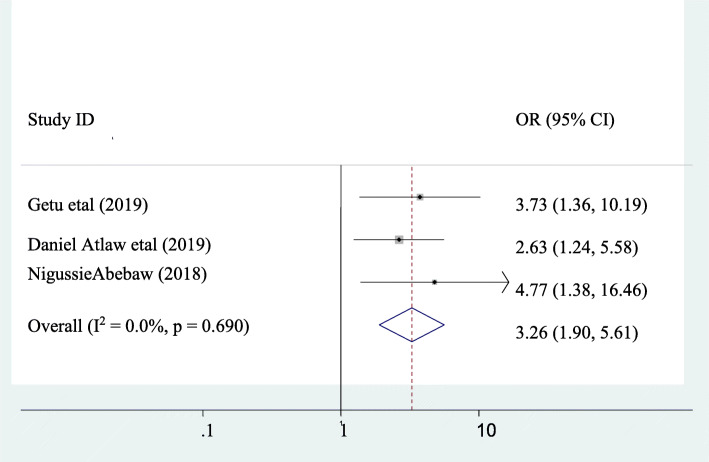
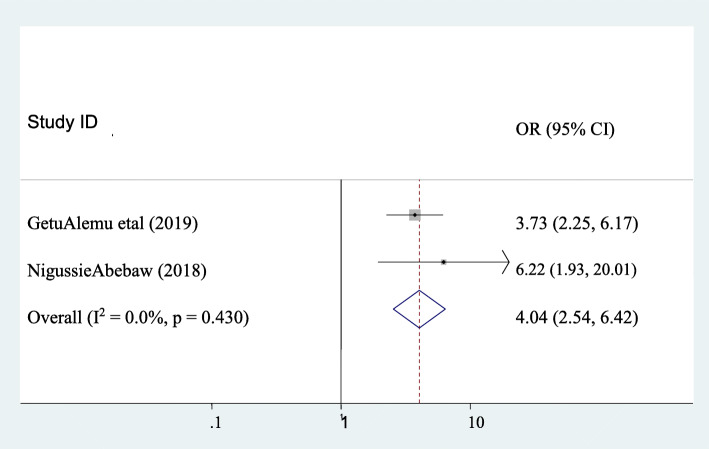
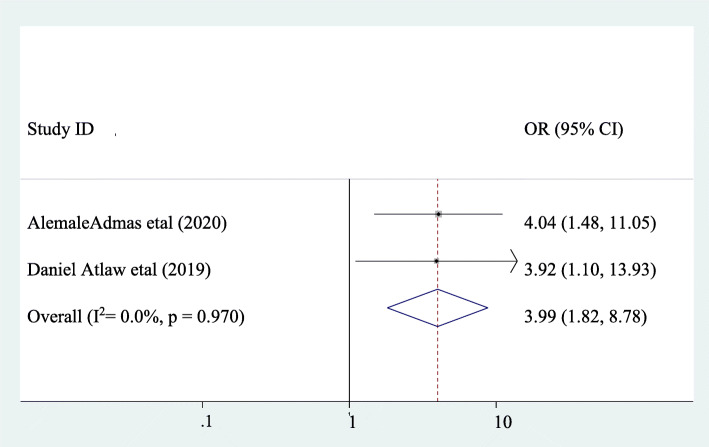
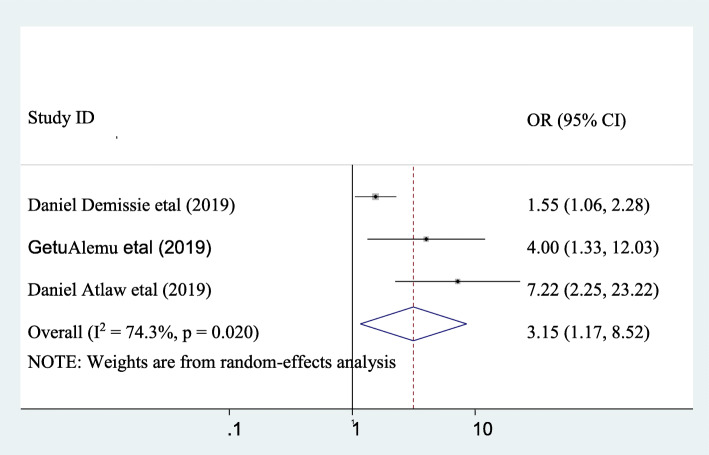
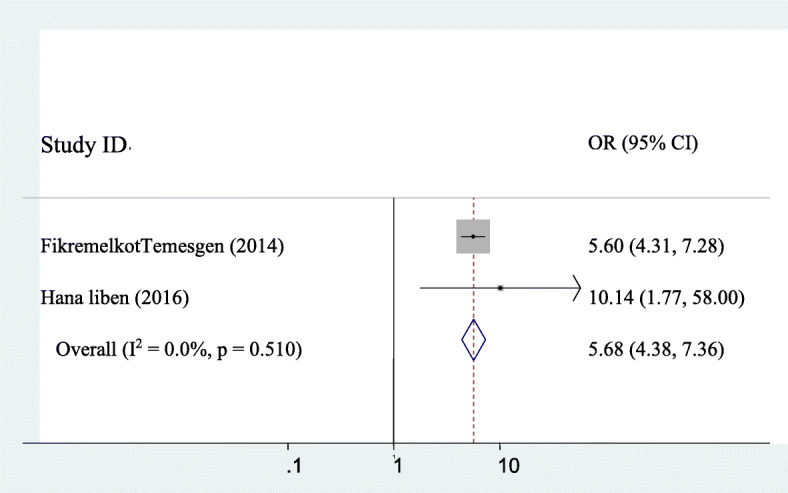
Result: In this review, a total of 2222 respondents were involved from seven studies. The pooled prevalence of puerperal sepsis was 14.811% (95%CI; 8.46: 21.16; I2 = 94.2, P ≤ 0.001). Cesarean section delivery (CSD) (OR = 3.26, 95%CI: 1.90, 5.61), membrane rupture≥24 h (OR = 4.04, 95%CI: 2.54, 6.42), being multiparous mother (OR = 3.99, 95%CI: 1.82, 8.78), vaginal examination≥5 times (OR = 3.15, 95%CI: 1.17, 8.52), and anemia (OR = 5.68, 95%CI: 4.38, 7.36) were factors significantly associated with puerperal sepsis.
Conclusion: The prevalence of puerperal sepsis was high in Ethiopia. CSD, membrane rupture≥24 h, being multiparous mother, vaginal examination≥5, and anemia were factors associated with puerperal sepsis. Appropriate standard infection prevention techniques during CSD shall be practiced to reduce the maternal burden of puerperal sepsis. The unnecessary vaginal examination should be discouraged during the intrapartum period. Besides this, routine Iron sulfate supplementation and counsel on iron reach foods during ante partum and postpartum shall be considered for all mothers.
Keywords: Associated factors; Burden; Ethiopia; Puerperal sepsis.
© 2021. The Author(s).
Conflict of interest statement
There is no conflict of interest for systematic review and meta-analysis.
Figures
References
-
- Demisse GA, Sifer SD, Kedir B, Fekene DB, Bulto GA. Determinants of puerperal sepsis among post partum women at public hospitals in west SHOA zone Oromia regional STATE, Ethiopia (institution BASEDCASE control study) BMC pregnancy and childbirth. 2019;19(1):1–6. doi: 10.1186/s12884-019-2230-x. - DOI - PMC - PubMed
-
- Madhudas CKF, Sirichand P. Maternal morbidity and mortality associated with puerperal Sepsis. J Liquat Univ Med Heal Sci. 2008;10(2):121–123.
-
- Kehoe S NJ, Norman J.. Maternal and infant deaths: chasing millennium development goals 4 and 5. London. RCOG. 2010:433.
Publication types
Grants and funding
LinkOut - more resources
Full Text Sources
