


From pandemic response to portable population health: A formative evaluation of the Detroit mobile health unit program
- PMID: 34847164
- PMCID: PMC8631611
- DOI: 10.1371/journal.pone.0256908
From pandemic response to portable population health: A formative evaluation of the Detroit mobile health unit program
Abstract
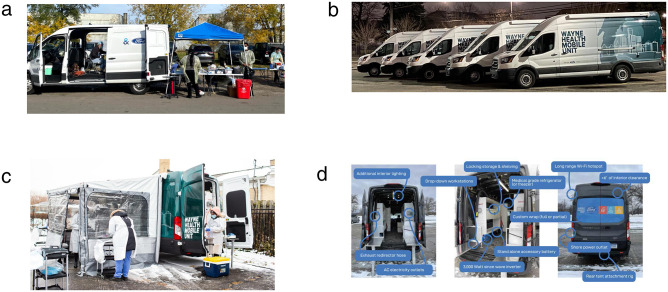
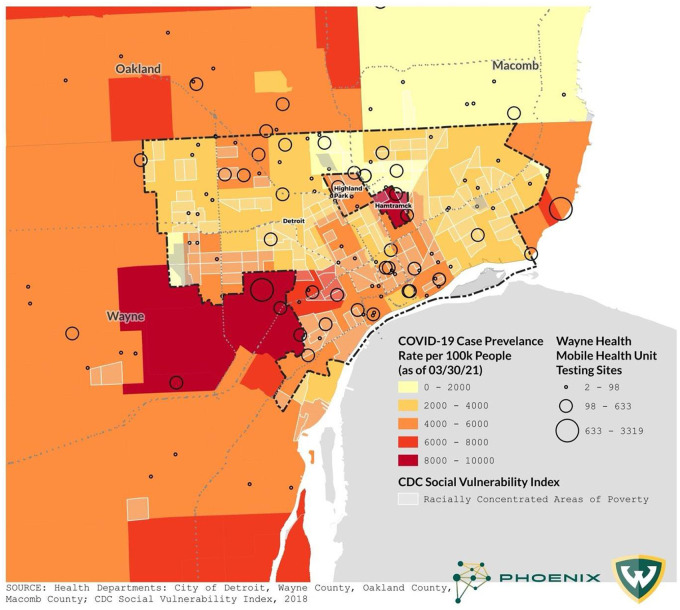
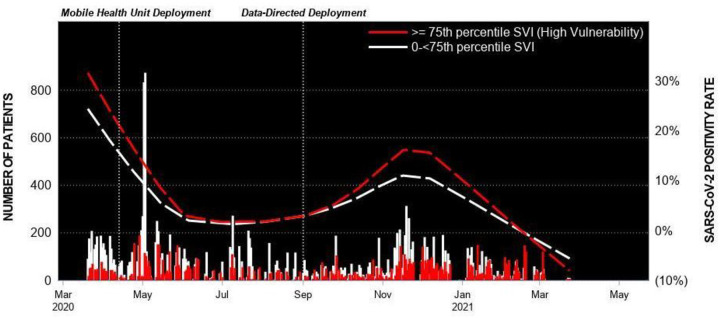
This article describes our experience developing a novel mobile health unit (MHU) program in the Detroit, Michigan, metropolitan area. Our main objectives were to improve healthcare accessibility, quality and equity in our community during the novel coronavirus pandemic. While initially focused on SARS-CoV-2 testing, our program quickly evolved to include preventive health services. The MHU program began as a location-based SARS-CoV-2 testing strategy coordinated with local and state public health agencies. Community needs motivated further program expansion to include additional preventive healthcare and social services. MHU deployment was targeted to disease "hotspots" based on publicly available SARS-CoV-2 testing data and community-level information about social vulnerability. This formative evaluation explores whether our MHU deployment strategy enabled us to reach patients from communities with heightened social vulnerability as intended. From 3/20/20-3/24/21, the Detroit MHU program reached a total of 32,523 people. The proportion of patients who resided in communities with top quartile Centers for Disease Control and Prevention Social Vulnerability Index rankings increased from 25% during location-based "drive-through" SARS-CoV-2 testing (3/20/20-4/13/20) to 27% after pivoting to a mobile platform (4/13/20-to-8/31/20; p = 0.01). The adoption of a data-driven deployment strategy resulted in further improvement; 41% of the patients who sought MHU services from 9/1/20-to-3/24/21 lived in vulnerable communities (Cochrane Armitage test for trend, p<0.001). Since 10/1/21, 1,837 people received social service referrals and, as of 3/15/21, 4,603 were administered at least one dose of COVID-19 vaccine. Our MHU program demonstrates the capacity to provide needed healthcare and social services to difficult-to-reach populations from areas with heightened social vulnerability. This model can be expanded to meet emerging pandemic needs, but it is also uniquely capable of improving health equity by addressing longstanding gaps in primary care and social services in vulnerable communities.
Conflict of interest statement
The authors have declared that no competing interests exist.
Figures
References
-
- Dasgupta S, Bowen VB, Leidner A, Fletcher K, Rose C, Cha A, et al.. Association Between Social Vulnerability and a County’s Risk for Becoming a COVID-19 Hotspot—United States, June 1–July 25, 2020. Morbidity and Mortality Weekly Report. 2020;69(42):1535. doi: 10.15585/mmwr.mm6942a3 - DOI - PMC - PubMed
Publication types
MeSH terms
LinkOut - more resources
Full Text Sources
Miscellaneous
