


Dosage, Intensity, and Frequency of Language Therapy for Aphasia: A Systematic Review-Based, Individual Participant Data Network Meta-Analysis
- PMID: 34847708
- PMCID: PMC8884127
- DOI: 10.1161/STROKEAHA.121.035216
Dosage, Intensity, and Frequency of Language Therapy for Aphasia: A Systematic Review-Based, Individual Participant Data Network Meta-Analysis
Abstract
Background and purpose: Optimizing speech and language therapy (SLT) regimens for maximal aphasia recovery is a clinical research priority. We examined associations between SLT intensity (hours/week), dosage (total hours), frequency (days/week), duration (weeks), delivery (face to face, computer supported, individual tailoring, and home practice), content, and language outcomes for people with aphasia.
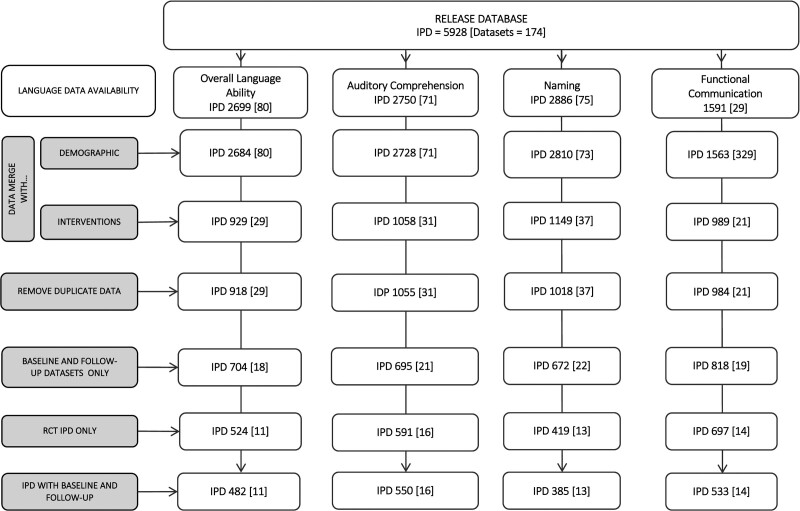
Methods: Databases including MEDLINE and Embase were searched (inception to September 2015). Published, unpublished, and emerging trials including SLT and ≥10 individual participant data on aphasia, language outcomes, and time post-onset were selected. Patient-level data on stroke, language, SLT, and trial risk of bias were independently extracted. Outcome measurement scores were standardized. A statistical inferencing, one-stage, random effects, network meta-analysis approach filtered individual participant data into an optimal model examining SLT regimen for overall language, auditory comprehension, naming, and functional communication pre-post intervention gains, adjusting for a priori-defined covariates (age, sex, time poststroke, and baseline aphasia severity), reporting estimates of mean change scores (95% CI).
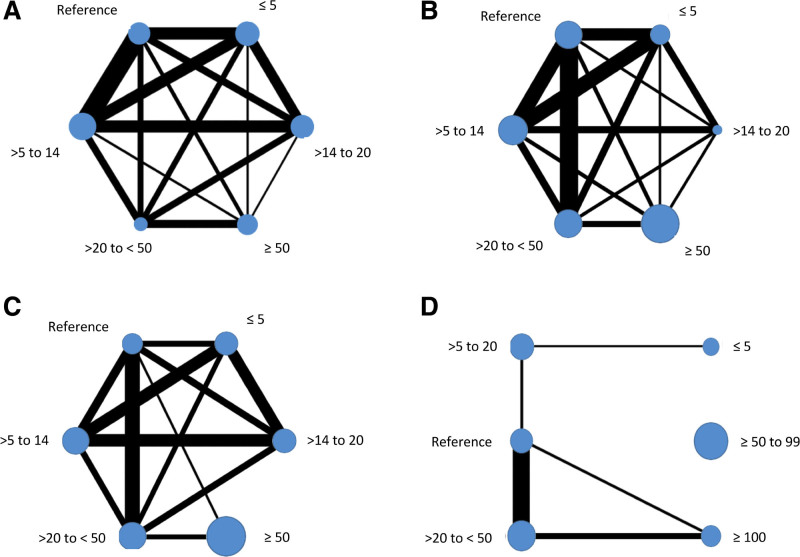
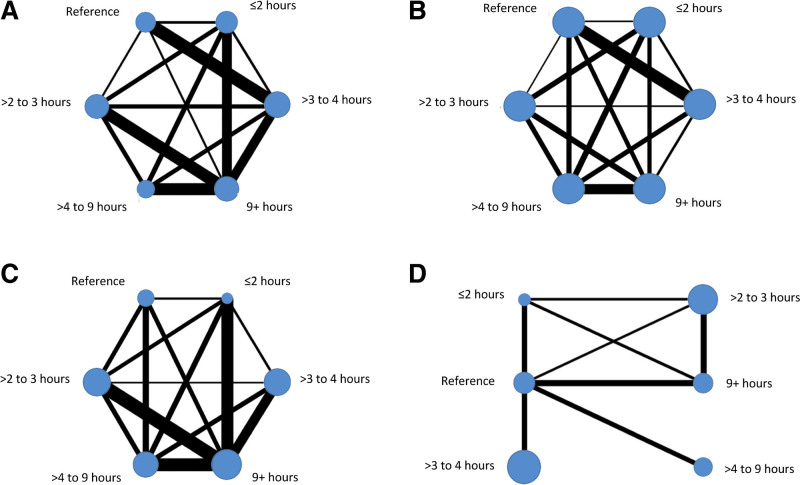
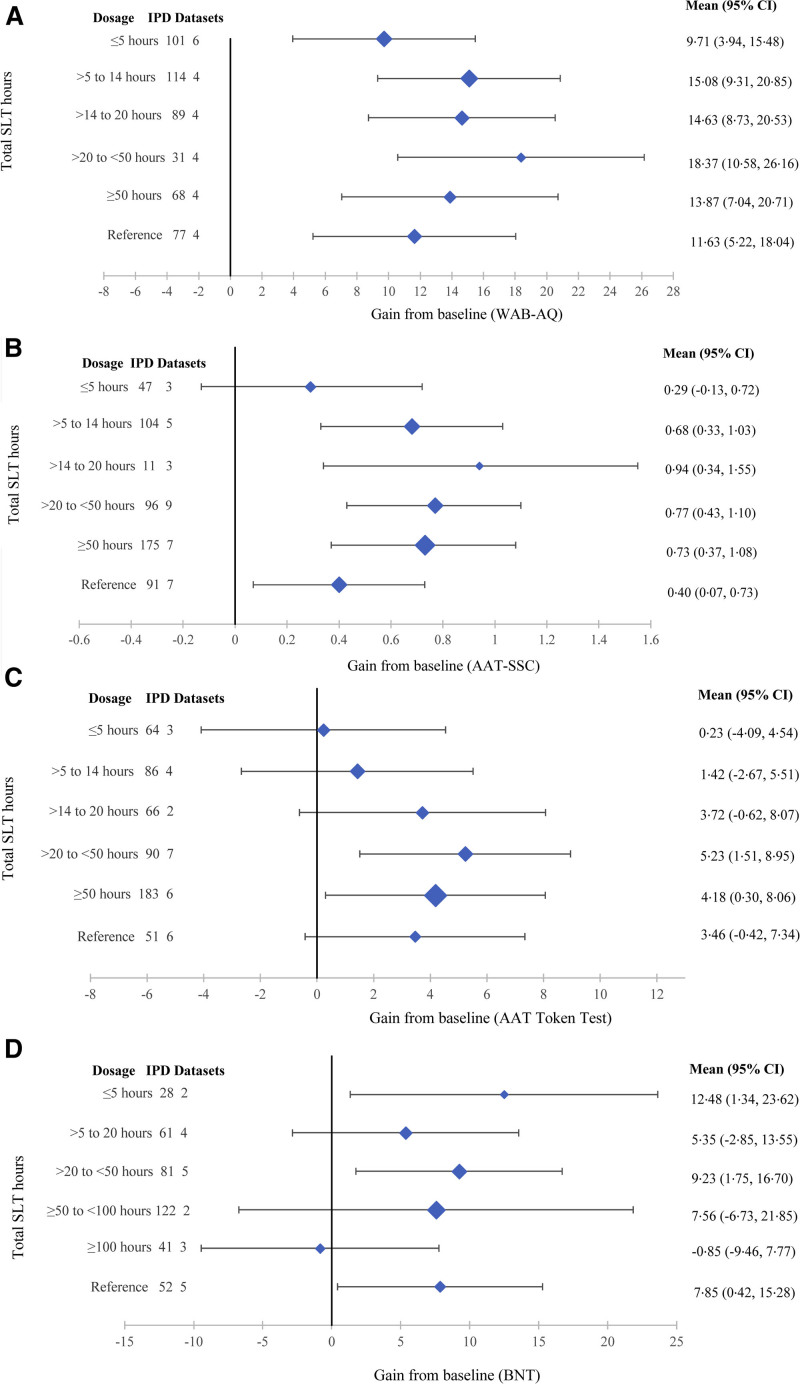
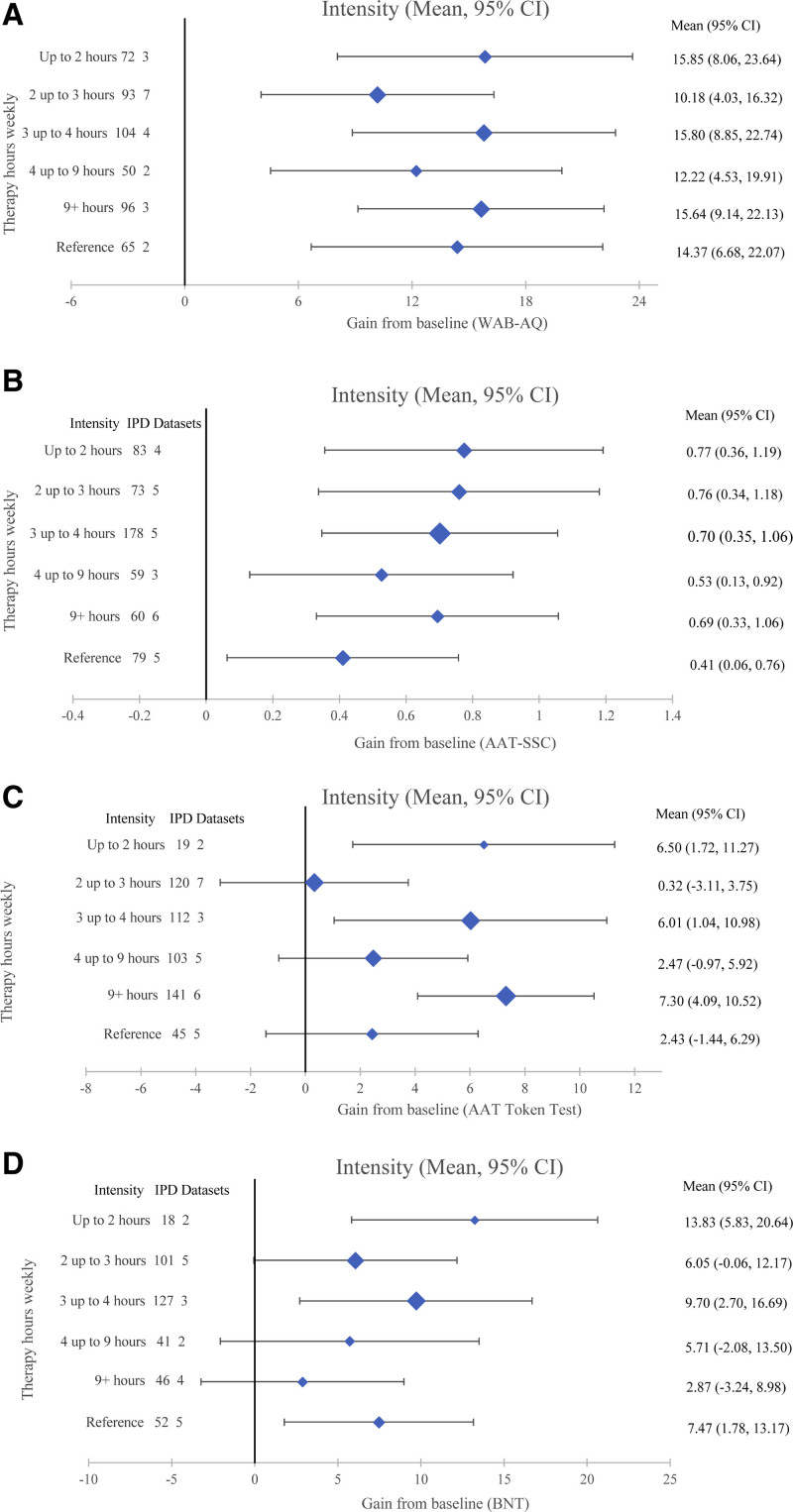
Results: Data from 959 individual participant data (25 trials) were included. Greatest gains in overall language and comprehension were associated with >20 to 50 hours SLT dosage (18.37 [10.58-26.16] Western Aphasia Battery-Aphasia Quotient; 5.23 [1.51-8.95] Aachen Aphasia Test-Token Test). Greatest clinical overall language, functional communication, and comprehension gains were associated with 2 to 4 and 9+ SLT hours/week. Greatest clinical gains were associated with frequent SLT for overall language, functional communication (3-5+ days/week), and comprehension (4-5 days/week). Evidence of comprehension gains was absent for SLT ≤20 hours, <3 hours/week, and ≤3 days/week. Mixed receptive-expressive therapy, functionally tailored, with prescribed home practice was associated with the greatest overall gains. Relative variance was <30%. Risk of trial bias was low to moderate; low for meta-biases.
Conclusions: Greatest language recovery was associated with frequent, functionally tailored, receptive-expressive SLT, with prescribed home practice at a greater intensity and duration than reports of usual clinical services internationally. These exploratory findings suggest critical therapeutic ranges, informing hypothesis-testing trials and tailoring of clinical services. Registration: URL: https://www.crd.york.ac.uk/PROSPERO/; Unique identifier: CRD42018110947.
Keywords: aphasia; big data; comprehension; language therapy; meta-analysis; stroke.
Figures
References
-
- Dickey L, Kagan A, Lindsay MP, Fang J, Rowland A, Black S. Incidence and profile of inpatient stroke-induced aphasia in Ontario, Canada. Arch Phys Med Rehabil. 2010;91:196–202. doi: 10.1016/j.apmr.2009.09.020 - PubMed
-
- Bersano A, Burgio F, Gattinoni M, Candelise L; PROSIT Study Group. Aphasia burden to hospitalised acute stroke patients: need for an early rehabilitation programme. Int J Stroke. 2009;4:443–447. doi: 10.1111/j.1747-4949.2009.00349.x - PubMed
-
- Paolucci S, Matano A, Bragoni M, Coiro P, De Angelis D, Fusco FR, Morelli D, Pratesi L, Venturiero V, Bureca I. Rehabilitation of left brain-damaged ischemic stroke patients: the role of comprehension language deficits. A matched comparison. Cerebrovasc Dis. 2005;20:400–406. doi: 10.1159/000088671 - PubMed
-
- Hilari K, Northcott S. ‘Struggling to stay connected’: comparing the social relationships of healthy older people and people with stroke and aphasia. Aphasiology. 2016;31:674–687.
