


The Clinical Genetics of Hemophilia B (Factor IX Deficiency)
- PMID: 34848993
- PMCID: PMC8627312
- DOI: 10.2147/TACG.S288256
The Clinical Genetics of Hemophilia B (Factor IX Deficiency)
Abstract
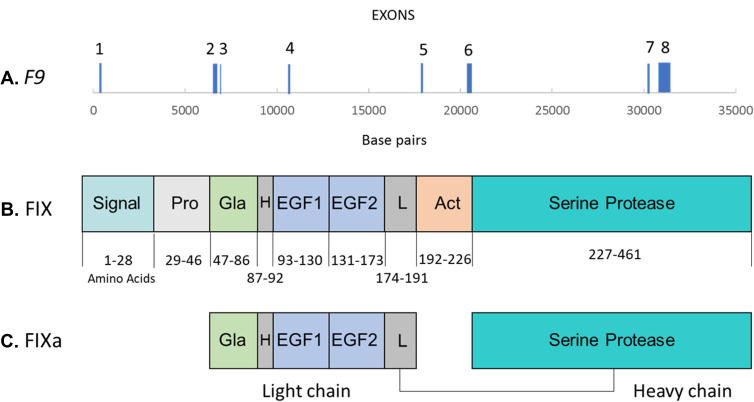
Hemophilia B (HB) is a bleeding disorder caused by deficiency of or defect in blood coagulation factor IX (FIX) inherited in an X-linked manner. It results from one of over 1000 known pathogenic variants in the FIX gene, F9; missense and frameshift changes predominate. Although primarily males are affected with HB, heterozygous females may have excessive bleeding due to random or non-random X chromosome inactivation; in addition, homozygous, compound heterozygous, and hemizygous females have been reported. Somatic and germinal mosaicism for F9 variants has been observed. Development of antibodies to FIX treatment products (inhibitors) is rare and related to the type of causative variant present. Treatment is with products produced by recombinant DNA technology, and gene therapy is in clinical trials. Genetic counseling with up-to-date information is warranted for heterozygotes, potential heterozygotes, and men and women affected with HB.
Keywords: factor IX; genetics; hematology; hemophilia B.
© 2021 Miller.
Conflict of interest statement
The author reports no conflicts of interest in this work.
Figures
References
Publication types
LinkOut - more resources
Full Text Sources
Miscellaneous
