


CTS teams: a new model for translational team training and team science intervention
- PMID: 34849258
- PMCID: PMC8596063
- DOI: 10.1017/cts.2021.854
CTS teams: a new model for translational team training and team science intervention
Abstract
Introduction: Clinical/translational science (CTS) is team-based, requiring effective collaboration and communication across many disciplines involving a variety of stakeholders. We implemented a pre-doctoral team-based training model with didactic and experiential curricular interventions to support the development of CTS research skills in a cross-disciplinary team environment. We assessed the potential impact of this new training model as a team science intervention that can catalyze new cross-disciplinary collaborations across the institution.
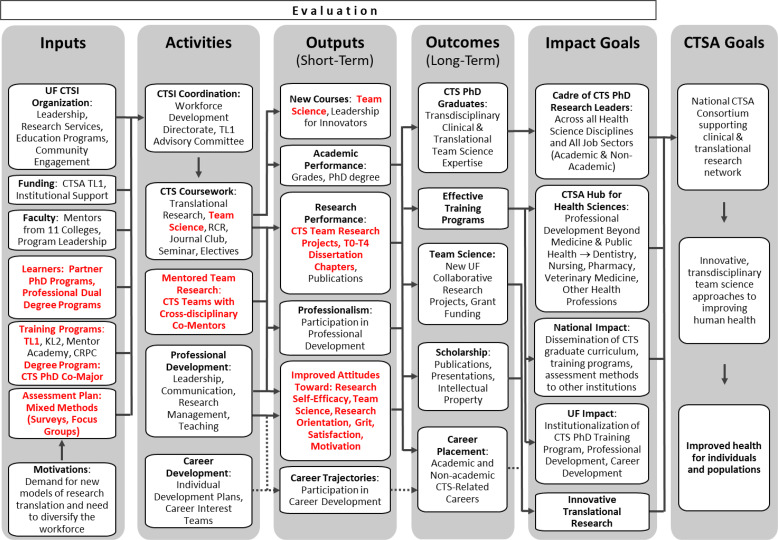
Methods: Between 2016 and 2020, 32 pre-doctoral students and 26 co-mentors participated in the assessment of the CTS Team program over a two-year period of TL1 training grant support. Data collection and analyses followed a program logic model and used a variety of metrics for clinical and translational scientist career success.
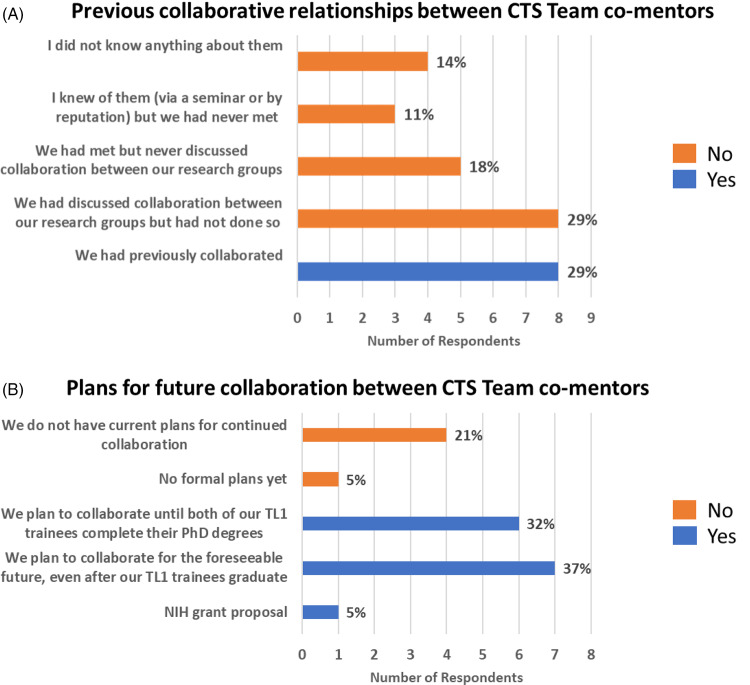
Results: CTS training in the context of CTS Teams supported improved self-efficacy for clinical research skills and resulted in a significant increase in the frequency of participation in cross-disciplinary collaborative activities by both trainees and mentors. Most CTS Team co-mentor pairs had not previously collaborated. Two-thirds of the co-mentors plan to continue collaborating, and most (85%) currently use or plan to use collaboration tools, for example, written collaboration plans, authorship agreements.
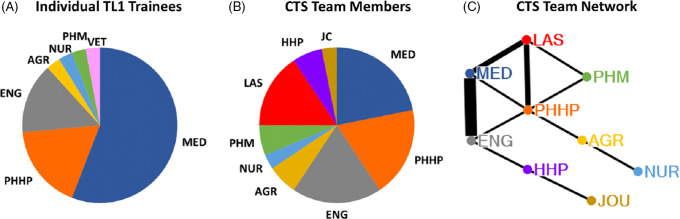
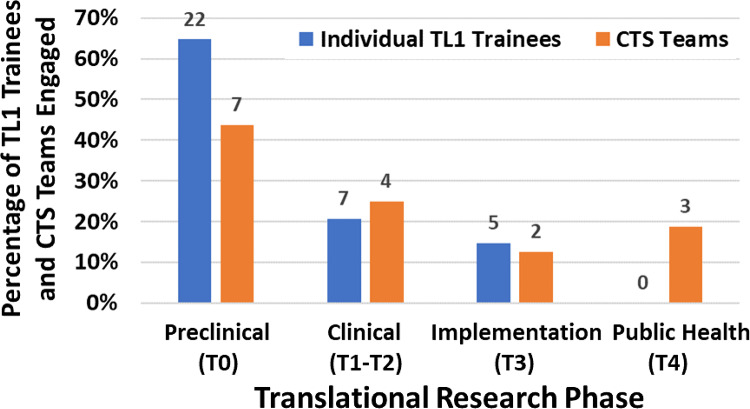
Conclusions: The CTS Team training model provides a unique clinical and translational science team training experience that embeds authentic cross-disciplinary research collaboration into PhD research projects. It establishes trainee cohorts that are diverse in terms of scientific disciplines and translational research phases, and creates a new cross-disciplinary community of practice across faculty members and research groups in multiple colleges.
Keywords: CTSA; TL1; Team science; evaluation; predoctoral.
© The Author(s) 2021.
Conflict of interest statement
The authors have no conflicts of interest to disclose.
Figures
References
-
- Clinical and Translational Science Award. National Institutes of Health PAR-18-940 [Internet], 2018. (https://grants.nih.gov/grants/guide/pa-files/par-18-940.html)
-
- Wuchty S, Jones B, Uzzi B. The increasing dominance of teams in production of knowledge. Science 2007; 316(5827): 1036–1039. - PubMed
-
- International Network for the Science of Team Science. [Internet], 2021. (https://www.inscits.org)
-
- Cooke N, Hilton M. Enhancing the Effectiveness of Team Science. Washington, DC: National Academies Press, 2015. - PubMed
Grants and funding
LinkOut - more resources
Full Text Sources
Research Materials
Miscellaneous