


Participation of rural patients in clinical trials at a multisite academic medical center
- PMID: 34849264
- PMCID: PMC8596068
- DOI: 10.1017/cts.2021.813
Participation of rural patients in clinical trials at a multisite academic medical center
Abstract
Objective: Clinical trials, which are mainly conducted in urban medical centers, may be less accessible to rural residents. Our aims were to assess participation and the factors associated with participation of rural residents in clinical trials.
Methods: Using geocoding, the residential address of participants enrolled into clinical trials at Mayo Clinic locations in Arizona, Florida, and the Midwest between January 1, 2016, and December 31, 2017, was categorized as urban or rural. The distance travelled by participants and trial characteristics was compared between urban and rural participants. Ordinal logistic regression analyses were used to evaluate whether study location and risks were associated with rural participation in trials.
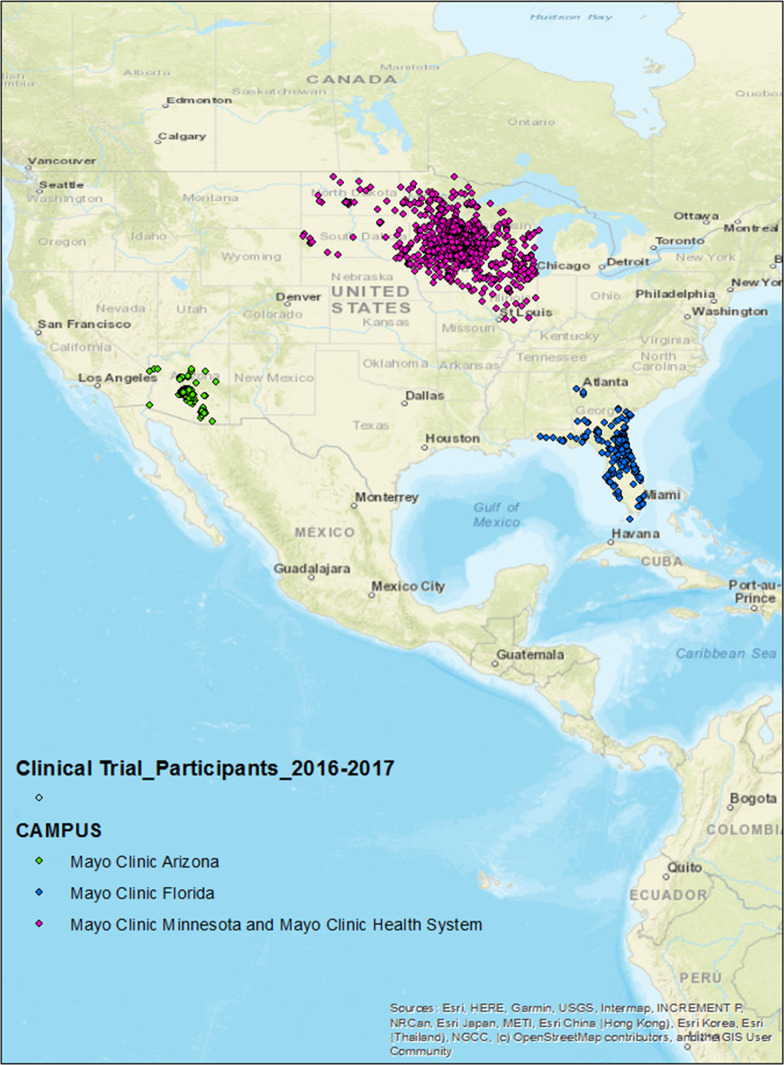
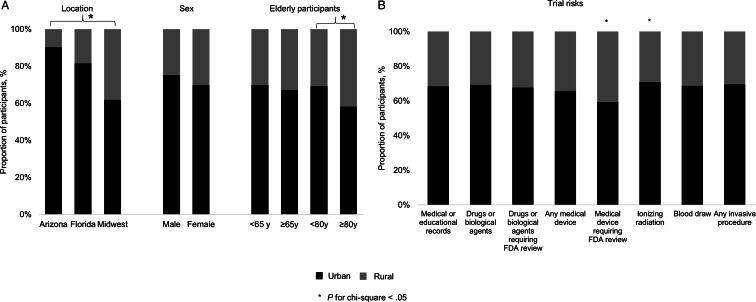
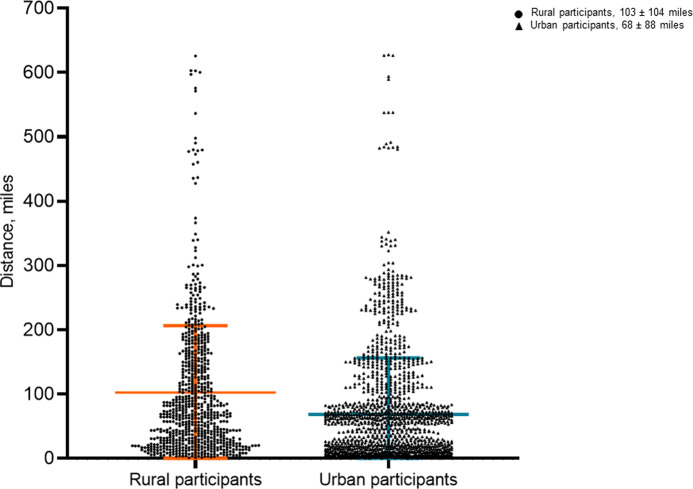
Results: Among 292 trials, including 136 (47%) cancer trials, there were 2313 participants. Of these, 731 (32%) were rural participants, which is greater than the rural population in these 9 states (19%, P < 0.001). Compared to urban participants, rural participants were older (65 ± 12 years vs 64 ± 12 years, P = 0.004) and travelled further to the medical center (103 ± 104 vs 68 ± 88 miles, P < 0.001). The proportion of urban and rural participants who were remunerated was comparable. In the multivariable analysis, the proportion of rural participants was lower (P < 0.001) in Arizona (10%) and Florida (18%) than the Midwest (38%) but not significantly associated with the study-related risks.
Conclusions: Approximately one in three clinical trial participants were rural residents versus one in five in the population. Rural residents travelled further to access clinical trials. The study-associated risks were not associated with the distribution of rural and urban participants in trials.
Keywords: Clinical trial; geocoding; recruitment; rural; urban.
© The Author(s) 2021.
Conflict of interest statement
The authors have no conflicts of interest to declare.
Figures
References
-
- Bureau USC. New Census Data Show Differences Between Urban and Rural Populations. https://www.census.gov/newsroom/press-releases/2016/cb16-210.html. Published 2016. Accessed 5/5/2021, 2021.
-
- Singh GK, Siahpush M. Widening rural-urban disparities in life expectancy, U.S., 1969–2009. American Journal of Preventive Medicine 2014; 46(2): e19–e29. - PubMed
-
- Krzyzanowska MK, Kaplan R, Sullivan R. How may clinical research improve healthcare outcomes? Annals of Oncology 2011; 22(Suppl 7): vii10–vii15. - PubMed
LinkOut - more resources
Full Text Sources