


Molecular trans-dural efflux to skull bone marrow in humans with CSF disorders
- PMID: 34849609
- PMCID: PMC9128823
- DOI: 10.1093/brain/awab388
Molecular trans-dural efflux to skull bone marrow in humans with CSF disorders
Abstract
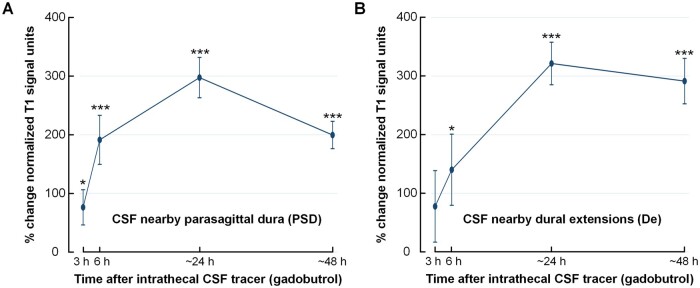
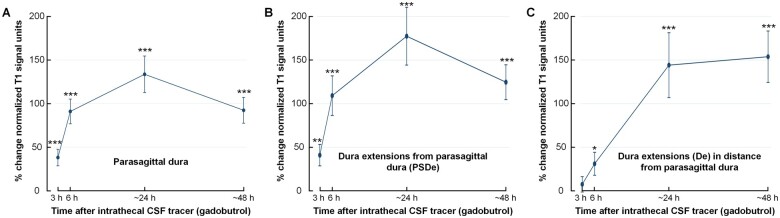
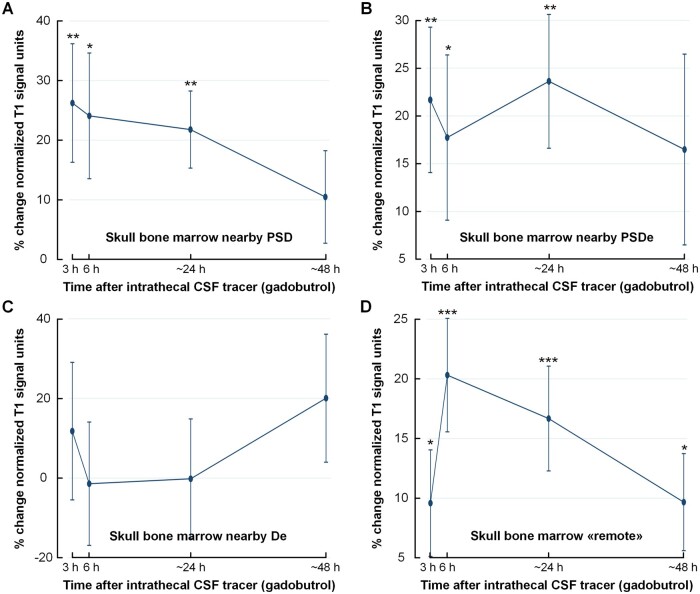
Dural sinuses were recently identified as a hub for peripheral immune surveillance of brain-derived antigens cleared through CSF. However, animal studies have also indicated that substances and cells may enter the intracranial compartment directly from bone marrow. We used MRI and a CSF tracer to investigate in vivo whether intracranial molecules can move via dura to skull bone marrow in patients with suspicion of CSF disorders. Tracer enrichment in CSF, dural regions and within skull bone marrow was assessed up to 48 h after intrathecal administration of gadobutrol (0.5 ml, 1 mmol/ml) in 53 patients. In participants diagnosed with disease, tracer enrichment within diploe of skull bone marrow was demonstrated nearby the parasagittal dura, nearby extensions of parasagittal dura into diploe, and in diploe of skull bone remote from the dura extensions. This crossing of meningeal and skull barriers suggests that bone marrow may contribute in brain immune surveillance also in humans.
Keywords: bone marrow; dural lymphatic vessels; immune system; parasagittal dura.
© The Author(s) (2021). Published by Oxford University Press on behalf of the Guarantors of Brain.
Figures
References
-
- Abbott NJ. Evidence for bulk flow of brain interstitial fluid: Significance for physiology and pathology. Neurochem Int. 2004;45(4):545–552. - PubMed
