


The impact of different plant extracts on population suppression of Helicoverpa armigera (Hub.) and tomato (Lycopersicon esculentum Mill) yield under field conditions
- PMID: 34852006
- PMCID: PMC8635350
- DOI: 10.1371/journal.pone.0260470
The impact of different plant extracts on population suppression of Helicoverpa armigera (Hub.) and tomato (Lycopersicon esculentum Mill) yield under field conditions
Retraction in
-
Retraction: The impact of different plant extracts on population suppression of Helicoverpa armigera (Hub.) and tomato (Lycopersicon esculentum Mill) yield under field conditions.PLoS One. 2022 Aug 17;17(8):e0272432. doi: 10.1371/journal.pone.0272432. eCollection 2022. PLoS One. 2022. PMID: 35976889 Free PMC article. No abstract available.
Abstract
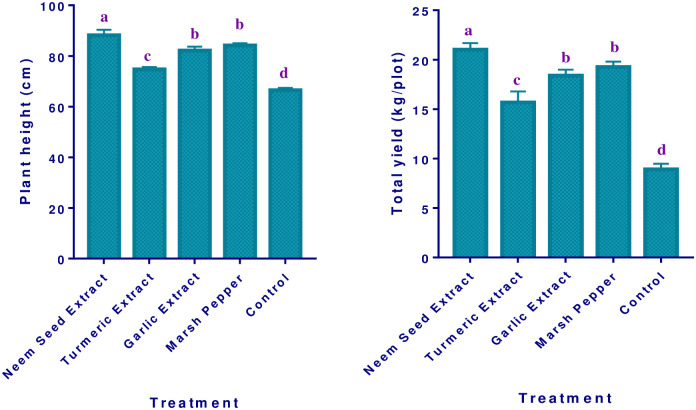
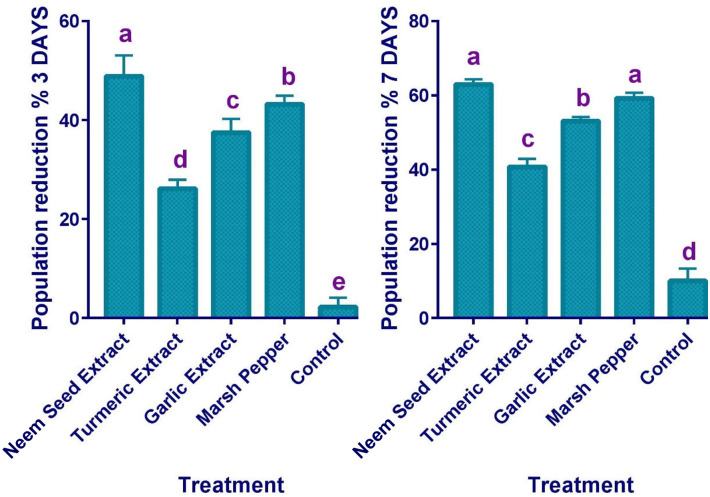
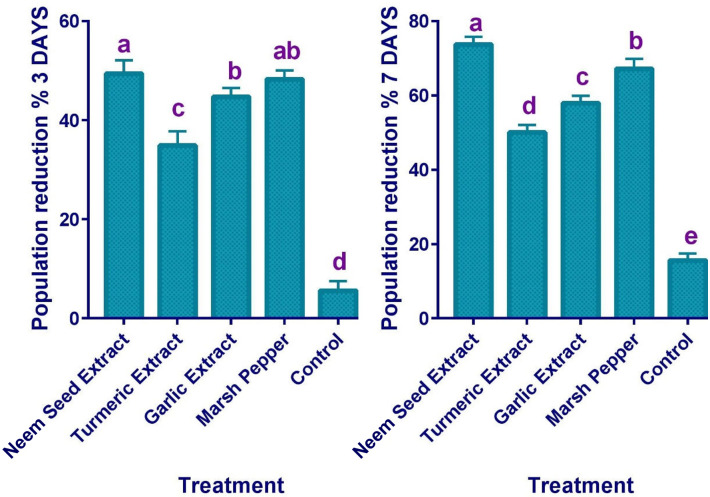
Helicoverpa armigera (Hub.) is a destructive pest of the tomato (Lycopersicon esculentum Mill) crop in Pakistan. Although insecticides are the primary management strategy used to control H. armigera, most of them are not effective due to considerable toxic residual effects on the fruits. Nonetheless, H. armigera is rapidly evolving resistance against the available pesticides for its management. This situation calls upon the need of alternative management options against the pest. Different plant extracts have been suggested as a viable, environment-friendly option for plant protection with minimal side effects. Furthermore, the plant extracts could also manage the insect species evolving resistance against pesticides. This study evaluated the efficacy of different plant extracts (i.e., Neem seed, turmeric, garlic and marsh pepper) against H. armigera. Furthermore, the impact of the plant extracts on growth and yield of tomato crop was also tested under field conditions. The results revealed that all plant extracts resulted in higher mortality of H. armigera compared to control. Similarly, the highest plant height was observed for the plants treated with the plant extracts compared to untreated plants. Moreover, the highest tomato yield was observed in plants treated with plant extracts, especially with neem seed (21.013 kg/plot) followed by pepper extract (19.25 kg/plot), and garlic extract 18.4 kg/plot) compared to the untreated plants (8.9 kg/plot). It is concluded that plant extracts can be used as eco-friendly approaches for improving tomato yield and resistance management of H. armigera.
Conflict of interest statement
The authors have declared that no competing interests exist.
Figures
References
-
- Chohan TZ, Ahmad S. An assessment of tomato production practices in Danna Katchely, Azad Jammu Kashmir. Pak J Life Soc Sci. 2008;6:96–102.
-
- Arshad U, Naveed M, Javed N, Gogi MD, Ali MA. Biochar application from different feedstocks enhances plant growth and resistance against Meloidogyne incognita in tomato. International Journal of Agriculture Biology. 2020;24(4):961–968.
-
- Pakistan Government. Agricultural statistics of Pakistan. Ministry of Food, Agriculture and Livestock (Economic Wing) Islamabad; 2011. p. 84–85.
-
- Sharma H, Srivastava C, Durairaj C, Gowda C. Pest management in grain legumes and climate change. Climate change and management of cool season grain legume crops: Springer; 2010. p. 115–139.
-
- Hussain B, Bilal S. Efficacy of different insecticides on tomato fruit borer Helicoverpa armigera. J Entomol. 2007;4(1):64–67.
Publication types
MeSH terms
Substances
LinkOut - more resources
Full Text Sources
