


Understanding therapists' perceived determinants of trauma narrative use
- PMID: 34852850
- PMCID: PMC8638192
- DOI: 10.1186/s43058-021-00231-9
Understanding therapists' perceived determinants of trauma narrative use
Abstract
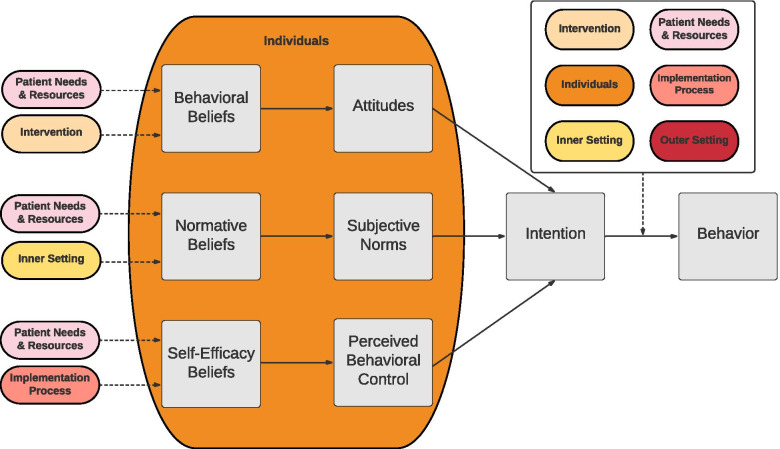
Background: Trauma narratives are a critical, exposure-based component of trauma-focused cognitive-behavioral therapy, yet community therapists rarely use them. Given evidence that intentions to deliver elements of cognitive behavioral therapy vary by component, and that intentions to deliver exposure are the weakest, this study focused specifically on trauma narratives. We drew on a social psychology causal theory (Theory of Planned Behavior (TPB)) and an implementation science framework (the Consolidated Framework for Implementation Research (CFIR)) to glean insight into multilevel influences on trauma narrative use. While the CFIR offers a broad list of factors potentially affecting implementation, the TPB offers causal pathways between individual-level constructs that predict behavior, including the uptake of an evidence-based intervention. The integration of these approaches may provide a more complete understanding of factors affecting therapists' use of TNs.
Methods: Therapists (n=65) trained in trauma-focused cognitive behavioral therapy completed a survey about their use of and beliefs about trauma narratives. Content analysis was used to identify common beliefs about trauma narratives. A subset of participants (n=17) completed follow-up qualitative interviews, which were analyzed using an integrated approach informed by the CFIR.
Results: While most participants reported high intentions to use TNs, nearly half reported that they did not use TNs in the last 6 months. Survey data indicate a number of TPB-related determinants related to using trauma narratives. Qualitative interviews identified CFIR-relevant contextual factors that may influence constructs central to TPB.
Conclusions: These results highlight the importance of integrating approaches that address multiple theoretical determinants of therapist behavior, including therapist, organizational, and client factors with causal explanations to explain implementation behavior.
Keywords: Consolidated Framework for Implementation Research; Determinants; Implementation science; Theory of Planned Behavior; Trauma-focused cognitive behavioral therapy.
© 2021. The Author(s).
Conflict of interest statement
Dr. Beidas receives royalties from Oxford University Press. She has provided consultation to the Camden Coalition for Healthcare Providers. She is a consultant to United Behavioral Health and serves on the Clinical and Scientific Advisory Committee for Behavioral Health.
Figures
References
-
- Trask EV, Fawley-King K, Garland AF, Aarons GA. Client Report of Delivery of Common Elements in Usual Care and the Association to Satisfaction. J Child Fam Stud. 2016;25(3):845–855.
Grants and funding
LinkOut - more resources
Full Text Sources
