


Metabolomic signatures after bariatric surgery - a systematic review
- PMID: 34855133
- PMCID: PMC9156502
- DOI: 10.1007/s11154-021-09695-5
Metabolomic signatures after bariatric surgery - a systematic review
Abstract
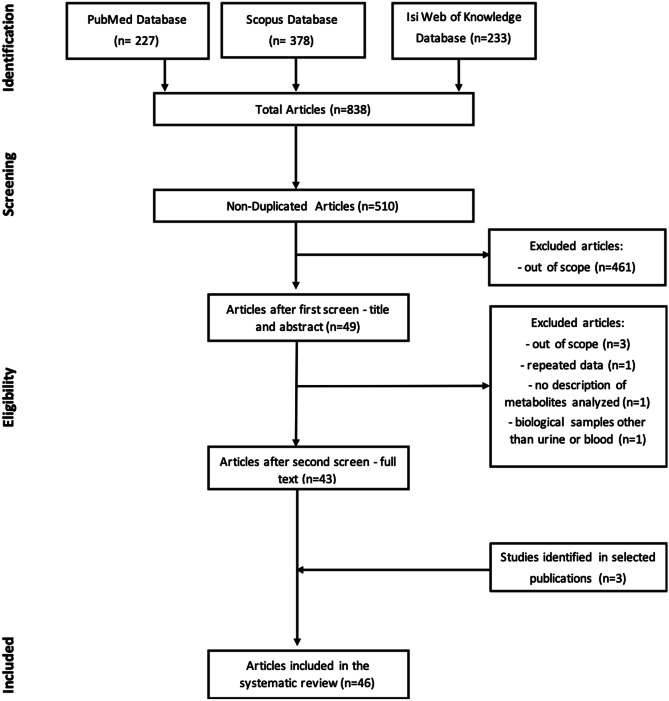
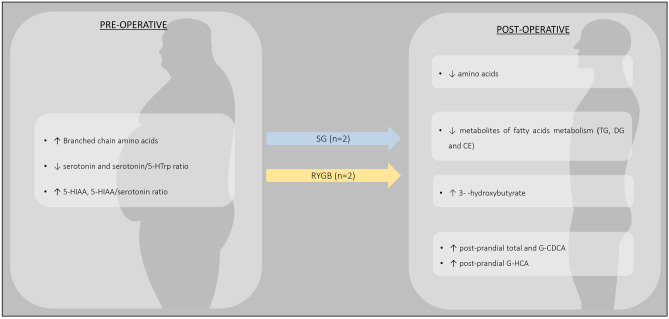
Metabolomics emerged as an important tool to gain insights on how the body responds to therapeutic interventions. Bariatric surgery is the most effective treatment for severe obesity and obesity-related co-morbidities. Our aim was to conduct a systematic review of the available data on metabolomics profiles that characterize patients submitted to different bariatric surgery procedures, which could be useful to predict clinical outcomes including weight loss and type 2 diabetes remission. For that, the Preferred Reporting Items for Systematic Reviews and Meta-Analyses - PRISMA guidelines were followed. Data from forty-seven original study reports addressing metabolomics profiles induced by bariatric surgery that met eligibility criteria were compiled and summarized. Amino acids, lipids, energy-related and gut microbiota-related were the metabolite classes most influenced by bariatric surgery. Among these, higher pre-operative levels of specific lipids including phospholipids, long-chain fatty acids and bile acids were associated with post-operative T2D remission. As conclusion, metabolite profiling could become a useful tool to predict long term response to different bariatric surgery procedures, allowing more personalized interventions and improved healthcare resources allocation.
Keywords: Bariatric surgery; Metabolomics; Type 2 diabetes remission; Weight loss.
© 2021. The Author(s).
Conflict of interest statement
The authors have nothing to disclose.
Figures


References
-
- Nyberg ST, Batty GD, Pentti J, Virtanen M, Alfredsson L, Fransson EI, Goldberg M, Heikkilä K, Jokela M, Knutsson A, Koskenvuo M, Lallukka T, Leineweber C, Lindbohm JV, Madsen IEH, Magnusson Hanson LL, Nordin M, Oksanen T, Pietiläinen O, Rahkonen O, Rugulies R, Shipley MJ, Stenholm S, Suominen S, Theorell T, Vahtera J, Westerholm PJM, Westerlund H, Zins M, Hamer M, Singh-Manoux A, Bell JA, Ferrie JE, Kivimäki M. Obesity and loss of disease-free years owing to major non-communicable diseases: a multicohort study. The Lancet Public Health. 2018;3(10):e490–e497. doi: 10.1016/S2468-2667(18)30139-7. - DOI - PMC - PubMed
-
- Tulipani S, Griffin J, Palau-Rodriguez M, Mora-Cubillos X, Bernal-Lopez RM, Tinahones FJ, Corkey BE, Andres-Lacueva C. Metabolomics-guided insights on bariatric surgery versus behavioral interventions for weight loss. Obesity (Silver Spring) 2016;24(12):2451–2466. doi: 10.1002/oby.21686. - DOI - PubMed
-
- Poirier P, Cornier MA, Mazzone T, Stiles S, Cummings S, Klein S, McCullough PA, Ren Fielding C, Franklin BA. Bariatric surgery and cardiovascular risk factors: a scientific statement from the American Heart Association. Circulation. 2011;123(15):1683–1701. doi: 10.1161/CIR.0b013e3182149099. - DOI - PubMed
-
- Arterburn DE, Bogart A, Sherwood NE, Sidney S, Coleman KJ, Haneuse S, O'Connor PJ, Theis MK, Campos GM, McCulloch D, Selby J. A multisite study of long-term remission and relapse of type 2 diabetes mellitus following gastric bypass. Obes Surg. 2013;23(1):93–102. doi: 10.1007/s11695-012-0802-1. - DOI - PMC - PubMed
Publication types
MeSH terms
Substances
LinkOut - more resources
Full Text Sources
Medical
Research Materials
Miscellaneous
