


Prevalence of common mental health issues among migrant workers: A systematic review and meta-analysis
- PMID: 34855800
- PMCID: PMC8638981
- DOI: 10.1371/journal.pone.0260221
Prevalence of common mental health issues among migrant workers: A systematic review and meta-analysis
Abstract
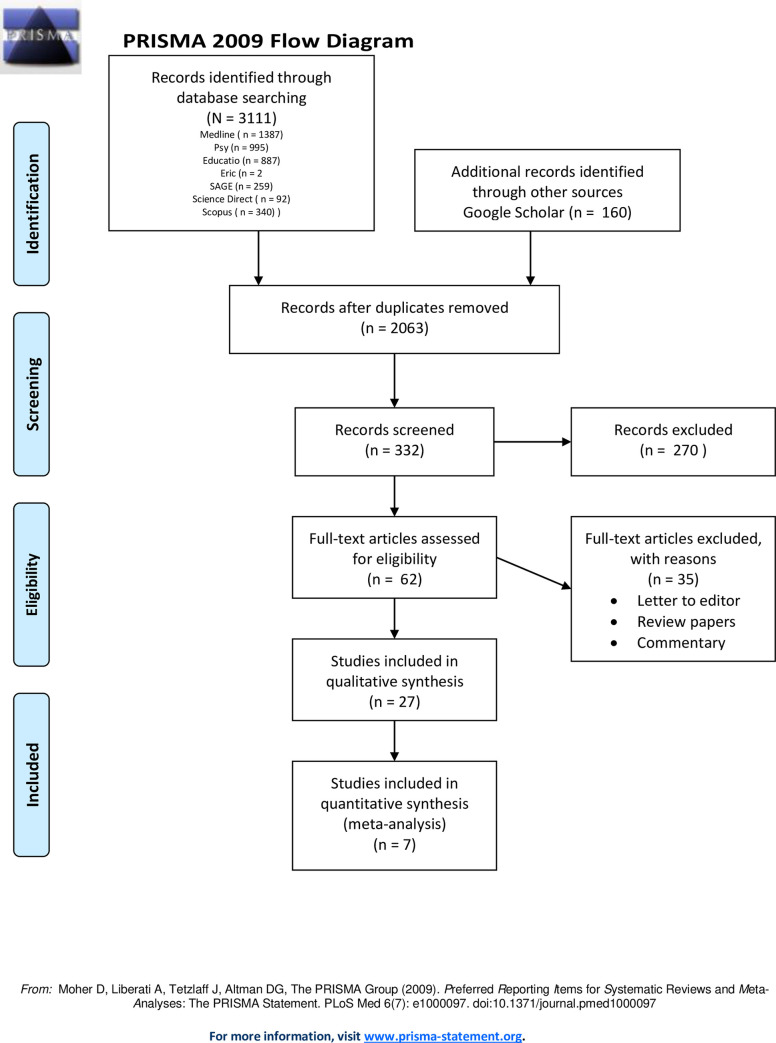
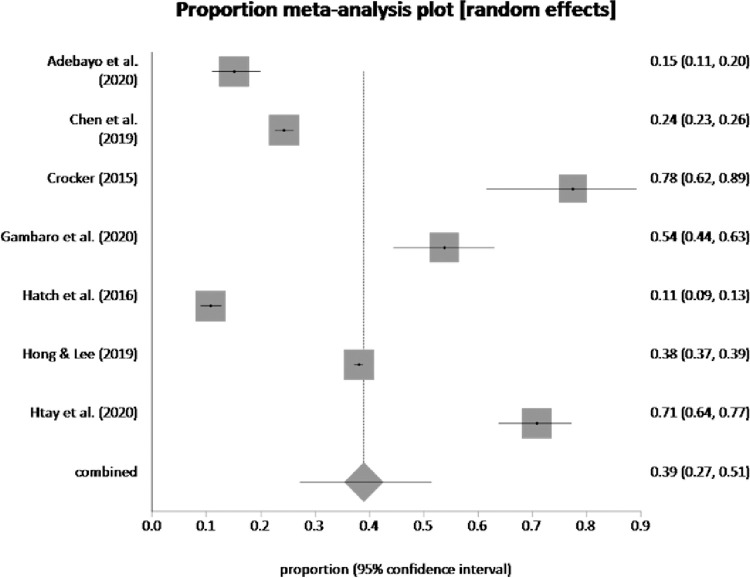
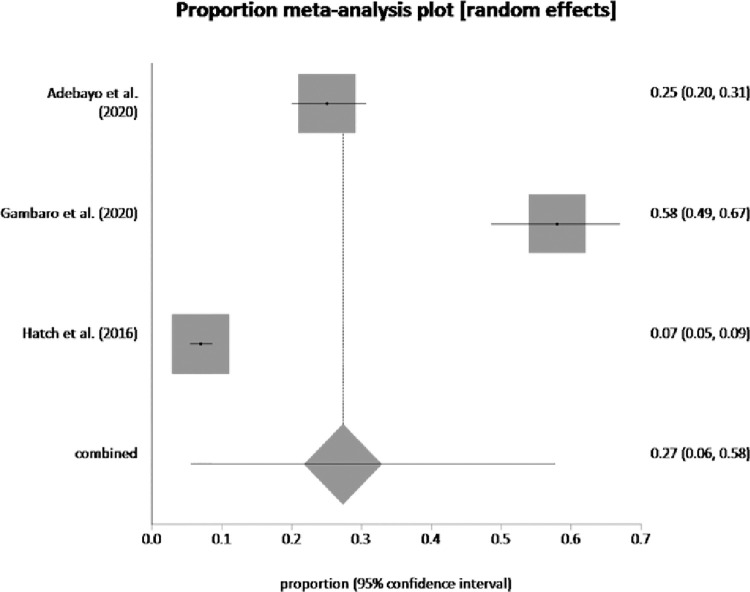
Previous literature has shown that migrant workers manifested higher common mental issues (especially depressive symptom) compared to local workers due to stressors such as financial constraint and lack of access to healthcare. The aim of this systematic review and meta-analysis is to summarize the current body of evidence for the prevalence of depression and anxiety among migrant workers as well as exploring the risk factors and the availability of social support for migrant workers. Seven electronic databases, grey literature and Google Scholar were searched for studies from 2015 to 2021 related to mental health, social support and migrant workers. Study quality was assessed using the Newcastle Ottawa Scale and the Joanna Briggs Institute Qualitative Assessment and Review Instrument (JBI-QARI). Study heterogeneity was evaluated using I2 statistics. Random effects meta-analysis results were presented given heterogeneity among studies. The search returned 27 articles and only seven studies were included in meta-analysis, involving 44 365 migrant workers in 17 different countries. The overall prevalence of depression and anxiety among migrant workers was 38.99% (95% CI = 0.27, 0.51) and 27.31% (95% CI = 0.06, 0.58), respectively. Factors such as age, biological (health issue, family history of psychiatric disorder), individual (poor coping skills), occupational (workplace psychosocial stressors, poor working condition, salary and benefits issue, abuse), environmental (limited access towards healthcare, duration of residence, living condition) and social factor (limited social support) were associated with a mental health outcome in migrant workers. The availability of social support for migrant workers was mainly concentrated in emotional type of support. A high prevalence of depression and anxiety was found among migrant workers across the globe. This finding warrants a collective effort by different parties in providing assistance for migrant workers to promote their mental well-being.
Conflict of interest statement
The authors have declared that no competing interests exist.
Figures
References
-
- Czaika M, de Haas H. The globalization of migration: has the world become more migratory? Int Migr Rev. 2014. Jun;48(2):283–323. doi: 10.1111/imre.12095 - DOI
-
- Colic-Peisker V. Globalization and migration. In Farazmand A, editor. Global encyclopedia of public administration, public policy, and governance. Switzerland: Springer International Publishing; 2017. pp. 1–7.
-
- International Organization for Migration. World Migration Report 2020. [Internet]. 2019 [cited 2021 May 8]. Available from: https://publications.iom.int/system/files/pdf/wmr_2020.pdf
