Rationale and design of a double-blind randomized non-inferiority clinical trial to evaluate one or two doses of vaccine against human papillomavirus including an epidemiologic survey to estimate vaccine efficacy: The Costa Rica ESCUDDO trial
- PMID: 34857420
- PMCID: PMC8759448
- DOI: 10.1016/j.vaccine.2021.11.041
Rationale and design of a double-blind randomized non-inferiority clinical trial to evaluate one or two doses of vaccine against human papillomavirus including an epidemiologic survey to estimate vaccine efficacy: The Costa Rica ESCUDDO trial
Abstract
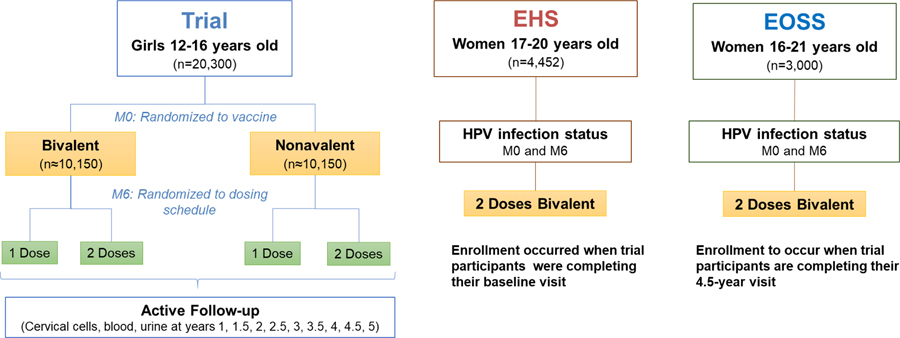
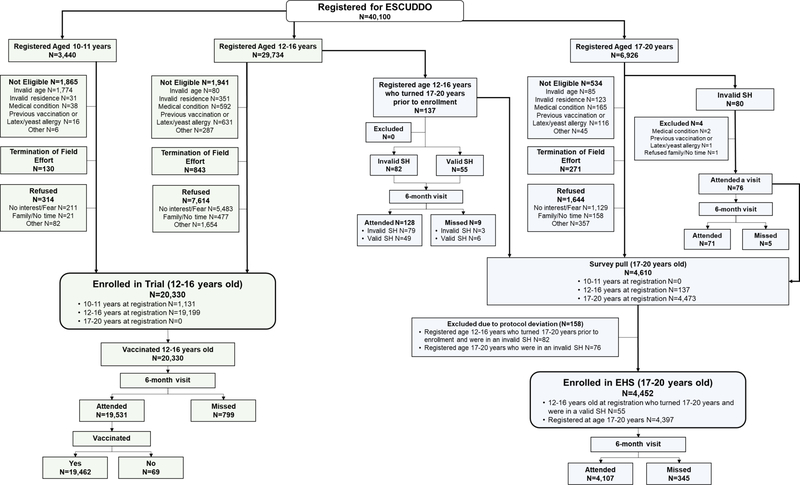
HPV vaccination of adolescent girls is the most effective measure to prevent cervical cancer. The World Health Organization recommends that adolescent girls receive two doses of vaccine but only a small proportion of girls from regions with the highest disease burden are vaccinated because of cost and logistical considerations. Our Costa Rica HPV Vaccine trial suggested that one dose of the bivalent HPV vaccine provides robust and lasting protection against persistent HPV infections for over a decade. Data from a post-licensure trial of the quadrivalent vaccine in India also suggested that a single dose may be effective in reducing cervical cancer risk. To formally compare one versus two doses of the bivalent and nonavalent HPV vaccines, we implemented a large, randomized, double-blind trial to investigate the non-inferiority of one compared to two vaccine doses in the prevention of new HPV16/18 infections that persist 6 or more months. Bivalent and nonavalent vaccines will be evaluated separately. The trial enrolled and randomized (1:1:1:1 to 1- and 2-dose arms of the bivalent and nonavalent vaccines) 20,330 girls 12 to 16 years old residing in Costa Rica. Trial participants are followed every 6 months for up to 5 years. We also aim to estimate vaccine efficacy by comparing the rates of 6 month persistent infection in unvaccinated women with the rates in the follow-up visits of trial participants. We included one survey of unvaccinated women at the start of the study (N = 4452) and will include another survey concomitant with follow up visits of trial participants at year 4.5 (planned N = 3000). Survey participants attend two visits 6 months appart. Herein, we present the rationale, design, and enrolled study population of the ESCUDDO trial. ClinicalTrials.gov Identifier: NCT03180034.
Keywords: Cervical cancer prevention; HPV antibodies; HPV infection; Prophylactic HPV vaccine; Single-dose.
Copyright © 2021. Published by Elsevier Ltd.
Conflict of interest statement
Declaration of Competing Interest The authors declare that they have no known competing financial interests or personal relationships that could have appeared to influence the work reported in this paper.
Figures