


Sex Differences in Hemostatic Factors in Patients With Ischemic Stroke and the Relation With Migraine-A Systematic Review
- PMID: 34858141
- PMCID: PMC8632366
- DOI: 10.3389/fncel.2021.711604
Sex Differences in Hemostatic Factors in Patients With Ischemic Stroke and the Relation With Migraine-A Systematic Review
Abstract
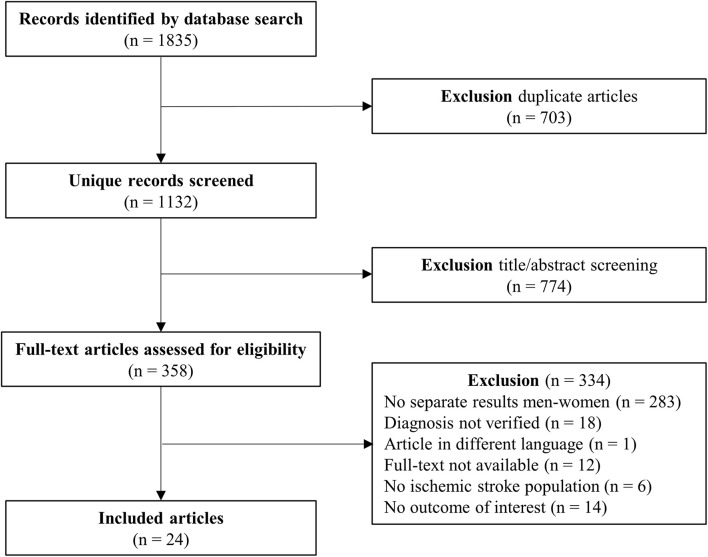
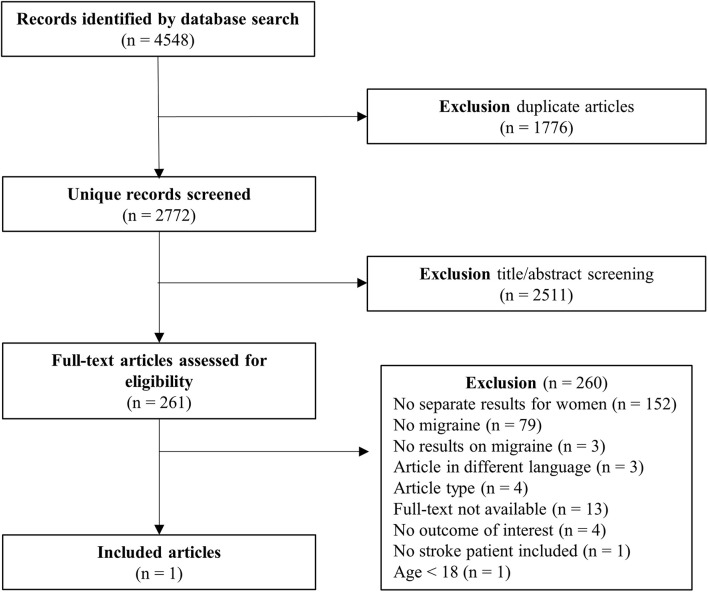
Background: Women are more affected by stroke than men. This might, in part, be explained by sex differences in stroke pathophysiology. The hemostasis system is influenced by sex hormones and associated with female risk factors for stroke, such as migraine. Aim: To systematically review possible sex differences in hemostatic related factors in patients with ischemic stroke in general, and the influence of migraine on these factors in women with ischemic stroke. Results: We included 24 studies with data on sex differences of hemostatic factors in 7247 patients with ischemic stroke (mean age 57-72 years, 27-57% women) and 25 hemostatic related factors. Levels of several factors were higher in women compared with men; FVII:C (116% ± 30% vs. 104% ± 30%), FXI (0.14 UI/mL higher in women), PAI-1 (125.35 ± 49.37 vs. 96.67 ± 38.90 ng/mL), D-dimer (1.25 ± 0.31 vs. 0.95 ± 0.24 μg/mL), and aPS (18.7% vs. 12.0% positive). In contrast, protein-S (86.2% ± 23.0% vs. 104.7% ± 19.8% antigen) and P-selectin (48.9 ± 14.4 vs. 79.1 ± 66.7 pg/mL) were higher in men. Most factors were investigated in single studies, at different time points after stroke, and in different stroke subtypes. Only one small study reported data on migraine and hemostatic factors in women with ischemic stroke. No differences in fibrinogen, D-dimer, t-PA, and PAI-1 levels were found between women with and without migraine. Conclusion: Our systematic review suggests that sex differences exist in the activation of the hemostatic system in ischemic stroke. Women seem to lean more toward increased levels of procoagulant factors whereas men exhibit increased levels of coagulation inhibitors. To obtain better insight in sex-related differences in hemostatic factors, additional studies are needed to confirm these findings with special attention for different stroke phases, stroke subtypes, and not in the least women specific risk factors, such as migraine.
Keywords: coagulation; female; male; migraine; plasma; risk factor; serum.
Copyright © 2021 van der Weerd, van Os, Ali, Schoones, van den Maagdenberg, Kruyt, Siegerink and Wermer.
Conflict of interest statement
The authors declare that the research was conducted in the absence of any commercial or financial relationships that could be construed as a potential conflict of interest.
Figures
References
Publication types
LinkOut - more resources
Full Text Sources
Miscellaneous
