


Leptomeningeal disease in neurosurgical brain metastases patients: A systematic review and meta-analysis
- PMID: 34859226
- PMCID: PMC8633671
- DOI: 10.1093/noajnl/vdab162
Leptomeningeal disease in neurosurgical brain metastases patients: A systematic review and meta-analysis
Abstract
Background: Leptomeningeal disease (LMD) is a complication distinguished by progression of metastatic disease into the leptomeninges and subsequent spread via cerebrospinal fluid (CSF). Although treatments for LMD exist, it is considered fatal with a median survival of 2-4 months. A broader overview of the risk factors that increase the brain metastasis (BM) patient's risk of LMD is needed. This meta-analysis aimed to systematically review and quantitatively assess risk factors for LMD after surgical resection for BM.
Methods: A systematic literature search was performed on 7 May 2021. Pooled effect sizes were calculated using a random-effects model for variables reported by three or more studies.
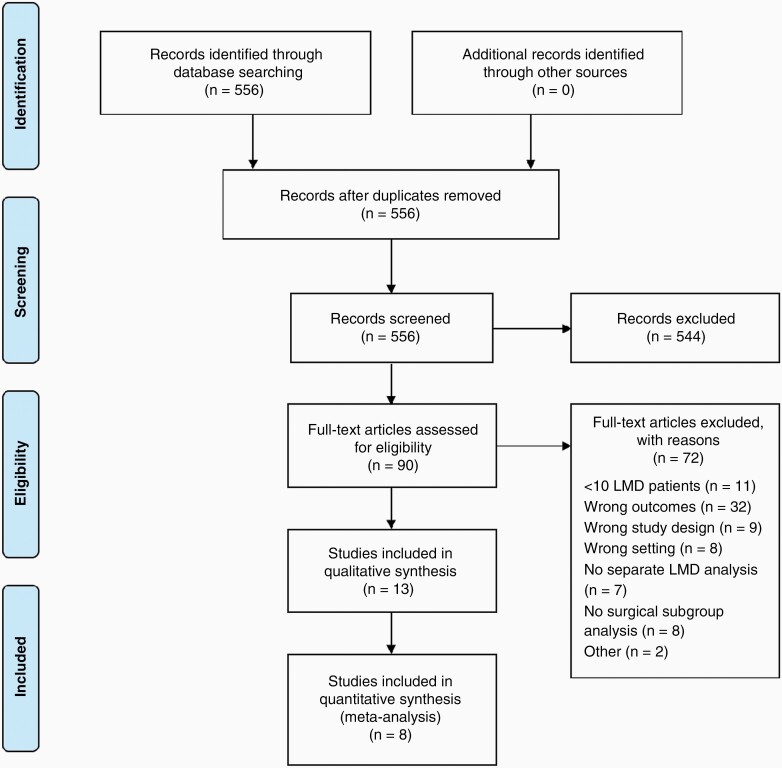
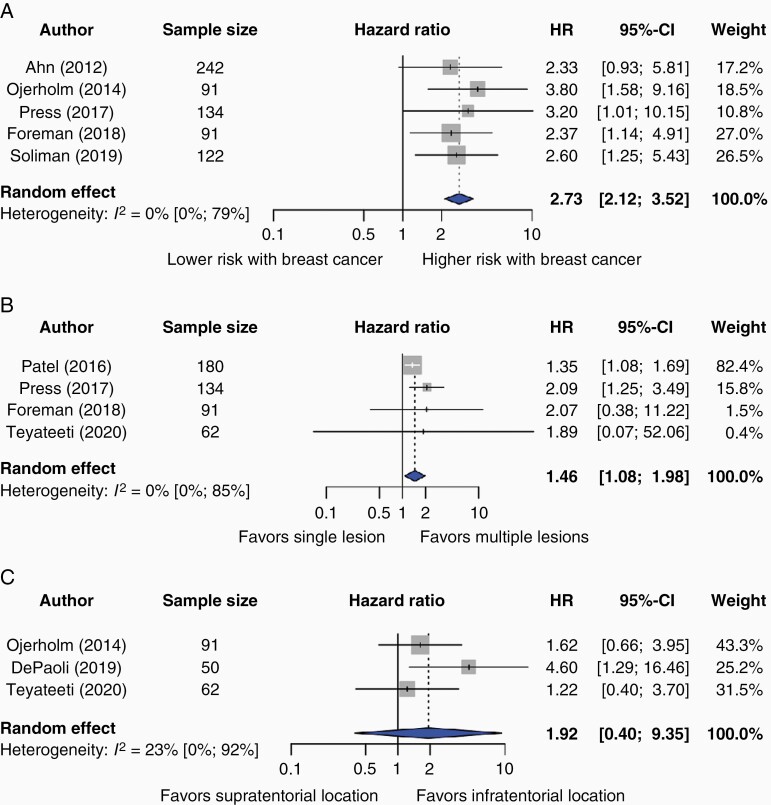
Results: Among 503 studies, thirteen studies met the inclusion criteria with a total surgical sample size of 2105 patients, of which 386 patients developed LMD. The median incidence of LMD across included studies was 16.1%. Eighteen unique risk factors were reported as significantly associated with LMD occurrence, including but not limited to: larger tumor size, infratentorial BM location, proximity of BM to cerebrospinal fluid spaces, ventricle violation during surgery, subtotal or piecemeal resection, and postoperative stereotactic radiosurgery. Pooled results demonstrated that breast cancer as the primary tumor location (HR = 2.73, 95% CI: 2.12-3.52) and multiple BMs (HR = 1.37, 95% CI: 1.18-1.58) were significantly associated with a higher risk of LMD occurrence.
Conclusion: Breast cancer origin and multiple BMs increase the risk of LMD occurrence after neurosurgery. Several other risk factors which might play a role in LMD development were also identified.
Keywords: brain metastases; leptomeningeal disease; predictive factors; resection.
© The Author(s) 2021. Published by Oxford University Press, the Society for Neuro-Oncology and the European Association of Neuro-Oncology.
Figures
References
-
- Lee S, Ahn HK, Park YH, et al. Leptomeningeal metastases from breast cancer: intrinsic subtypes may affect unique clinical manifestations. Breast Cancer Res Treat. 2011; 129(3):809–817. - PubMed
-
- Vecht CJ, Haaxma-Reiche H, Noordijk EM, et al. Treatment of single brain metastasis: radiotherapy alone or combined with neurosurgery? Ann Neurol. 1993; 33(6):583–590. - PubMed
-
- DeAngelis LM, Mandell LR, Thaler HT, et al. The role of postoperative radiotherapy after resection of single brain metastases. Neurosurgery. 1989; 24(6):798–805. - PubMed
-
- Dosoretz DE, Blitzer PH, Russell AH, Wang CC. Management of solitary metastasis to the brain: the role of elective brain irradiation following complete surgical resection. Int J Radiat Oncol Biol Phys. 1980; 6(12):1727–1730. - PubMed
-
- Seute T, Leffers P, ten Velde GP, Twijnstra A. Leptomeningeal metastases from small cell lung carcinoma. Cancer. 2005; 104(8):1700–1705. - PubMed
Publication types
LinkOut - more resources
Full Text Sources
Miscellaneous