


Management of brain metastases in lung cancer: evolving roles for radiation and systemic treatment in the era of targeted and immune therapies
- PMID: 34859233
- PMCID: PMC8633733
- DOI: 10.1093/noajnl/vdab106
Management of brain metastases in lung cancer: evolving roles for radiation and systemic treatment in the era of targeted and immune therapies
Abstract
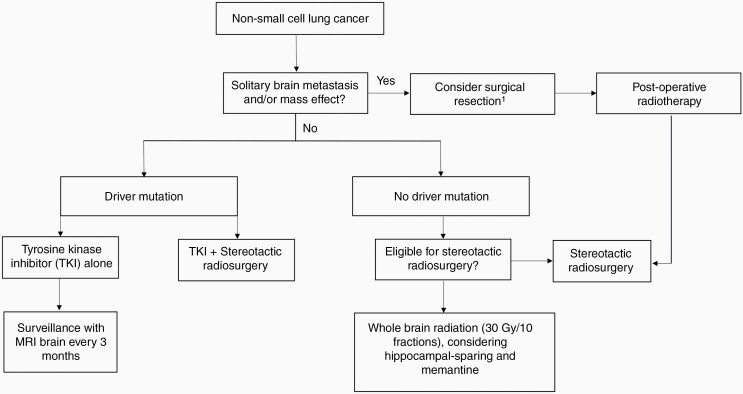
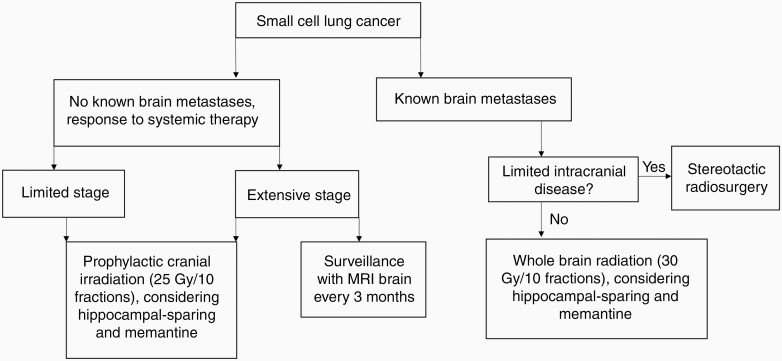
Brain metastases are a common occurrence in both non-small cell and small cell lung cancer with the potential to affect quality of life and prognosis. Due to concerns about the accessibility of the central nervous system by systemic chemotherapy agents, the management of brain metastases has historically relied on local therapies including surgery and radiation. However, novel targeted and immune therapies that improve overall outcomes in lung cancer have demonstrated effective intracranial activity. As a result, the management of brain metastases in lung cancer has evolved, with both local and systemic therapies now playing an important role. Factors such as tumor histology (non-small versus small cell), oncogenic driver mutations, and symptom burden from intracranial disease impact treatment decisions. Here, we review the current management of brain metastases in lung cancer, highlighting the roles of stereotactic radiosurgery and novel systemic therapies as well as the ongoing questions that remain under investigation.
Keywords: brain metastases; immunotherapy; lung cancer; radiotherapy; targeted therapy.
© The Author(s) 2021. Published by Oxford University Press, the Society for Neuro-Oncology and the European Association of Neuro-Oncology.
Figures
References
-
- Nayak L, Lee EQ, Wen PY. Epidemiology of brain metastases. Curr Oncol Rep. 2012;14(1):48–54. - PubMed
LinkOut - more resources
Full Text Sources
Research Materials