


Colonoscopy utilization and outcomes in older adults: Data from the New Hampshire Colonoscopy Registry
- PMID: 34859887
- PMCID: PMC8904292
- DOI: 10.1111/jgs.17560
Colonoscopy utilization and outcomes in older adults: Data from the New Hampshire Colonoscopy Registry
Abstract
Background: Colonoscopy is frequently performed in older adults, yet data on current use, and clinical outcomes of and follow-up recommendations after colonoscopy in older adults are lacking.
Methods: This was an observational study using the New Hampshire Colonoscopy Registry of adults age ≥65 years undergoing colonoscopy for screening, surveillance of prior polyps, or evaluation of symptoms. The main outcomes were clinical findings of polyps and colorectal cancer and recommendations for future colonoscopy by age.
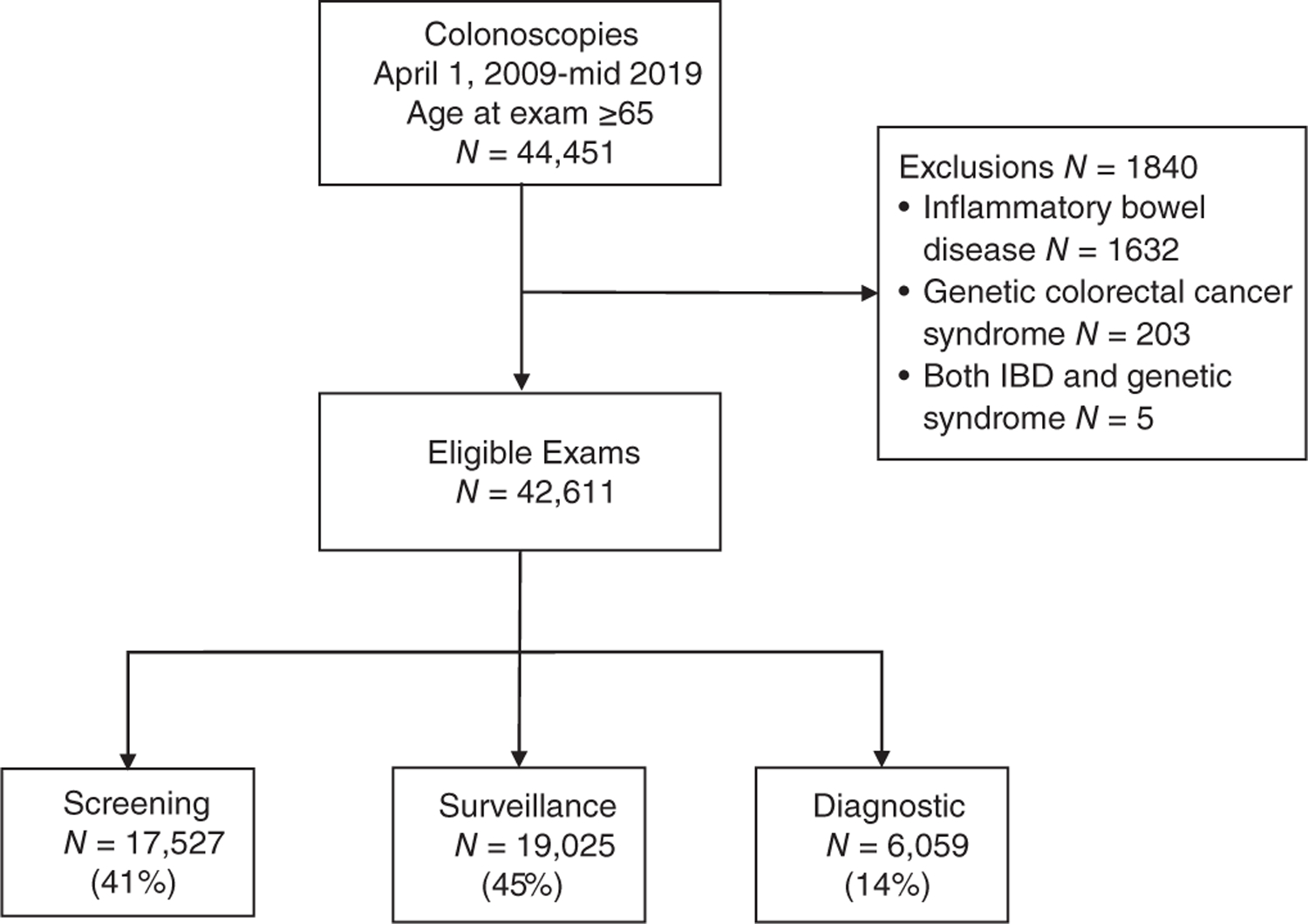
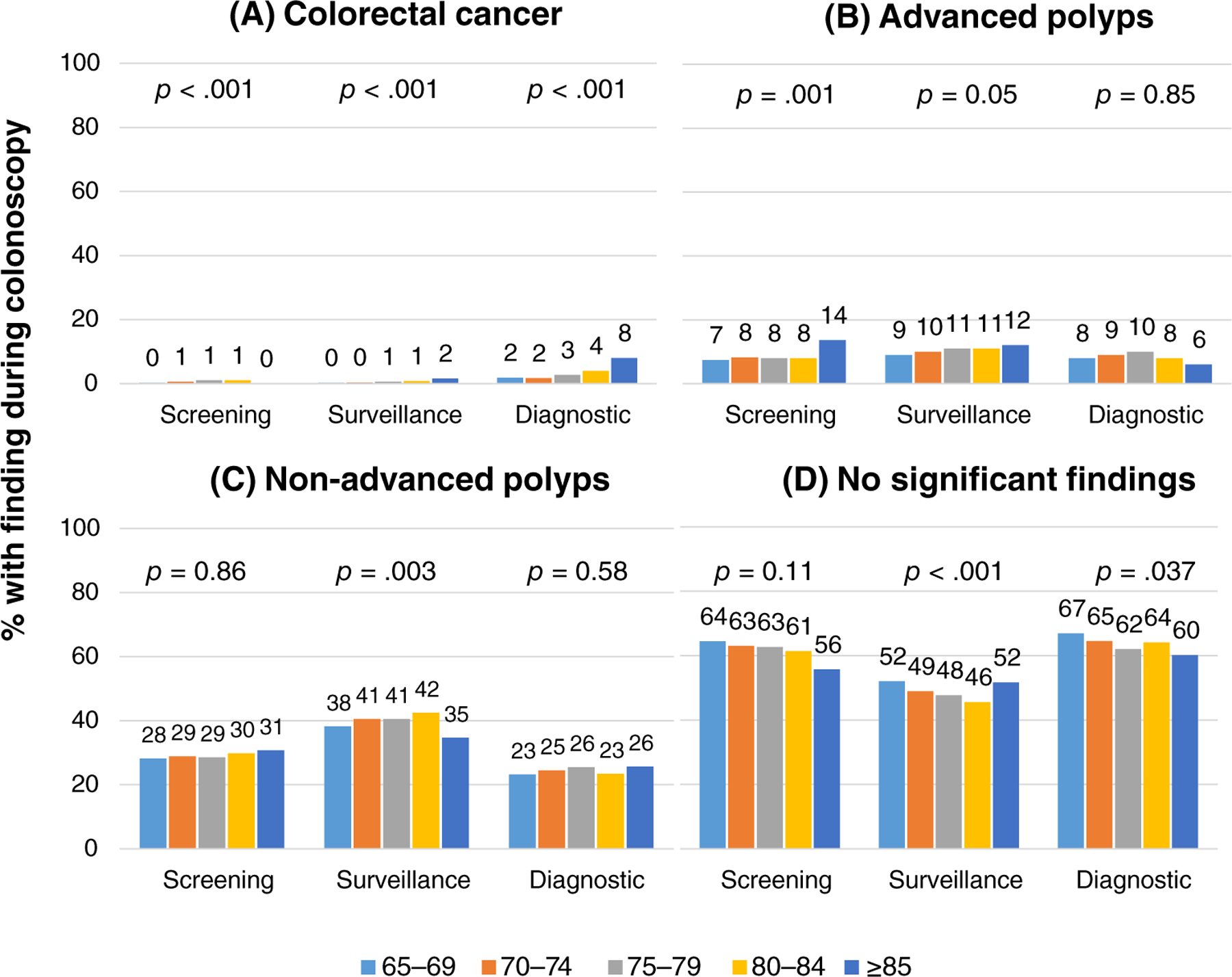
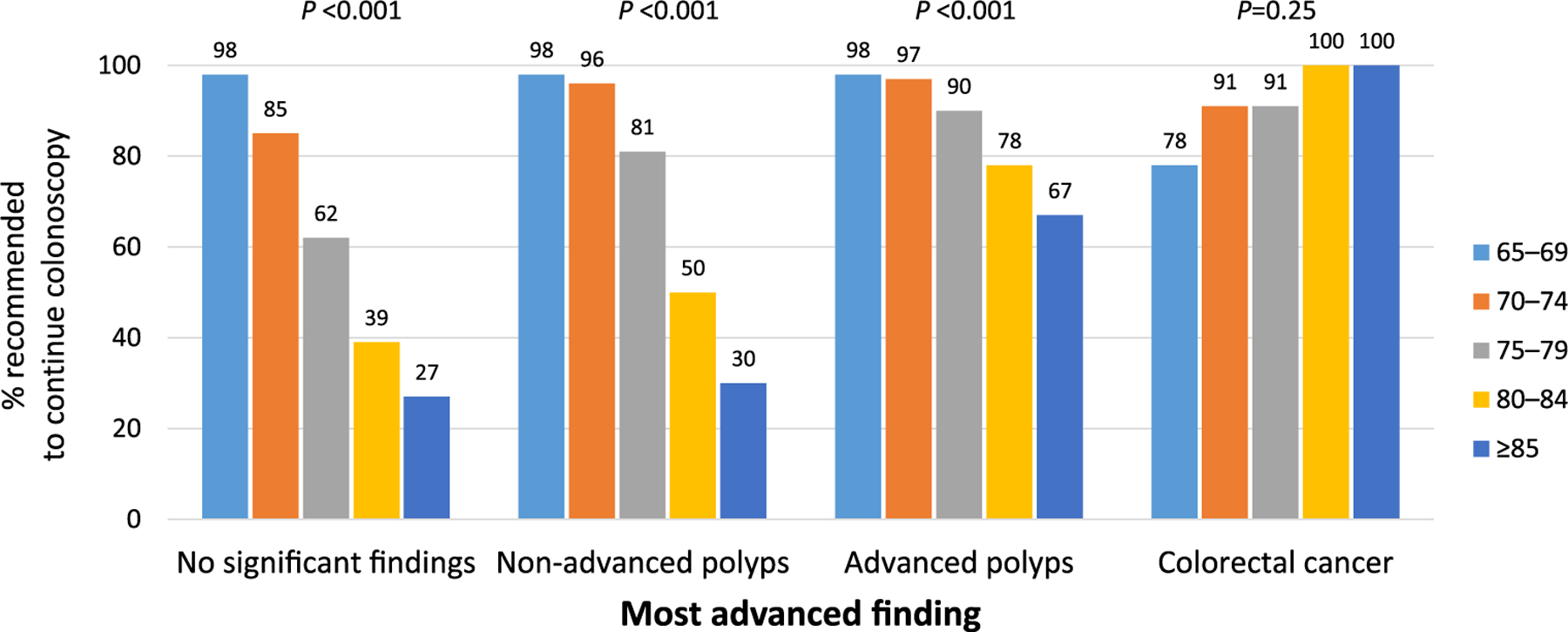
Results: Between 2009 and 2019, there were 42,611 colonoscopies, of which 17,527 (41%) were screening, 19,025 (45%) surveillance, and 6059 (14%) for the evaluation of symptoms. Mean age was 71.1 years (SD 5.0), and 49.3% were male. The finding of colorectal cancer was rare (0.71%), with the highest incidence among diagnostic examinations (2.4%). The incidence of advanced polyps increased with patient age from 65-69 to ≥85 years for screening (7.1% to 13.6%; p = 0.05) and surveillance (9.4% to 12.0%; p < 0.001). Recommendations for future colonoscopy decreased with age and varied by findings at current colonoscopy. In patients without any significant findings, 85% aged 70-74 years, 61.9% aged 75-79 years, 39.1% aged 80-84 years, and 27.4% aged ≥85 years (p < 0.001) were told to continue colonoscopy. Among patients with advanced polyps, 97.2% aged 70-74 years, 89.6% aged 75-79 years, 78.4% aged 80-84 years, and 66.7% aged ≥85 years were told to continue colonoscopy (p < 0.001).
Conclusions: Within this comprehensive statewide registry, clinical findings during colonoscopy varied by indication and increased with age. Overall rates of finding advanced polyps and colorectal cancer are low. Older adults are frequently recommended to continue colonoscopy despite advanced age and insignificant clinical findings on current examination. These data inform the potential benefits of ongoing colonoscopy, which must be weighed with the low but known potential immediate and long-term harms of colonoscopy, including cost, psychological distress, and long lag time to benefit exceeding life expectancy.
Keywords: age; colorectal cancer screening; polyp surveillance; recommendations.
© 2021 The American Geriatrics Society.
Conflict of interest statement
CONFLICT OF INTEREST
The authors declare no conflicts of interest.
Figures
References
-
- Lieberman DA, Williams JL, Holub JL, et al. Colonoscopy utilization and outcomes 2000 to 2011. Gastrointest Endosc 2014; 80:133–143. - PubMed
-
- United States Census Bureau. Older people projected to out-number children for first time in U.S. history: Release Number CB18–41 Revised September 6, 2018. Accessed April 2, 2021. https://www.census.gov/newsroom/press-releases/2018/cb18-41-population-p...
-
- Ko CW, Riffle S, Shapiro JA, et al. Incidence of minor complications and time lost from normal activities after screening or surveillance colonoscopy. Gastrointest Endosc 2007;65: 648–656. - PubMed
-
- Warren JL, Klabunde CN, Mariotto AB, et al. Adverse events after outpatient colonoscopy in the Medicare population. Ann Intern Med 2009;150:849–857, W152. - PubMed
Publication types
MeSH terms
Grants and funding
LinkOut - more resources
Full Text Sources
Medical
