


Global differences in vitamin D status and dietary intake: a review of the data
- PMID: 34860171
- PMCID: PMC8789021
- DOI: 10.1530/EC-21-0282
Global differences in vitamin D status and dietary intake: a review of the data
Abstract
Background: Internationally, concern has been repeatedly raised about the little notable progress in the collection, analysis and use of population micronutrient status and deficiency data globally. The need for representative status and intake data for vitamin D has been highlighted as a research priority for well over a decade.
Aim and methods: A narrative review which aims to provide a summary and assessment of vitamin D nutritional status data globally. This review divides the world into the Food and Agriculture Organisation's (FAO) major regions: the Americas, Europe, Oceania, Africa and Asia. Emphasis was placed on published data on the prevalence of serum 25-hydroxyvitamin D (25(OH)D) < 25/30 and <50 nmol/L (reflecting vitamin D deficiency and inadequacy, respectively) as well as vitamin D intake, where possible from nationally representative surveys.
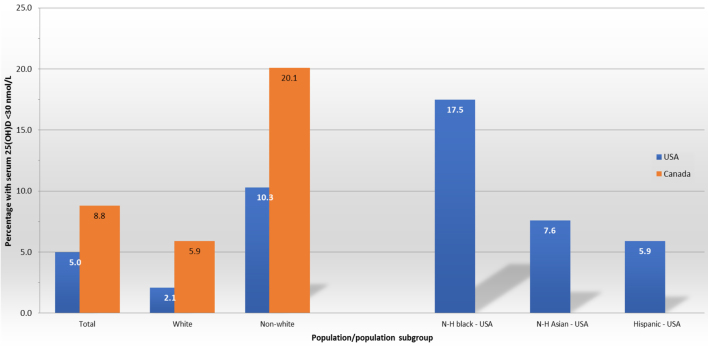
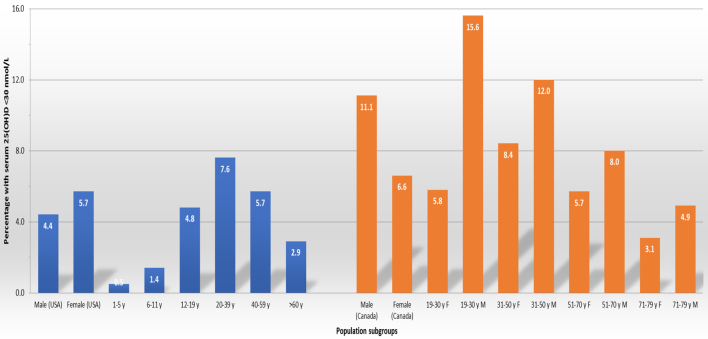
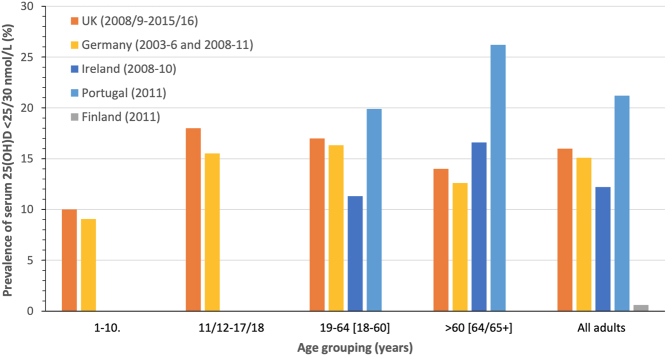
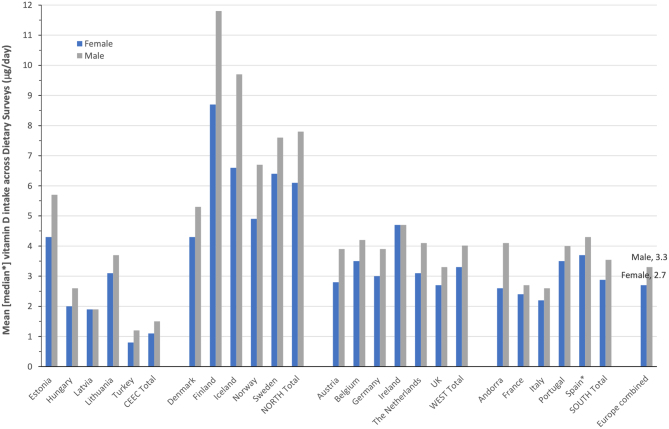
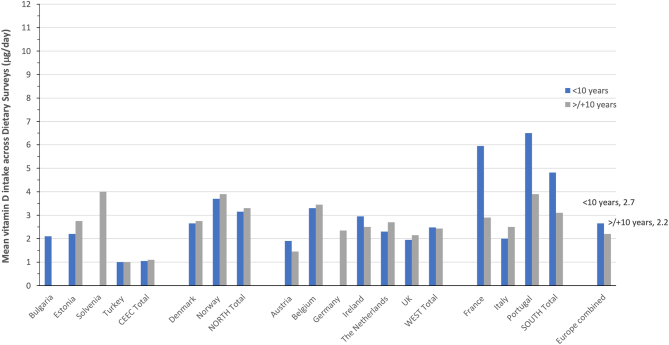
Results: Collating data from the limited number of available representative surveys from individual countries might suggest a relatively low overall prevalence of vitamin D deficiency in South America, Oceania and North America, whereas there is more moderate prevalence in Europe and Asia, and possibly Africa. Overall, the prevalence of serum 25(OH)D < 25/30 and <50 nmol/L ranges from ~5 to 18% and 24 to 49%, respectively, depending on FAO world region. Usual intakes of vitamin D can also vary by FAO world region, but in general, with a few exceptions, there are very high levels of inadequacy of vitamin D intake.
Conclusions: While the burden of vitamin D deficiency and inadequacy varies by world regions and not just by UVB availability, the global burden overall translates into enormous numbers of individuals at risk.
Keywords: national surveys; serum 25(OH)D; usual vitamin D intake; vitamin D status.
Figures
References
-
- Institute of Medicine. Dietary Reference Intakes for Calcium and Vitamin D. Washington, DC, USA: The National Academies Press, 2011. - PubMed
-
- Scientific Advisory Committee on Nutrition. Report on vitamin D and health, 2016. (available at: https://assets.publishing.service.gov.uk/government/uploads/system/uploa...)
Publication types
LinkOut - more resources
Full Text Sources
Medical
