. 2022 Mar;11(1):205-222.
doi: 10.1007/s40120-021-00305-9. Epub 2021 Dec 3.

Burden of Migraine in Japan: Results of the ObserVational Survey of the Epidemiology, tReatment, and Care Of MigrainE (OVERCOME [Japan]) Study

Affiliations

Burden of Migraine in Japan: Results of the ObserVational Survey of the Epidemiology, tReatment, and Care Of MigrainE (OVERCOME [Japan]) Study

Yasuhiko Matsumori et al. Neurol Ther. 2022 Mar.

Abstract

Introduction: The ObserVational survey of the Epidemiology, tReatment, and Care Of MigrainE study in Japan (OVERCOME [Japan]) assessed the impact and burden of migraine in Japan.

Methods: OVERCOME (Japan) was a cross-sectional, observational, population-based web survey of Japanese people with migraine conducted between July and September 2020. The burden and impact of migraine were assessed using the Migraine Disability Assessment (MIDAS), Migraine-Specific Quality-of-Life Questionnaire (MSQ), Migraine Interictal Burden Scale (MIBS-4), and Work Productivity and Activity Impairment-Migraine scale. Results were stratified by average number of monthly headache days (0-3, 4-7, 8-14, ≥ 15).

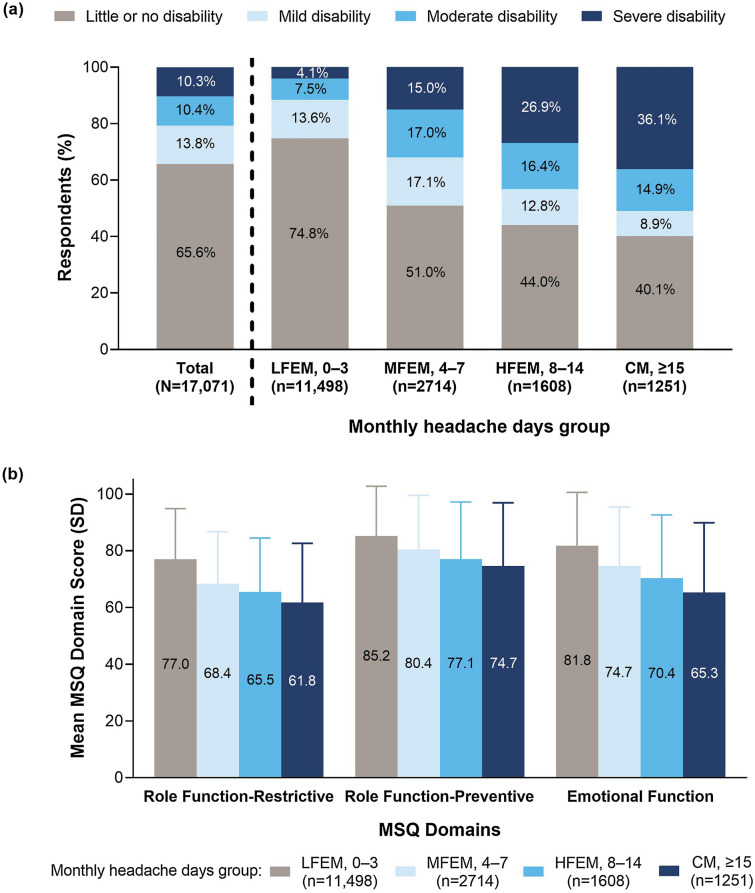
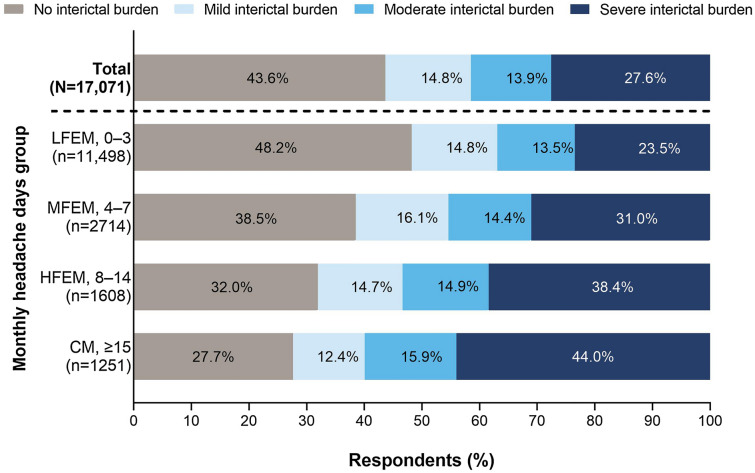
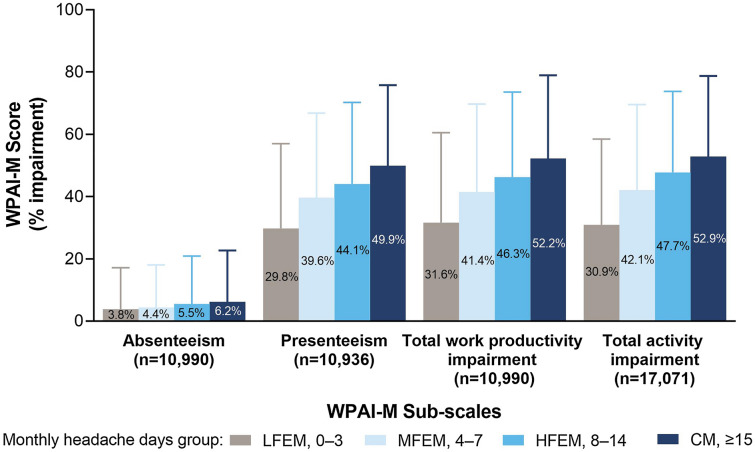
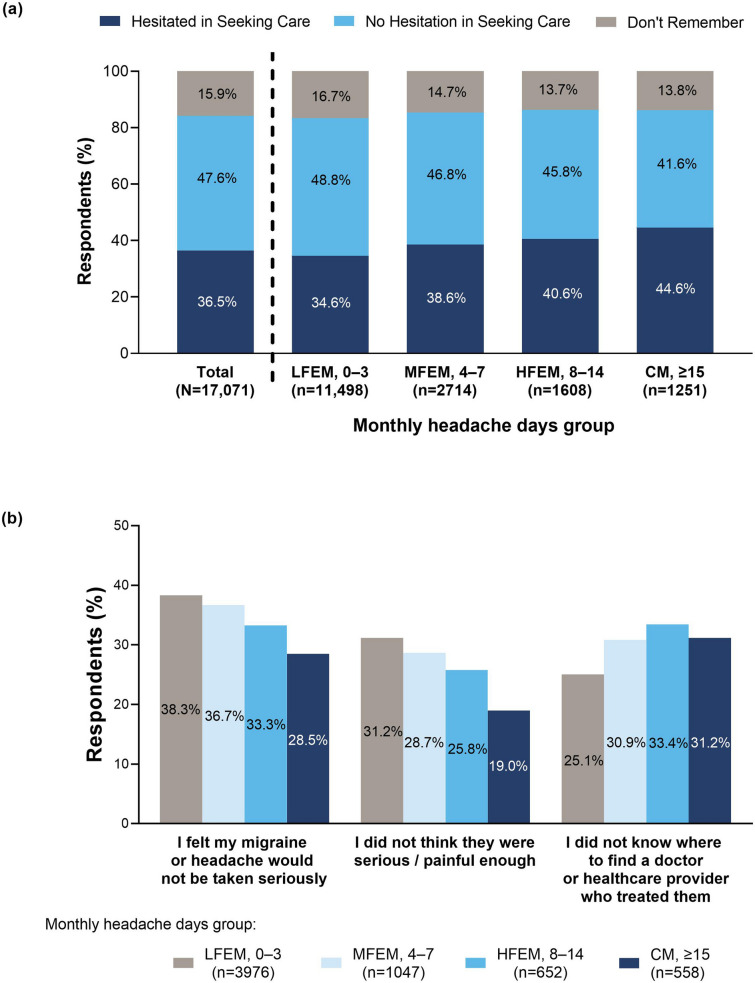
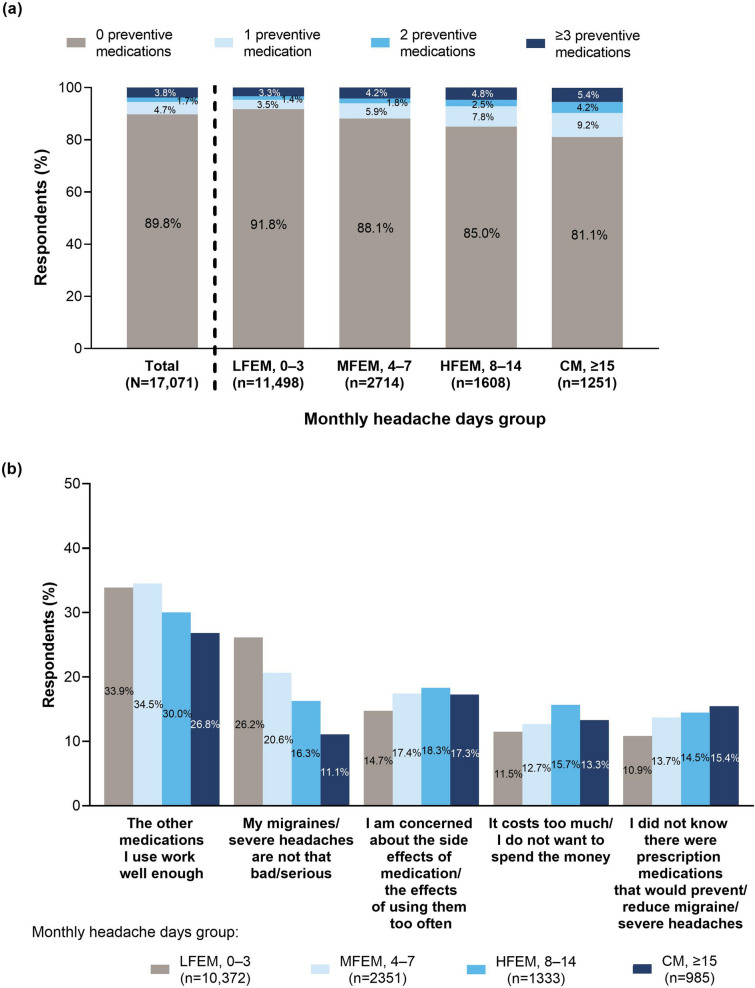
Results: In total, 17,071 Japanese people with migraine completed the survey. Of these, 14,033 (82.2%) met International Classification of Headache Disorders, 3rd edition criteria for migraine and 9667 (56.6%) reported a physician diagnosis of migraine. Overall, 20.7% of respondents experienced moderate-to-severe disability (MIDAS). Moderate-to-severe interictal burden (MIBS-4) was experienced by 41.5% of respondents. MSQ scores in all domains were lowest in respondents with the most frequent headaches (≥ 15 monthly headache days) and highest in those with the lowest frequency headaches (≤ 3 monthly headache days), indicating poorer quality of life in those with more frequent headaches. Work time missed due to migraine (absenteeism) increased with increasing headache frequency, from 3.8 to 6.2%; presenteeism affected 29.8-49.9% of work time. Although migraine burden was greatest in people with the most frequent headaches, those with the lowest headache frequency still experienced substantial disability, interictal burden, and impacts on productivity and quality of life. There was also substantial unmet need for migraine care: 36.5% of respondents had ever hesitated to seek medical care for their headaches, and 89.8% had never used preventive medication.

Conclusion: In Japan, the burden of migraine and barriers to migraine care are substantial. Improving patient awareness and healthcare provider vigilance may help improve patient outcomes.

Keywords: Drug therapy; Headache disorders; Japan; Migraine burden; Migraine disorders; Quality of life; Work productivity.


Figures

Fig. 1
Fig. 1
a Migraine-related disability (MIDAS grade) in each of the monthly headache days groups. b HRQoL scores (MSQ domain scores) in each of the monthly headache days groups. CM, chronic migraine; HFEM, high-frequency episodic migraine; HRQoL, health-related quality of life; LFEM, low-frequency episodic migraine; MFEM, moderate-frequency episodic migraine; MIDAS, Migraine Disability Assessment; MSQ, Migraine-Specific Quality-of-Life Questionnaire
Fig. 2
Fig. 2
Interictal burden across monthly headache days groups. Interictal burden categories from the MIBS-4 are none (score of 0), mild (score of 1–2), moderate (score of 3–4), and severe (score ≥ 5). CM, chronic migraine; HFEM, high-frequency episodic migraine; LFEM, low-frequency episodic migraine; MFEM, moderate-frequency episodic migraine; MIBS-4, Migraine Interictal Burden Scale
Fig. 3
Fig. 3
WPAI-M scores across monthly headache days groups. All respondents answered the WPAI-M total activity impairment questions, but only those who were full-time, part-time, or self-employed provided data for absenteeism, presenteeism, and overall work impairment. The numbers of respondents in each monthly headache days category for each of the WPAI-M subscales were: absenteeism LFEM n = 7295, MFEM n = 1854, HFEM n = 1049, CM n = 792; presenteeism LFEM n = 7261, MFEM n = 1848, HFEM n = 1043, CM n = 784; total work impairment LFEM n = 7295, MFEM n = 1854, HFEM n = 1049, CM n = 792; total activity impairment LFEM n = 11,498, MFEM n = 2714, HFEM n = 1608, CM n = 1251. CM, chronic migraine; HFEM, high-frequency episodic migraine; LFEM, low-frequency episodic migraine; MFEM, moderate-frequency episodic migraine; WPAI-M, Work Productivity and Activity Impairment-Migraine
Fig. 4
Fig. 4
Hesitation in seeking care for migraine across monthly headache days groups: a proportion of respondents who had and had not hesitated to seek care for migraine from their doctor or healthcare provider and b frequency of the top three reasons for not seeking care for migraine or severe headache. CM, chronic migraine; HFEM, high-frequency episodic migraine; LFEM, low-frequency episodic migraine; MFEM, moderate-frequency episodic migraine
Fig. 5
Fig. 5
Use of preventive migraine medication across monthly headache days groups: a the number of preventive medicationsa ever used by respondents and b frequency of the top five reasons for not having ever used preventive medication. aRespondents who did not answer this question were assumed not to have used preventives, i.e., were included in the “0 preventive medications used” group. CM, chronic migraine; HFEM, high-frequency episodic migraine; LFEM, low-frequency episodic migraine; MFEM, moderate-frequency episodic migraine

References

    1. Steiner TJ, Stovner LJ, Jensen R, Uluduz D, Katsarava Z. on behalf of Lifting The Burden: the Global Campaign against Headache. Migraine remains second among the world’s causes of disability, and first among young women: findings from GBD2019. J Headache Pain. 2020;21(1):137. doi: 10.1186/s10194-020-01208-0. - DOI - PMC - PubMed
    1. Lipton RB, Bigal ME, Kolodner K, Stewart WF, Liberman JN, Steiner TJ. The family impact of migraine: population-based studies in the USA and UK. Cephalalgia. 2003;23(6):429–440. doi: 10.1046/j.1468-2982.2003.00543.x. - DOI - PubMed
    1. Blumenfeld AM, Varon SF, Wilcox TK, et al. Disability, HRQoL and resource use among chronic and episodic migraineurs: results from the International Burden of Migraine Study (IBMS) Cephalalgia. 2011;31(3):301–315. doi: 10.1177/0333102410381145. - DOI - PubMed
    1. Steiner TJ, Jensen R, Katsarava Z, et al. Structured Q1 headache services as the solution to the ill-health burden of headache: 1. Rationale and description. J Headache Pain. 2021;22(1):78. doi: 10.1186/s10194-021-01265-z. - DOI - PMC - PubMed
    1. Sakai F, Igarashi H. Prevalence of migraine in Japan: a nationwide survey. Cephalalgia. 1997;17(1):15–22. doi: 10.1046/j.1468-2982.1997.1701015.x. - DOI - PubMed

LinkOut - more resources