


Cyathostomin resistance to moxidectin and combinations of anthelmintics in Australian horses
- PMID: 34863271
- PMCID: PMC8645149
- DOI: 10.1186/s13071-021-05103-8
Cyathostomin resistance to moxidectin and combinations of anthelmintics in Australian horses
Abstract
Background: Cyathostomins are the most important and common parasitic nematodes of horses, with > 50 species known to occur worldwide. The frequent and indiscriminate use of anthelmintics has resulted in the development of anthelmintic resistance (AR) in horse nematodes. In this study we assessed the efficacy of commonly used anthelmintics against cyathostomins in Australian thoroughbred horses.
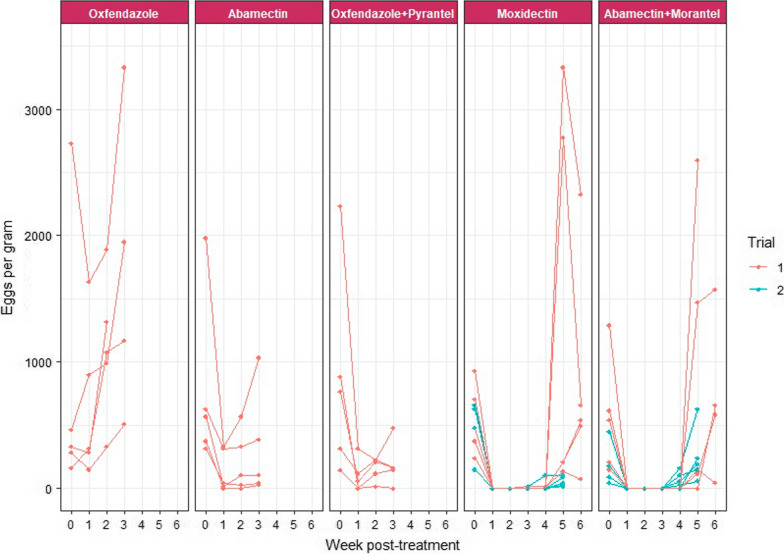
Methods: Two drug efficacy trials per farm were conducted on two thoroughbred horse farms in the state of Victoria, Australia. In the first trial, the horses on Farm A were treated with single and combinations of anthelmintics, including oxfendazole (OFZ), abamectin (ABM), abamectin and morantel (ABM + MOR), moxidectin (MOX) and oxfendazole and pyrantel (OFZ + PYR), at the recommended doses, whereas the horses on Farm B only received MOX, at the recommended dose. The faecal egg count reduction test (FECRT) was used to determine the efficacy and egg reappearance period (ERP) of anthelmintics. Based on the results of the first trial, the efficacies of MOX and a combination of ABM + MOR were reassessed to confirm their activities against cyathostomins.
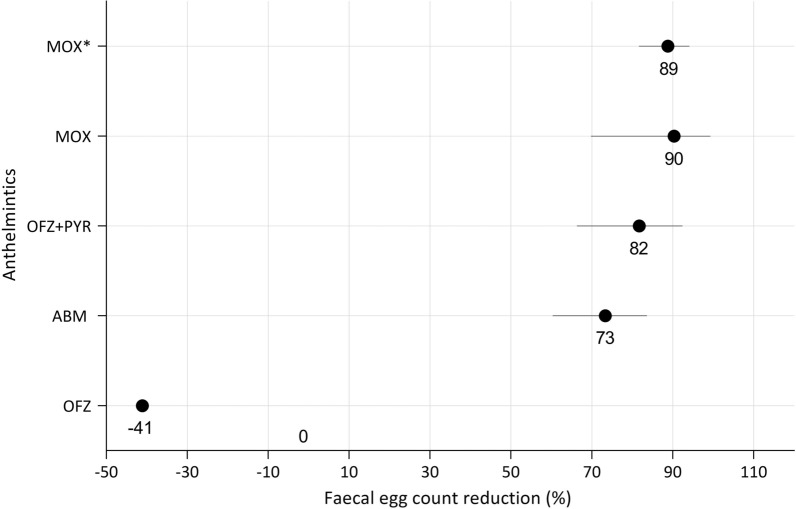
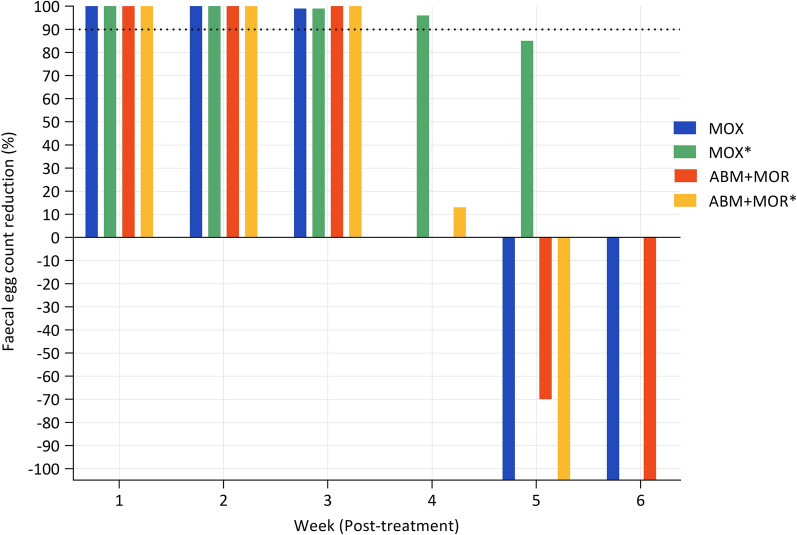
Results: Of the five anthelmintic products tested on Farm A, resistance against OFZ, ABM and OFZ + PYR was found, with efficacies of - 41% (- 195% lower confidence limit [LCL]), 73% (60% LCL) and 82% (66% LCL) at 2 weeks post-treatment, respectively. The FECRT showed high efficacies of MOX and ABM + MOR (100%) at 2 week post-treatment and shortened ERPs for these anthelmintics (ABM + MOR: 4 weeks; MOX: 5 weeks). Resistance to MOX was found on Farm B, with a reduced efficacy of 90% (70% LCL) and 89% (82% LCL) at 2 weeks post-treatment in trials one and two, respectively.
Conclusions: This study provides the first evidence of MOX- and multidrug-resistant (ABM and combinations of anthelmintics) cyathostomins in Australia and indicates the need for continuous surveillance of the efficacy of currently effective anthelmintics and large-scale investigations to assess the ERP for various anthelmintics.
Keywords: Australian thoroughbred horses; Cyathostomins; Egg reappearance period; FECRT; Moxidectin; Resistance.
© 2021. The Author(s).
Conflict of interest statement
The authors are members of the Australian Equine Parasitology Advisory Panel (AEPAP) supported by AgriFutures Australia and Boehringer Ingelheim Animal Health Australia. The authors declare that they have no known competing financial interests or personal relationships that could have appeared to influence the work reported in this paper.
Figures
References
-
- Lichtenfels JR, Kharchenko VA, Dvojnos GM. Illustrated identification keys to strongylid parasites (Strongylidae: Nematoda) of horses, zebras and asses (Equidae) Vet Parasitol. 2008;156:4–161. - PubMed
-
- Reid SWJ, Mair TS, Hillyer MH, Love S. Epidemiological risk factors associated with a diagnosis of clinical cyathostomiasis in the horse. Equine Vet J. 1995;27:127–130. - PubMed
-
- Love S, Murphy D, Mellor D. Pathogenicity of cyathostome infection. Vet Parasitol. 1999;85:113–121. - PubMed
MeSH terms
Substances
LinkOut - more resources
Full Text Sources
Research Materials
